My Double Life: The Memoirs of Sarah Bernhardt
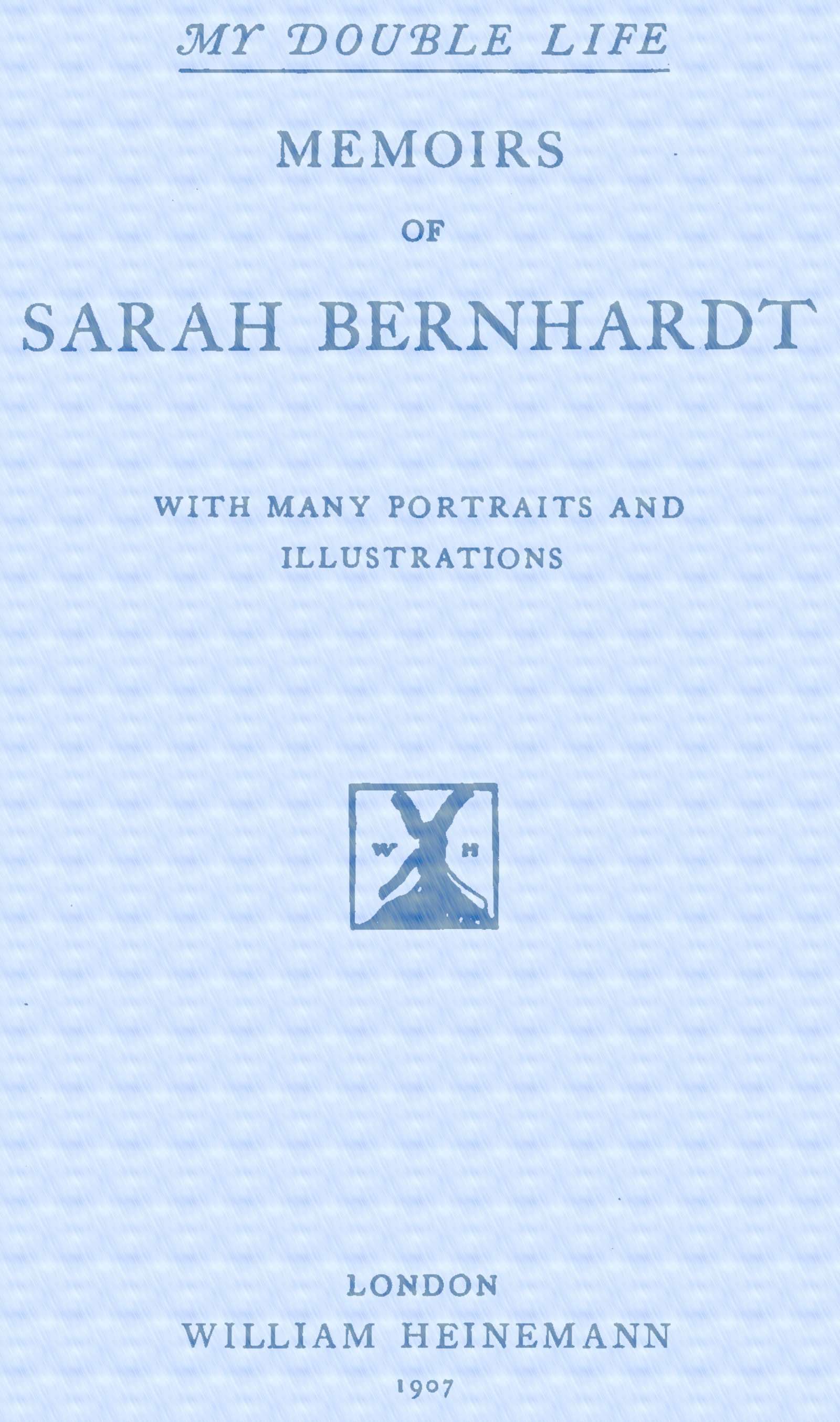
Sarah Bernhardt was the first international celebrity, a woman who transformed herself from illegitimate child abandoned in a convent to the most famous actress in the world. Her memoir reads less like a straightforward autobiography and more like her greatest role: a carefully constructed performance that she intended to outlive her. Yet precisely because Bernhardt understood her life as art, the book becomes something richer than mere self-aggrandizement. It is a portrait of a woman who refused the modest Victorian existence prescribed to her, who built herself from nothing into a force of nature, and who wrote her own legend with the same theatrical instincts that made audiences weep across two continents. The memoir traces her rise through the French theater world, her triumphs in America, her relationships with the great artists and writers of her age, and the relentless work that sustained her fame for decades. But beneath the bravado lies something raw: reflections on abandonment, on the price of ambition, on what it cost to be a woman who belonged to everyone and no one.
Editions
X-Ray
“Life is short, even for those who live a long time, and we must live for the few who know and appreciate us, who judge and absolve us, and for whom we have the same affection and indulgence. The rest I look upon as a mere crowd, lively or sad, loyal or corrupt, from whom there is nothing to be expected but fleeting emotions, either pleasant or unpleasant, which leave no trace behind them. We ought to hate very rarely, as it is too fatiguing; remain indifferent to a great deal, forgive often and never forget.””
— Sarah Bernhardt
Link to this book
Add a free, dofollow link to Lex on your blog, forum, syllabus, or reading list.

<a href="https://lex-books.com/book/my-double-life-the-memoirs-of-sarah-bernhardt-e8c9a790-2348-43ee-8192-7806b7286029"><img src="https://lex-books.com/badges/read-on-lex.svg" alt="Read My Double Life: The Memoirs of Sarah Bernhardt by Sarah Bernhardt free on Lex" width="160" height="40"></a>[](https://lex-books.com/book/my-double-life-the-memoirs-of-sarah-bernhardt-e8c9a790-2348-43ee-8192-7806b7286029)[url=https://lex-books.com/book/my-double-life-the-memoirs-of-sarah-bernhardt-e8c9a790-2348-43ee-8192-7806b7286029][img]https://lex-books.com/badges/read-on-lex.svg[/img][/url]Read My Double Life: The Memoirs of Sarah Bernhardt by Sarah Bernhardt free on Lex: https://lex-books.com/book/my-double-life-the-memoirs-of-sarah-bernhardt-e8c9a790-2348-43ee-8192-7806b7286029Cite this book
Reading this edition for a paper or guide? Copy a citation.
Bernhardt, Sarah. My Double Life: The Memoirs of Sarah Bernhardt. Lex, lex-books.com/book/my-double-life-the-memoirs-of-sarah-bernhardt-e8c9a790-2348-43ee-8192-7806b7286029.Bernhardt, S. (n.d.). My Double Life: The Memoirs of Sarah Bernhardt. Lex. https://lex-books.com/book/my-double-life-the-memoirs-of-sarah-bernhardt-e8c9a790-2348-43ee-8192-7806b7286029Bernhardt, Sarah. My Double Life: The Memoirs of Sarah Bernhardt. Lex. https://lex-books.com/book/my-double-life-the-memoirs-of-sarah-bernhardt-e8c9a790-2348-43ee-8192-7806b7286029.