What would you like to read?Search books, authors, genres, shelves, users...
Search books, authors, genres, shelves, users...Search books, authors, genres, shelves, users...

What would you like to read?Search books, authors, genres, shelves, users...
Search books, authors, genres, shelves, users...Search books, authors, genres, shelves, users...
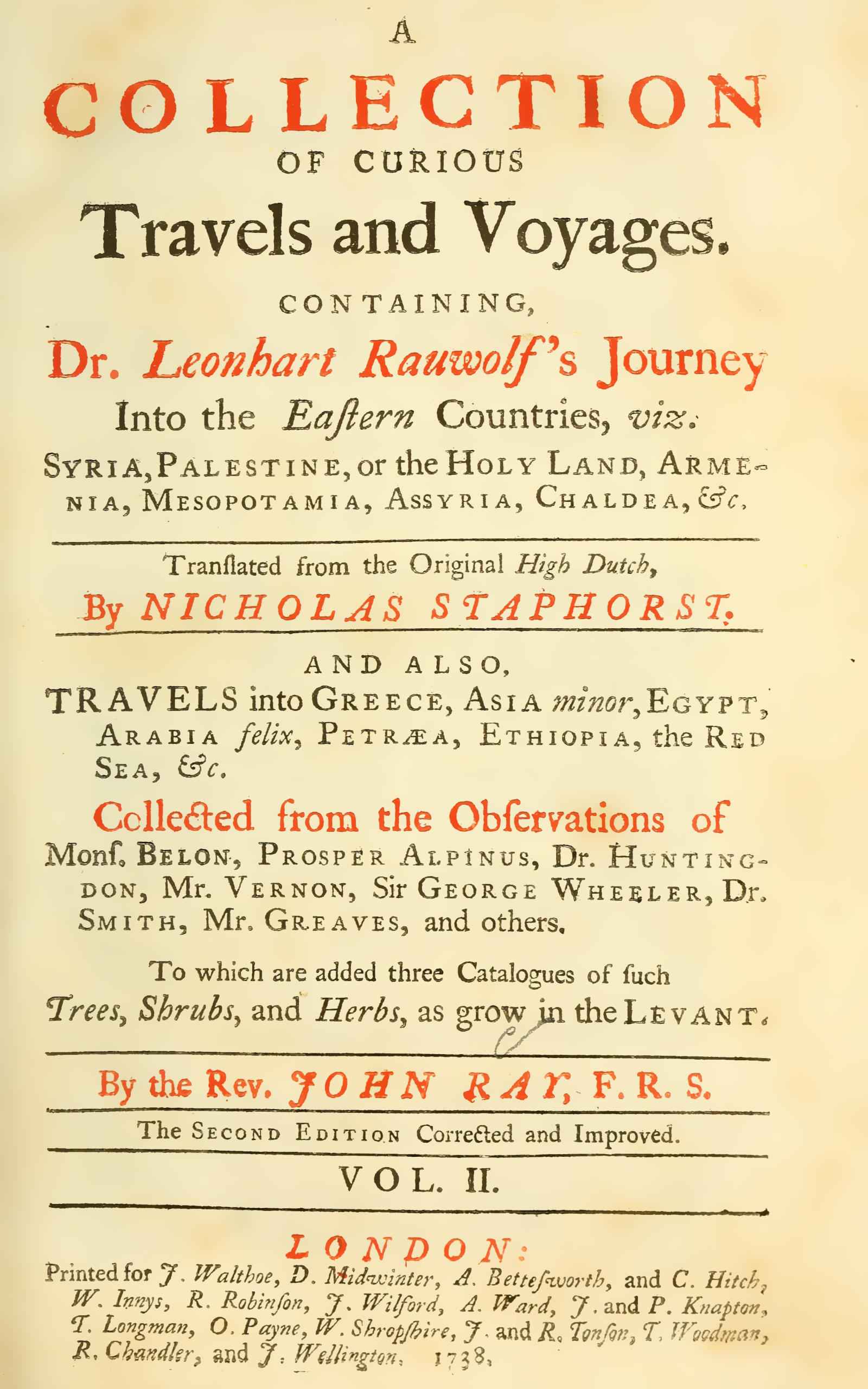
1693
Translated by Nicolaus Staphorst
A collection of travel narratives and natural history observations written in the mid-18th century. It gathers translated journeys and reports focused on the Levant and wider Ottoman world—Greece, Asia Minor, Egypt, Arabia, and Ethiopia—emphasizing geography, customs, trade, and plants. Readers will find firsthand itineraries enriched with ethnographic detail and long botanical lists compiled from multiple travelers. The opening of this volume lays out an extensive table of contents and then begins Dr. Leonhart Rauwolf’s travelogue into the Eastern Mediterranean. He states his botanical aims, travels overland from Augsburg to Marseilles noting towns and plants, and then undertakes a stormy, wind-driven passage past Sardinia, Sicily, Crete, and Cyprus, including a brief audience with an Ottoman officer at Salamis, before reaching Tripoli. On arrival he describes a scuffle at the gate and then sketches Tripoli’s setting, irrigated gardens and fruits, flat-roofed houses, narrow paved streets, caravanserais, and especially the public baths and their routines (washing, depilation, and massage). He surveys trade and governance: European consuls and fondiques, bustling bazaars, silk and raisin commerce, soap and potash making from local halophytic plants, coinage, and the roles of Ottoman officials and courts, with examples of both punishments and corruption alongside avenues of appeal. Rauwolf also notes everyday manners—dress, music and games, washing habits, women’s seclusion and cemetery visits, and funeral customs. The section closes by starting a catalog of local flora around Tripoli, from shore plants to ricinus, squills, and sugar-canes.