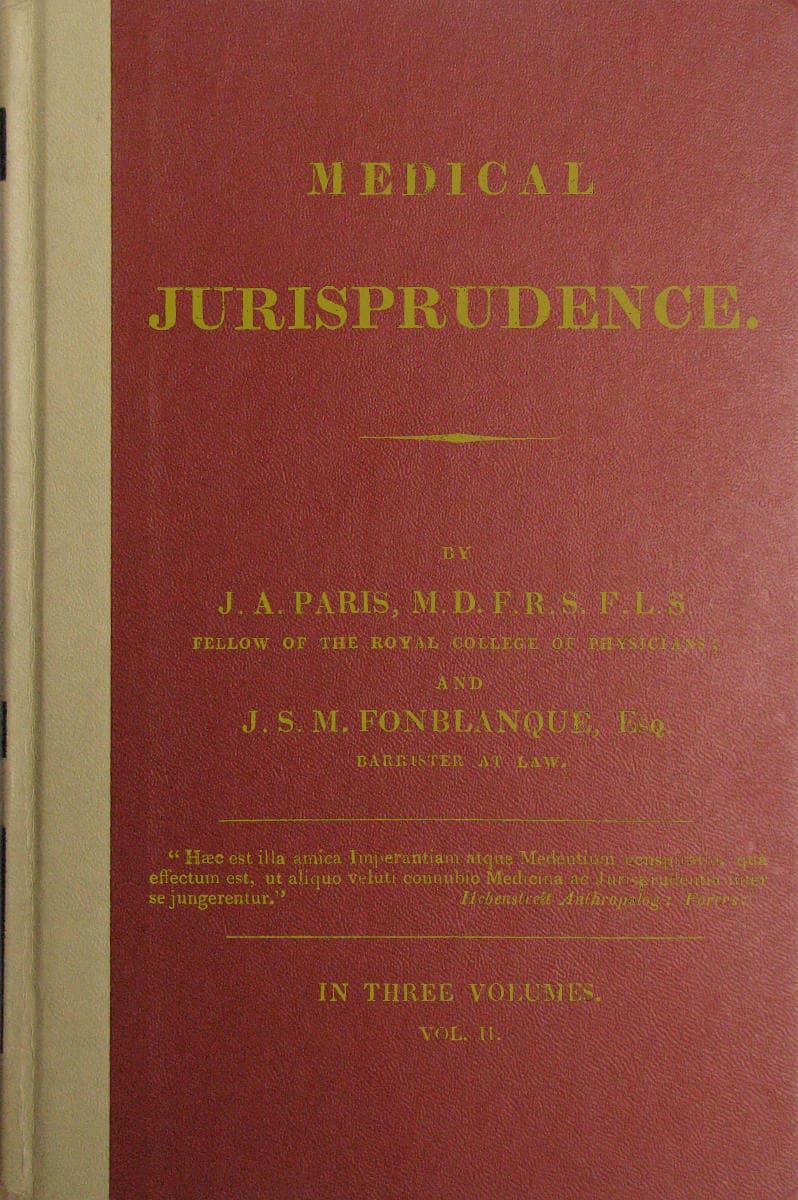
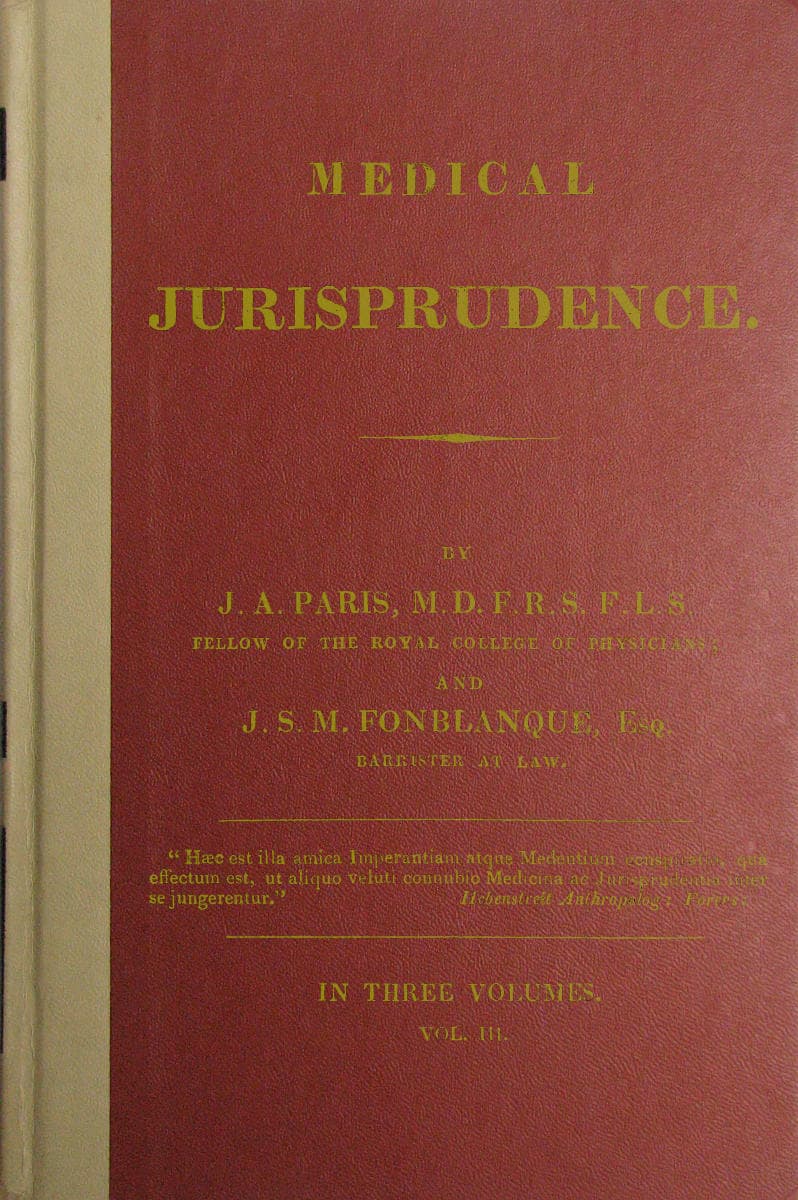
Medical Jurisprudence, Volume 1 (of 3)
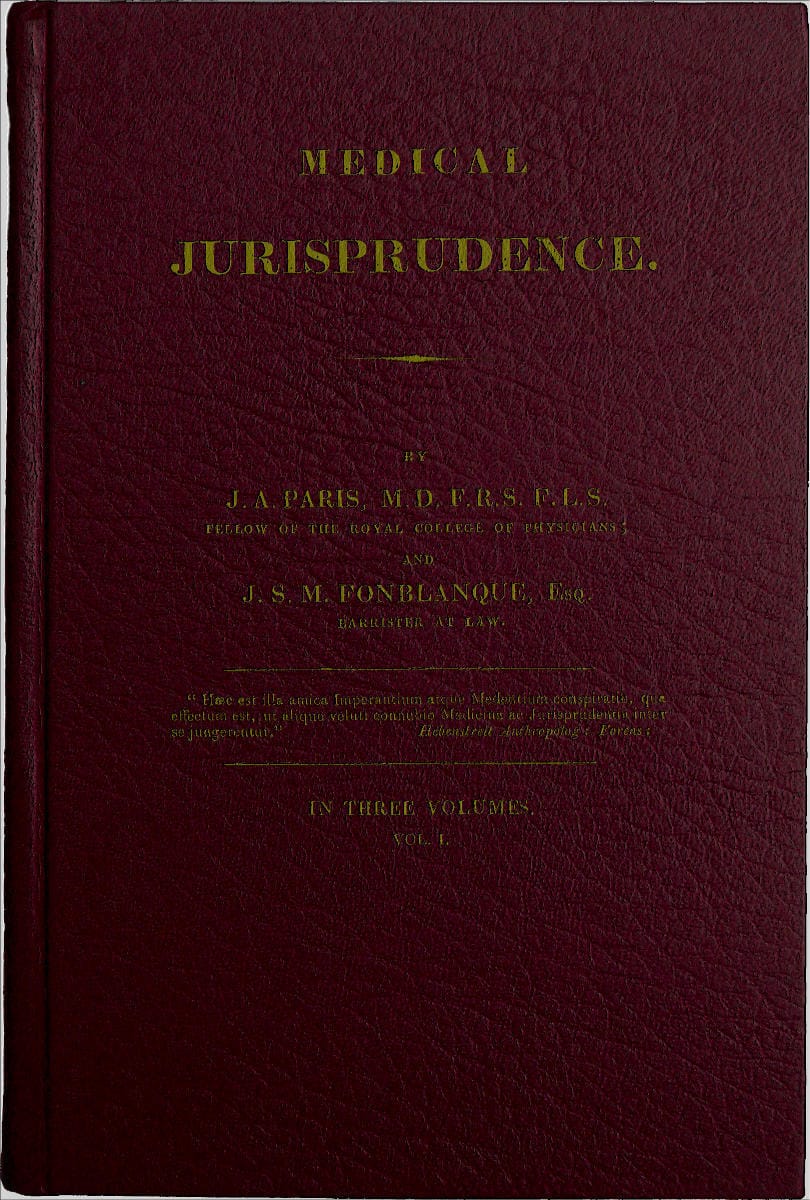
In the early 19th century, as medicine and law were both undergoing profound transformations, two pioneering figures sought to formalize the relationship between them. J.S.M. Fonblanque and John Ayrton Paris created this comprehensive treatise to address a pressing question: how should medical knowledge shape legal practice, and vice versa? The result was a foundational work that would influence generations of legal and medical professionals. This volume tackles the practical mechanics of that intersection. How should courts evaluate medical evidence? What are the legal responsibilities of physicians? How does public health intersect with legal enforcement? Through detailed case studies and legal precedents, the authors map out the obligations and protections that must exist when healing meets judgment. They examine forensic evidence, the role of medical experts as witnesses, and the ethical tensions inherent in a physician's duties to patients and to society. For historians of medicine, legal scholars, and anyone curious about how modern forensic science took shape, this volume remains essential reading. It captures a pivotal moment when two professions began to recognize their interdependence in the service of justice.
Editions
Link to this book
Add a free, dofollow link to Lex on your blog, forum, syllabus, or reading list.

<a href="https://lex-books.com/book/medical-jurisprudence-volume-1-of-3-5aab7d76-9960-48ec-9fc7-ffcd63500897"><img src="https://lex-books.com/badges/read-on-lex.svg" alt="Read Medical Jurisprudence, Volume 1 (of 3) by J. S. M. Fonblanque free on Lex" width="160" height="40"></a>[](https://lex-books.com/book/medical-jurisprudence-volume-1-of-3-5aab7d76-9960-48ec-9fc7-ffcd63500897)[url=https://lex-books.com/book/medical-jurisprudence-volume-1-of-3-5aab7d76-9960-48ec-9fc7-ffcd63500897][img]https://lex-books.com/badges/read-on-lex.svg[/img][/url]Read Medical Jurisprudence, Volume 1 (of 3) by J. S. M. Fonblanque free on Lex: https://lex-books.com/book/medical-jurisprudence-volume-1-of-3-5aab7d76-9960-48ec-9fc7-ffcd63500897Cite this book
Reading this edition for a paper or guide? Copy a citation.
Fonblanque, J. S. M.. Medical Jurisprudence, Volume 1 (of 3). Lex, lex-books.com/book/medical-jurisprudence-volume-1-of-3-5aab7d76-9960-48ec-9fc7-ffcd63500897.Fonblanque, J. S. M. (n.d.). Medical Jurisprudence, Volume 1 (of 3). Lex. https://lex-books.com/book/medical-jurisprudence-volume-1-of-3-5aab7d76-9960-48ec-9fc7-ffcd63500897Fonblanque, J. S. M.. Medical Jurisprudence, Volume 1 (of 3). Lex. https://lex-books.com/book/medical-jurisprudence-volume-1-of-3-5aab7d76-9960-48ec-9fc7-ffcd63500897.