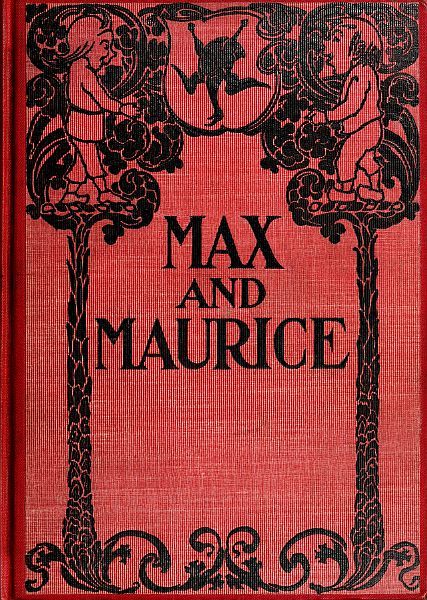
Max and Maurice: A Juvenile History in Seven Tricks
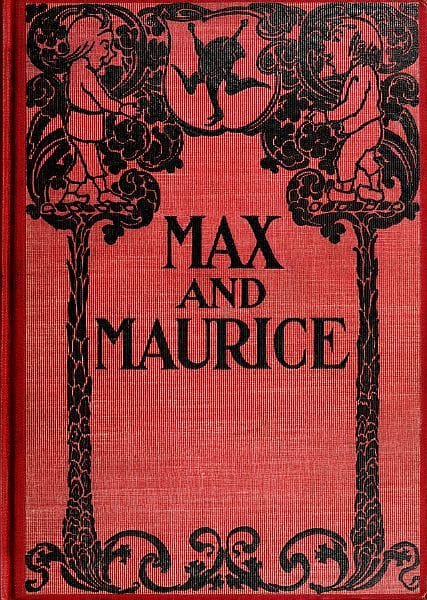
Max and Maurice: A Juvenile History in Seven Tricks
Translated by Charles Timothy Brooks
Two boys. Seven tricks. No mercy. Max and Maurice are not your ordinary troublemakers. They are artists of anarchy, masters of mischief whose every prank spirals into spectacular catastrophe. In this 1865 German classic, Wilhelm Busch crafted something revolutionary: a children's book that refuses to soften its edges, where consequences arrive with shocking finality. From stealing a widow's chickens through her chimney to feeding their teacher gunpowder in his pipe, each trick is more audacious than the last. The townsfolk suffer, the boys laugh, and then, justice arrives with a grim wink. Written in sparkling rhymed couplets and illustrated with Busch's wickedly funny drawings, this is a cautionary tale wrapped in a comedy of errors. It has been read and beloved by generations of German children, who recognize something true in Max and Maurice's gleeful defiance. For anyone who ever delighted in a well-executed trick, or remembers what it felt like to be small and absolutely certain the rules didn't apply to them.
Editions
X-Ray
“Dass Kinder eine derartige Darstellung sehr nach ihrem Geschmack finden, ist nicht zu bezweifeln […]« Tatsächlich gab es später Verbote des Buches: Die steirische Schulbehörde untersagte noch 1929 den Verkauf von Max und Moritz an Jugendliche unter achtzehn Jahren (!). Die Kritik der Spießer tat dem Erfolg nicht Abbruch: Bereits zu Wilhelm Buschs Lebzeiten wurde das Werk in zehn Sprachen übersetzt,””
— Wilhelm Busch
Link to this book
Add a free, dofollow link to Lex on your blog, forum, syllabus, or reading list.

<a href="https://lex-books.com/book/max-and-maurice-a-juvenile-history-in-seven-tricks-ac5cc8ff-05d3-49df-81ca-ddf3ae187afd"><img src="https://lex-books.com/badges/read-on-lex.svg" alt="Read Max and Maurice: A Juvenile History in Seven Tricks by Wilhelm Busch free on Lex" width="160" height="40"></a>[](https://lex-books.com/book/max-and-maurice-a-juvenile-history-in-seven-tricks-ac5cc8ff-05d3-49df-81ca-ddf3ae187afd)[url=https://lex-books.com/book/max-and-maurice-a-juvenile-history-in-seven-tricks-ac5cc8ff-05d3-49df-81ca-ddf3ae187afd][img]https://lex-books.com/badges/read-on-lex.svg[/img][/url]Read Max and Maurice: A Juvenile History in Seven Tricks by Wilhelm Busch free on Lex: https://lex-books.com/book/max-and-maurice-a-juvenile-history-in-seven-tricks-ac5cc8ff-05d3-49df-81ca-ddf3ae187afdCite this book
Reading this edition for a paper or guide? Copy a citation.
Busch, Wilhelm. Max and Maurice: A Juvenile History in Seven Tricks. Lex, lex-books.com/book/max-and-maurice-a-juvenile-history-in-seven-tricks-ac5cc8ff-05d3-49df-81ca-ddf3ae187afd.Busch, W. (n.d.). Max and Maurice: A Juvenile History in Seven Tricks. Lex. https://lex-books.com/book/max-and-maurice-a-juvenile-history-in-seven-tricks-ac5cc8ff-05d3-49df-81ca-ddf3ae187afdBusch, Wilhelm. Max and Maurice: A Juvenile History in Seven Tricks. Lex. https://lex-books.com/book/max-and-maurice-a-juvenile-history-in-seven-tricks-ac5cc8ff-05d3-49df-81ca-ddf3ae187afd.