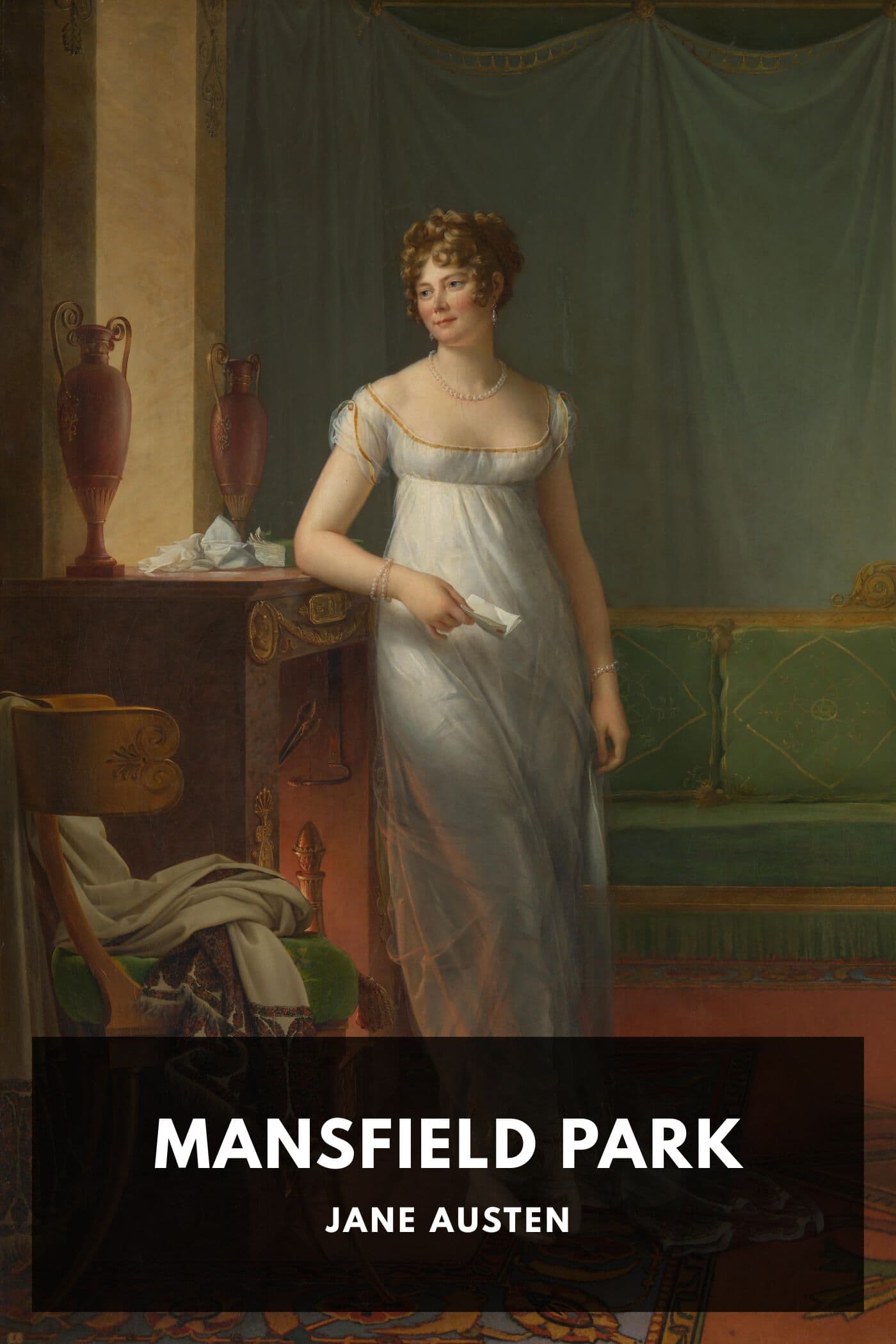
Mansfield Park

Mansfield Park is Jane Austen's darkest, most morally complex novel. When shy Fanny Price is taken from her poor Portsmouth family to live with her wealthy uncle Sir Thomas Bertram at his estate, she becomes a silent witness to the glittering corruption around her. The arrival of the charming Crawford siblings, Henry and Mary, throws Mansfield Park into chaos. They introduce play-acting, flirtation, and a dangerous freedom that threatens to unravel the Bertram family. Fanny, underestimated and overlooked, watches with quiet anguish as the person she loves most, Edmund Bertram, falls under Mary Crawford's spell. But this is not merely a story of patient virtue rewarded. Austen asks uncomfortable questions about complicity, observation, and what it means to hold firm in a world that rewards compromise. The theatrical production at the novel's center becomes a mirror for every character performing a role, hiding truths, or refusing to see. Mansfield Park demands patience, but for readers who stay, it offers Austen's sharpest critique of English privilege and her most nuanced examination of moral courage.
Editions


X-Ray
“Life seems but a quick succession of busy nothings.””
— Jane Austen
“I was quiet, but I was not blind.””
— Jane Austen
“We have all a better guide in ourselves, if we would attend to it, than any other person can be.””
— Jane Austen
“Selfishness must always be forgiven you know, because there is no hope of a cure.””
— Jane Austen
“A large income is the best recipe for happiness I ever heard of.””
— Jane Austen
“A fondness for reading, properly directed, must be an education in itself.””
— Jane Austen
“Her own thoughts and reflections were habitually her best companions.””
— Jane Austen
“Let us have the luxury of silence.””
— Jane Austen
“Every moment has its pleasures and its hope.””
— Jane Austen
Link to this book
Add a free, dofollow link to Lex on your blog, forum, syllabus, or reading list.

<a href="https://lex-books.com/book/mansfield-park-5734d7e9-056f-45ba-99fa-dce211ca87ff"><img src="https://lex-books.com/badges/read-on-lex.svg" alt="Read Mansfield Park by Jane Austen free on Lex" width="160" height="40"></a>[](https://lex-books.com/book/mansfield-park-5734d7e9-056f-45ba-99fa-dce211ca87ff)[url=https://lex-books.com/book/mansfield-park-5734d7e9-056f-45ba-99fa-dce211ca87ff][img]https://lex-books.com/badges/read-on-lex.svg[/img][/url]Read Mansfield Park by Jane Austen free on Lex: https://lex-books.com/book/mansfield-park-5734d7e9-056f-45ba-99fa-dce211ca87ffCite this book
Reading this edition for a paper or guide? Copy a citation.
Austen, Jane. Mansfield Park. Lex, lex-books.com/book/mansfield-park-5734d7e9-056f-45ba-99fa-dce211ca87ff.Austen, J. (n.d.). Mansfield Park. Lex. https://lex-books.com/book/mansfield-park-5734d7e9-056f-45ba-99fa-dce211ca87ffAusten, Jane. Mansfield Park. Lex. https://lex-books.com/book/mansfield-park-5734d7e9-056f-45ba-99fa-dce211ca87ff.
![Love and Freindship [sic]](/_next/image?url=https%3A%2F%2Fd3b2n8gj62qnwr.cloudfront.net%2FCOVERS%2Fgutenberg_covers75k%2Febook-1212.png&w=3840&q=75)