leven van Johannes Wouter Blommesteyn - deel 3
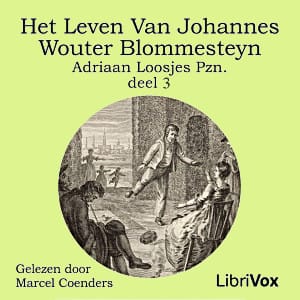
In this third installment of Adriaan Loosjes's ambitious satirical cycle, the 18th century finally gets its portrait. Where Maurits Lijnslager embodied 17th-century Dutch vigor and Hillegonda Buisman represented mid-century feminine virtue, Johannes Wouter Blommesteyn emerges as something far more uncomfortable: a man of his time, if his time was one of decline. Written in 1809, when the Dutch Republic had long since ceded its golden age, Loosjes uses Johannes's romantic pursuits of a young, innocent Frisian girl to anatomize a nation's softening. This is not a villain's story but something more insidious: an ordinary man's inability to rise to the moment. The satire cuts because it holds a mirror. For readers interested in the early European novel, Enlightenment self-reflection, or the roots of Dutch literary culture, this series stands as a fascinating artifact: one writer's attempt to diagnose his society's ailments through character studies across the centuries.
Editions

Link to this book
Add a free, dofollow link to Lex on your blog, forum, syllabus, or reading list.

<a href="https://lex-books.com/book/leven-van-johannes-wouter-blommesteyn-deel-3-5936c331-8cfc-4f94-aedc-2d548347a7fe"><img src="https://lex-books.com/badges/read-on-lex.svg" alt="Read leven van Johannes Wouter Blommesteyn - deel 3 by Adriaan Loosjes Pzn free on Lex" width="160" height="40"></a>[](https://lex-books.com/book/leven-van-johannes-wouter-blommesteyn-deel-3-5936c331-8cfc-4f94-aedc-2d548347a7fe)[url=https://lex-books.com/book/leven-van-johannes-wouter-blommesteyn-deel-3-5936c331-8cfc-4f94-aedc-2d548347a7fe][img]https://lex-books.com/badges/read-on-lex.svg[/img][/url]Read leven van Johannes Wouter Blommesteyn - deel 3 by Adriaan Loosjes Pzn free on Lex: https://lex-books.com/book/leven-van-johannes-wouter-blommesteyn-deel-3-5936c331-8cfc-4f94-aedc-2d548347a7feCite this book
Reading this edition for a paper or guide? Copy a citation.
Pzn, Adriaan Loosjes. leven van Johannes Wouter Blommesteyn - deel 3. Lex, lex-books.com/book/leven-van-johannes-wouter-blommesteyn-deel-3-5936c331-8cfc-4f94-aedc-2d548347a7fe.Pzn, A. L. (n.d.). leven van Johannes Wouter Blommesteyn - deel 3. Lex. https://lex-books.com/book/leven-van-johannes-wouter-blommesteyn-deel-3-5936c331-8cfc-4f94-aedc-2d548347a7fePzn, Adriaan Loosjes. leven van Johannes Wouter Blommesteyn - deel 3. Lex. https://lex-books.com/book/leven-van-johannes-wouter-blommesteyn-deel-3-5936c331-8cfc-4f94-aedc-2d548347a7fe.


