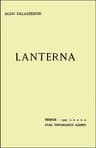
Lanterna
1907

Palazzeschi's 1907 collection arrives at a pivotal moment in Italian poetry, where the decorative excesses of Liberty symbolism begin to crack open into something stranger and more honest. Here, the author trades ornate surfaces for a leaner, more subversive voice - one that finds the sacred in the ridiculous and the tragic hiding inside the comic. Characters like the old woman Comare Coletta and the monk Frate Puccio drift through these pages not as fully rendered figures but as luminous fragments, half-dream and half-pantomime, caught in the glow of that titular lantern. The collection moves between solemn reflection and wild celebration, finding in that oscillation a philosophy: existence is lightness, absurdity, a perpetual negotiation between illumination and shadow. Palazzeschi refuses to preach or explain. He offers instead a world where joy and grief share the same breath, where the grotesque and the tender are impossible to separate. This is early avant-garde Italian poetry at its most accessible and its most radical - a book that rewired the possibilities of what verse could do and feel.
Editions
Link to this book
Add a free, dofollow link to Lex on your blog, forum, syllabus, or reading list.

<a href="https://lex-books.com/book/lanterna-1276c7e8-19d4-47a0-9fe3-0392de17bbee"><img src="https://lex-books.com/badges/read-on-lex.svg" alt="Read Lanterna by Aldo Palazzeschi free on Lex" width="160" height="40"></a>[](https://lex-books.com/book/lanterna-1276c7e8-19d4-47a0-9fe3-0392de17bbee)[url=https://lex-books.com/book/lanterna-1276c7e8-19d4-47a0-9fe3-0392de17bbee][img]https://lex-books.com/badges/read-on-lex.svg[/img][/url]Read Lanterna by Aldo Palazzeschi free on Lex: https://lex-books.com/book/lanterna-1276c7e8-19d4-47a0-9fe3-0392de17bbeeCite this book
Reading this edition for a paper or guide? Copy a citation.
Palazzeschi, Aldo. Lanterna. Lex, lex-books.com/book/lanterna-1276c7e8-19d4-47a0-9fe3-0392de17bbee.Palazzeschi, A. (1907). Lanterna. Lex. https://lex-books.com/book/lanterna-1276c7e8-19d4-47a0-9fe3-0392de17bbeePalazzeschi, Aldo. Lanterna. Lex. https://lex-books.com/book/lanterna-1276c7e8-19d4-47a0-9fe3-0392de17bbee.







![Birds and Nature, Vol. 12 No. 1 [June 1902]illustrated by Color Photography](/_next/image?url=https%3A%2F%2Fd3b2n8gj62qnwr.cloudfront.net%2FCOVERS%2Fgutenberg_covers75k%2Febook-47881.png&w=3840&q=75)