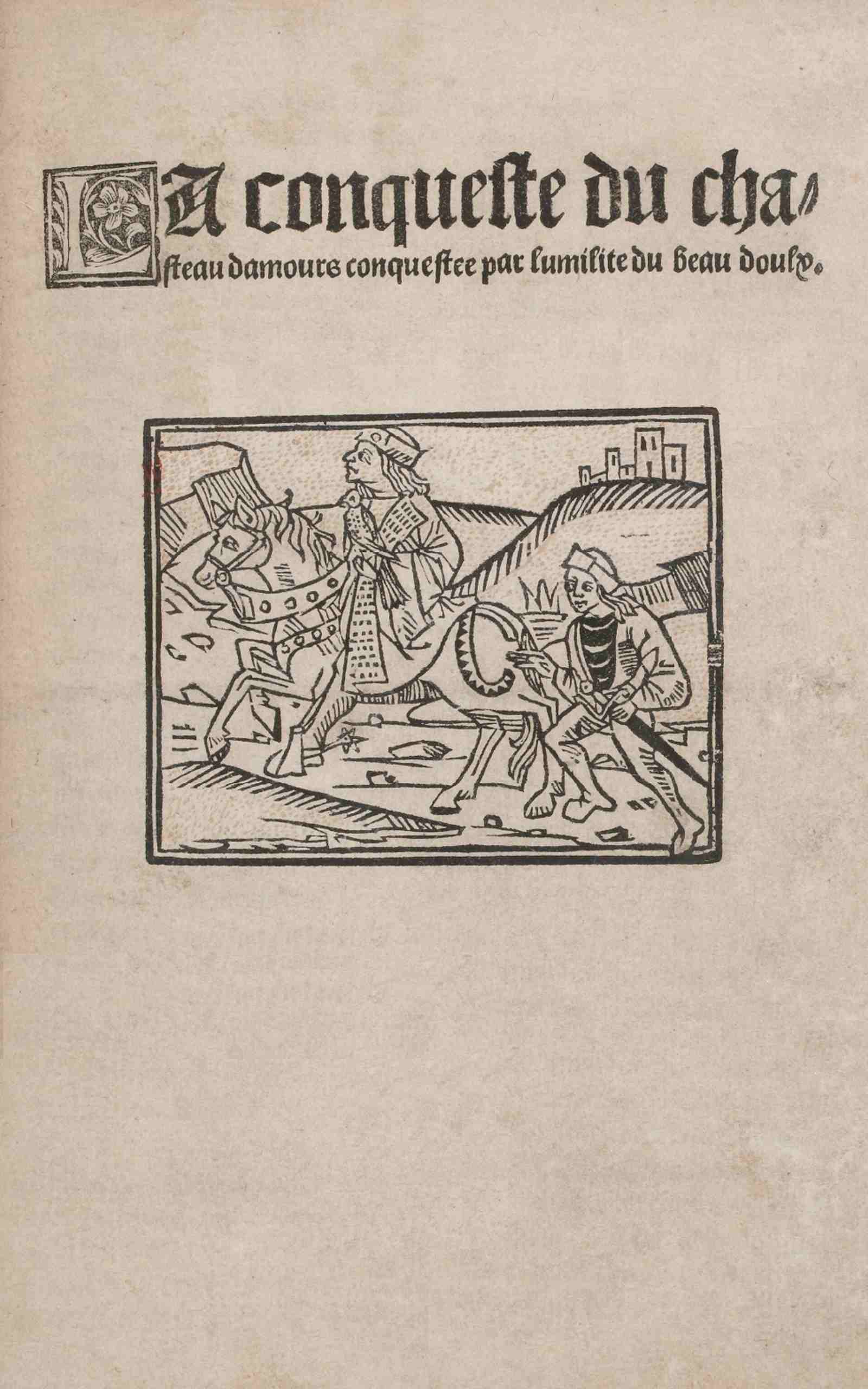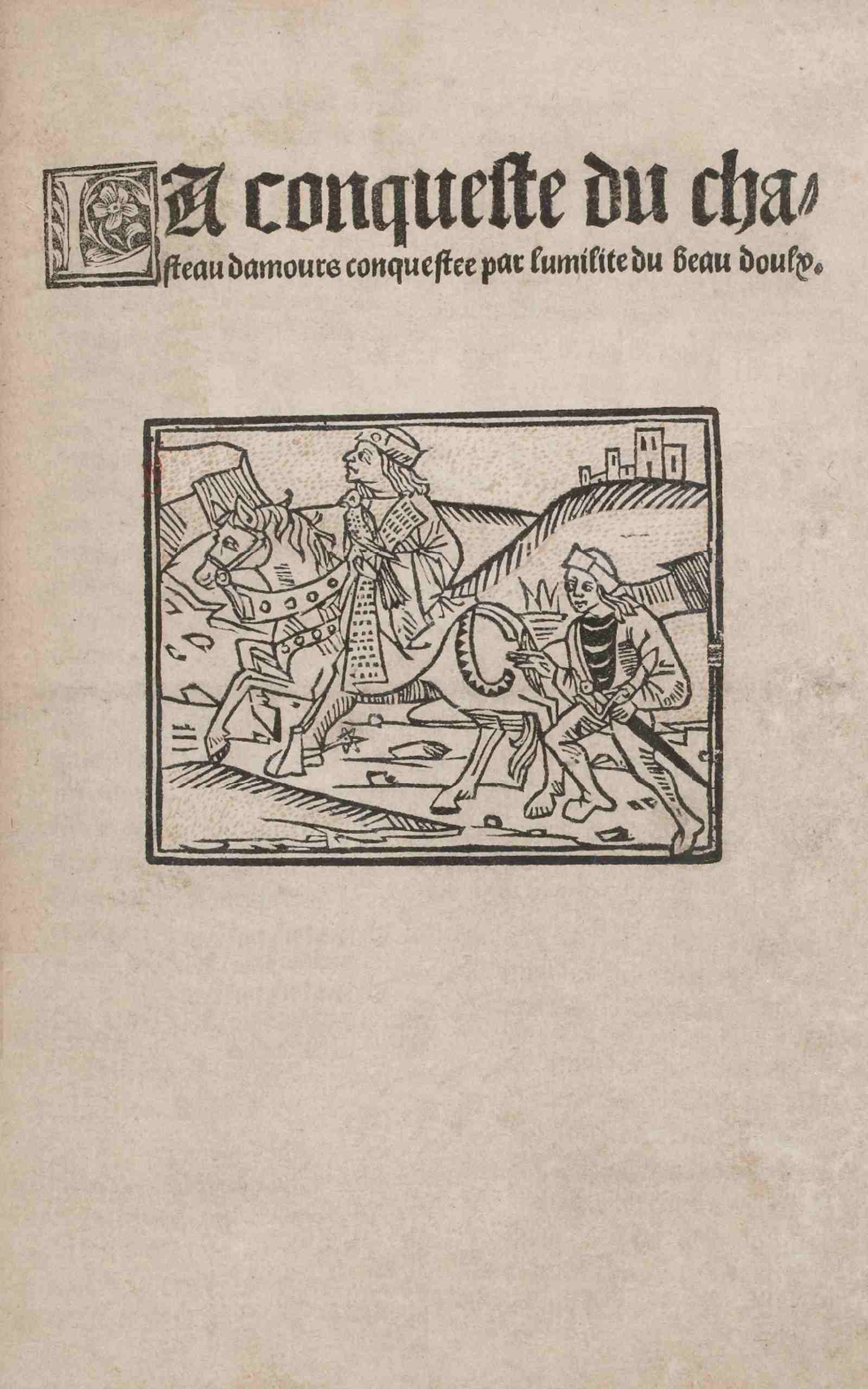
La Conqueste Du Chasteau D'amours Conquestee Par L'umilité Du Beau Doulx
1502
''La conqueste du chasteau d’amours conquestee par l'umilité du beau doulx'' is a medieval allegorical tale authored in an era typically characterized by the rise of chivalric literature, likely during the late medieval period. This work weaves together themes of humility, valor, and the pursuit of love, illustrating how such qualities can lead to personal triumph and societal recognition. The narrative follows the journey of a humble young knight, referred to as the ''beau doulx,'' who embarks on a quest to conquer the Castle of Love, spurred by a proclamation from its lady that offers lordship to those who can perform three assigned tasks. Throughout his adventures, the beau doulx showcases his remarkable humility and kindness, which ultimately win him the respect and support of nobility and even whimsical creatures like a kind mouse and a bee. His success culminates when he recognizes the true lady of the castle amongst three contenders, thereby fulfilling the lady's challenge and earning the title and honor of master of the Castle of Love. The story champions the virtues of humility and demonstrates that true greatness is achieved through modesty and service, echoed in the moral lessons conveyed throughout the tale.
About La Conqueste Du Chasteau D'amours Conquestee Par L'umilité Du Beau Doulx
Chapter Summaries
- 1
- The story introduces a young, poor, but noble-hearted boy who, after his parents' death, lives with his wise uncle. His uncle teaches him the profound importance of humility and liberality, emphasizing that these virtues lead to love and success, while pride leads to disdain.
- 2
- Beau Doulx's humility and skill during a hunt impress a great lord, who takes him into service. During a jousting tournament, Beau Doulx, disguised as the 'Chevalier Blanc,' defeats two formidable opponents, refusing to reveal his name and further demonstrating his humility despite his prowess.
- 3
- Beau Doulx is honored at the castle, where his master treats him as an equal, recognizing his noble character. The ladies name him 'Beau Doulx' (Beautiful Gentle One). Later, his master inherits ten castles and, in an act of great generosity, bestows five upon Beau Doulx, who continues to prosper through his humility.
Key Themes
- Humility
- Humility is the overarching theme, presented as the ultimate virtue and the key to success. Beau Doulx's consistent humble demeanor, even in victory, earns him favor from both humans and animals, directly enabling him to overcome challenges and ultimately conquer the allegorical 'Chasteau d'Amours' (Kingdom of Heaven).
- Liberality/Generosity
- Closely linked to humility, liberality is shown as a virtue that fosters goodwill and creates a network of reciprocal support. Beau Doulx's generosity in protecting the animals, despite their small stature, ensures their aid when he faces his greatest trials, illustrating that kindness is always rewarded.
- Reciprocity of Good Deeds
- The repeated proverb 'qui plaisir fait plaisir requiert' (he who does a favor asks for a favor) highlights that good deeds, no matter how small or to whom they are extended, will eventually be repaid. The animals' assistance to Beau Doulx in his time of need is a direct consequence of his earlier kindness towards them, emphasizing the long-term benefits of virtuous actions.
Characters
- Beau Doulx(protagonist)
- A young, humble, and liberal knight who, through his virtues, overcomes seemingly impossible challenges to conquer the Chasteau d'Amours.
- Oncle (of Beau Doulx)(supporting)
- Beau Doulx's wise uncle who instills in him the values of humility and liberality, which prove crucial to his success.
- Seigneur (Maistre of Beau Doulx)(supporting)
- A great lord who takes Beau Doulx into his service, recognizes his noble spirit, and ultimately becomes his generous benefactor.
- Roy des Formys (King of Ants)(supporting)
- The king of a vast army of ants whom Beau Doulx helps, and who later repays the favor by assisting in a challenge.
- Cane (Duck)(supporting)
- A duck whose ducklings Beau Doulx protects, and who later repays the favor by assisting in a challenge.
- Mouche à Miel (Honeybee)(supporting)
- A honeybee whose young Beau Doulx protects, and who later repays the favor by assisting in a challenge.