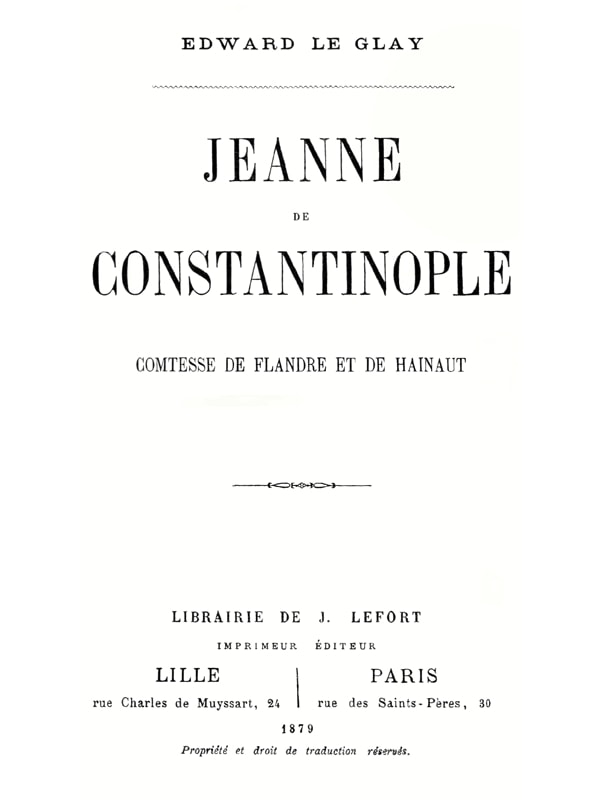
Jeanne De Constantinople: Comtesse De Flandre Et De Hainaut
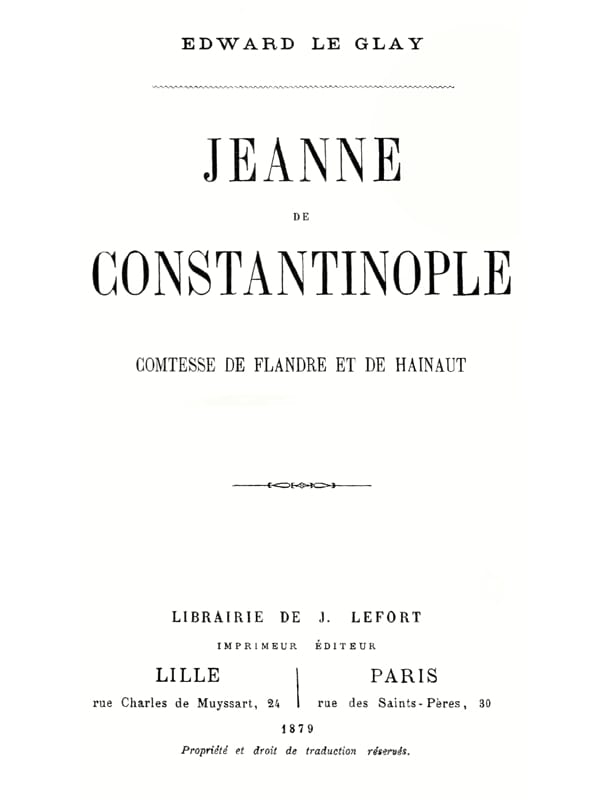
Jeanne De Constantinople: Comtesse De Flandre Et De Hainaut
A historical account written in the late 19th century. The work chronicles the life of Jeanne de Constantinople, who faced significant trials and political upheaval from a young age after becoming an orphan. With a narrative rich in medieval context, the book likely explores her role as a ruler and the challenges she faced from various political factions during her reign. At the start of the narrative, Jeanne, born to the comte Bauduin and Marie de Champagne, experiences considerable loss early in life, becoming an orphan and a ward of the French king at a tender age. As she navigates the treacherous waters of feudal politics, her life is marked by political manipulation, struggles for sovereignty, and familial tragedies. The opening sets the stage for her eventual marriage to Fernand of Portugal and indicates a life filled with strife amidst the backdrop of regional power struggles, hinting at the tumultuous events that would define her reign over Flanders and Hainaut.
Editions
X-Ray
Born 1190, daughter of Emperor Bauduin and Marie de Champagne. Becomes Countess of Flandre and Hainaut after her parents' deaths, ruling with wisdom and virtue through numerous trials.
Ninth Count of Flandre and Hainaut, first Latin Emperor of Constantinople. Dies tragically in battle at Andrinople in 1205, leaving his daughters orphaned.
Son of King of Portugal, marries Jeanne through political intrigue. Captured at Battle of Bouvines and imprisoned for 12 years in the Louvre tower.
King of France, defeats the coalition at Bouvines. Holds Fernand prisoner for years, refusing Jeanne's pleas for his release despite enormous ransoms offered.
About Jeanne De Constantinople: Comtesse De Flandre Et De Hainaut
Chapter Summaries
- Avant-propos
- Le Glay introduces Jeanne's life as an exemplary tale of virtue triumphing over adversity. He outlines the major trials she faced and her ultimate canonization by popular acclaim.
- I
- Chronicles Jeanne's birth in 1190, her parents' departure for the Crusades, their deaths, her marriage to Fernand de Portugal, and the catastrophic Battle of Bouvines where Fernand is captured.
- II
- Describes Fernand's imprisonment in the Louvre tower and Jeanne's solitary rule of Flandre and Hainaut. Details her political reforms, attempts to free her husband, and the scandal of her sister's marriage.
Key Themes
- Political Survival and Statecraft
- Jeanne demonstrates masterful political acumen in maintaining Flemish autonomy against French expansion while balancing noble and bourgeois interests. Her strategic use of municipal privileges as counterweight to feudal power shows sophisticated governance.
- Duty vs. Personal Desire
- Throughout her reign, Jeanne consistently places public duty above personal happiness, from accepting a political marriage to sacrificing wealth for her husband's freedom to governing alone during his captivity.
- Religious Faith and Moral Authority
- The narrative emphasizes how Christian virtue legitimizes rule, contrasting Jeanne's piety with the scandals surrounding her sister's marriage to an excommunicated priest and the false emperor's deception.
Characters
- Jeanne de Constantinople(protagonist)
- Born 1190, daughter of Emperor Bauduin and Marie de Champagne. Becomes Countess of Flandre and Hainaut after her parents' deaths, ruling with wisdom and virtue through numerous trials.
- Bauduin (Emperor)(major)
- Ninth Count of Flandre and Hainaut, first Latin Emperor of Constantinople. Dies tragically in battle at Andrinople in 1205, leaving his daughters orphaned.
- Fernand de Portugal(major)
- Son of King of Portugal, marries Jeanne through political intrigue. Captured at Battle of Bouvines and imprisoned for 12 years in the Louvre tower.
- Philippe-Auguste(antagonist)
- King of France, defeats the coalition at Bouvines. Holds Fernand prisoner for years, refusing Jeanne's pleas for his release despite enormous ransoms offered.
- Marguerite de Constantinople(major)
- Jeanne's younger sister who scandalously marries Bouchard d'Avesnes, a defrocked priest, causing family strife and papal excommunication.
- Bouchard d'Avesnes(major)
- Noble knight who became a scholar and priest, then abandoned his vows to marry Marguerite. His marriage causes scandal and papal condemnation.
Link to this book
Add a free, dofollow link to Lex on your blog, forum, syllabus, or reading list.

<a href="https://lex-books.com/book/jeanne-de-constantinople-comtesse-de-flandre-et-de-hainaut-5640ded7-2c89-4363-bc88-5f503897eb00"><img src="https://lex-books.com/badges/read-on-lex.svg" alt="Read Jeanne De Constantinople: Comtesse De Flandre Et De Hainaut by Edward Le Glay free on Lex" width="160" height="40"></a>[](https://lex-books.com/book/jeanne-de-constantinople-comtesse-de-flandre-et-de-hainaut-5640ded7-2c89-4363-bc88-5f503897eb00)[url=https://lex-books.com/book/jeanne-de-constantinople-comtesse-de-flandre-et-de-hainaut-5640ded7-2c89-4363-bc88-5f503897eb00][img]https://lex-books.com/badges/read-on-lex.svg[/img][/url]Read Jeanne De Constantinople: Comtesse De Flandre Et De Hainaut by Edward Le Glay free on Lex: https://lex-books.com/book/jeanne-de-constantinople-comtesse-de-flandre-et-de-hainaut-5640ded7-2c89-4363-bc88-5f503897eb00Cite this book
Reading this edition for a paper or guide? Copy a citation.
Glay, Edward Le. Jeanne De Constantinople: Comtesse De Flandre Et De Hainaut. Lex, lex-books.com/book/jeanne-de-constantinople-comtesse-de-flandre-et-de-hainaut-5640ded7-2c89-4363-bc88-5f503897eb00.Glay, E. L. (n.d.). Jeanne De Constantinople: Comtesse De Flandre Et De Hainaut. Lex. https://lex-books.com/book/jeanne-de-constantinople-comtesse-de-flandre-et-de-hainaut-5640ded7-2c89-4363-bc88-5f503897eb00Glay, Edward Le. Jeanne De Constantinople: Comtesse De Flandre Et De Hainaut. Lex. https://lex-books.com/book/jeanne-de-constantinople-comtesse-de-flandre-et-de-hainaut-5640ded7-2c89-4363-bc88-5f503897eb00.