Italy, the Magic Land
1907
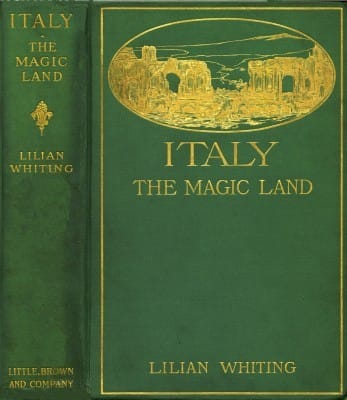
Lilian Whiting's 1907 meditation on Italy reads less like a guidebook than like a love letter to a world that was already disappearing. Whiting arrived in Rome during its golden age as a gathering point for artists, writers, and thinkers from across the globe, and her book captures the last tremors of that luminous moment before the Great War swept it all away. She writes about the cafés where Browning discussed poetry with younger admirers, the studios where American women painters challenged convention, the ancient streets that still hummed with creative energy. This isn't mere tourism; it's a document of what it meant to be young and ambitious in a city that made immortality seem possible. Whiting's observations carry the particular weight of someone who knew she was witnessing something precious and finite. For readers today, the book functions as both time capsule and elegy, preserving the atmosphere of a Rome that no longer exists while contemplating why certain places become crucibles for artistic transformation.
Editions
Link to this book
Add a free, dofollow link to Lex on your blog, forum, syllabus, or reading list.

<a href="https://lex-books.com/book/italy-the-magic-land-6c82e1f6-bb64-412d-b765-c26180408310"><img src="https://lex-books.com/badges/read-on-lex.svg" alt="Read Italy, the Magic Land by Lilian Whiting free on Lex" width="160" height="40"></a>[](https://lex-books.com/book/italy-the-magic-land-6c82e1f6-bb64-412d-b765-c26180408310)[url=https://lex-books.com/book/italy-the-magic-land-6c82e1f6-bb64-412d-b765-c26180408310][img]https://lex-books.com/badges/read-on-lex.svg[/img][/url]Read Italy, the Magic Land by Lilian Whiting free on Lex: https://lex-books.com/book/italy-the-magic-land-6c82e1f6-bb64-412d-b765-c26180408310Cite this book
Reading this edition for a paper or guide? Copy a citation.
Whiting, Lilian. Italy, the Magic Land. Lex, lex-books.com/book/italy-the-magic-land-6c82e1f6-bb64-412d-b765-c26180408310.Whiting, L. (1907). Italy, the Magic Land. Lex. https://lex-books.com/book/italy-the-magic-land-6c82e1f6-bb64-412d-b765-c26180408310Whiting, Lilian. Italy, the Magic Land. Lex. https://lex-books.com/book/italy-the-magic-land-6c82e1f6-bb64-412d-b765-c26180408310.