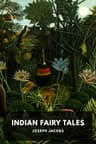
Indian Fairy Tales
1892
These aren't just children's stories. They're living artifacts from the mouth of colonial India, transcribed from Hindústání as they were told by ayahs and servants to a young collector in Calcutta and Simla. The magic here isn't decorative. A princess weighs no more than a flower. A tiger argues theology with a Brahman. A fakir teaches a prince humility through riddles. Animals speak, demons mated with mortals, and the boundary between the human and divine remains deliciously porous. The twenty-nine tales gathered here pulse with old wisdom: outwit your enemies, honor your parents, beware of clever wives and talking animals who may be gods in disguise. What makes this collection endure isn't its whimsy alone, though the whimsy is considerable. It's the glimpse behind the curtain of empire into households where these stories were currency, comfort, and instruction. Read it for the pure pleasure of storytelling that hasn't been sanitized for Western sensibilities. Read it as cultural artifact. Either way, you'll find tales where magic has teeth and morality costs something.
Editions
X-Ray
“Now both Sun and Wind were greedy and selfish. They enjoyed the great feast that had been prepared for them, without a thought of saving any of it to take home to their mother--but the gentle Moon did not forget her. Of every dainty dish that was brought round, she placed a small portion under one of her beautiful long finger-nails, that Star might also have a share in the treat.””
— Unknown
“The Bodhisatta was at one time born in the region of Himavanta as a white crane;””
— Unknown
“What is the price of this cloth?" one trader will””
— Unknown
“Now Balna's son was a bright, clever boy, so he said, "Do not fear, dear mother; the first thing to do is to discover how far the Magician's power extends, in order that we may be able to liberate my father and uncles, whom he has imprisoned in the form of rocks and trees. You have spoken to him angrily for twelve long years; now rather speak kindly. Tell him you have given up all hopes of again seeing the husband you have so long mourned, and say you are willing to marry him.””
— Unknown
Link to this book
Add a free, dofollow link to Lex on your blog, forum, syllabus, or reading list.

<a href="https://lex-books.com/book/indian-fairy-tales-c20a766d-30d2-45ab-b062-663f9e53384a"><img src="https://lex-books.com/badges/read-on-lex.svg" alt="Read Indian Fairy Tales by Unknown free on Lex" width="160" height="40"></a>[](https://lex-books.com/book/indian-fairy-tales-c20a766d-30d2-45ab-b062-663f9e53384a)[url=https://lex-books.com/book/indian-fairy-tales-c20a766d-30d2-45ab-b062-663f9e53384a][img]https://lex-books.com/badges/read-on-lex.svg[/img][/url]Read Indian Fairy Tales by Unknown free on Lex: https://lex-books.com/book/indian-fairy-tales-c20a766d-30d2-45ab-b062-663f9e53384aCite this book
Reading this edition for a paper or guide? Copy a citation.
Unknown. Indian Fairy Tales. Lex, lex-books.com/book/indian-fairy-tales-c20a766d-30d2-45ab-b062-663f9e53384a.Unknown (1892). Indian Fairy Tales. Lex. https://lex-books.com/book/indian-fairy-tales-c20a766d-30d2-45ab-b062-663f9e53384aUnknown. Indian Fairy Tales. Lex. https://lex-books.com/book/indian-fairy-tales-c20a766d-30d2-45ab-b062-663f9e53384a.