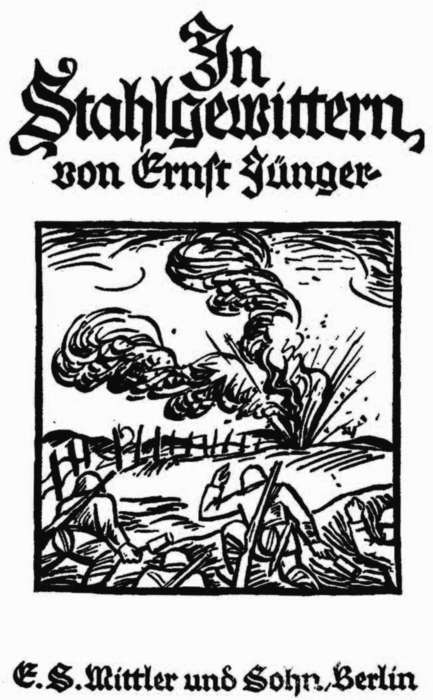
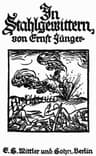
In Stahlgewittern, Aus Dem Tagebuch Eines Stoßtruppführers
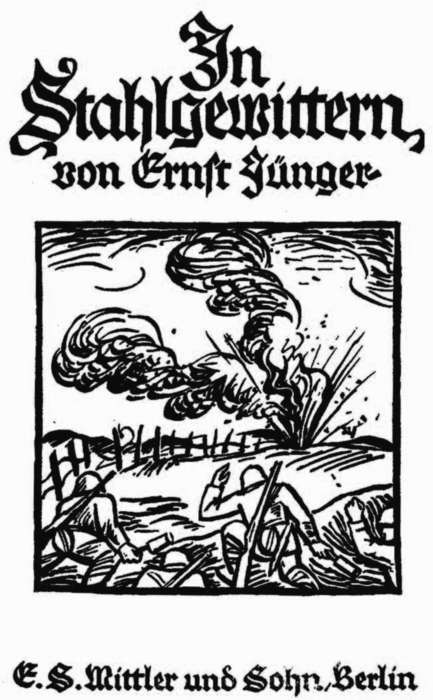
In Stahlgewittern, Aus Dem Tagebuch Eines Stoßtruppführers
This is one of the most unflinching, most controversial war memoirs ever written. Ernst Jünger was nineteen when he volunteered for the German army in 1914, and he emerged four years later having survived hundreds of battles, leading raiding parties, defending trenches against British attacks, watching comrades die in ways too horrible to describe. But this is not a protest document. It is something far more unsettling: a memoir that finds meaning, even a kind of terrible beauty, in the catastrophe. Jünger writes about war the way a poet writes about nature, with precision, with reverence, with an observer's extraordinary detachment. He does not flinch from the gore. He does not ask why. He simply records what it felt like to be young and alive and in constant danger, to discover that the worst circumstances can also be the most exhilarating. Published in 1920, Storm of Steel became an immediate worldwide sensation. It remains essential reading for anyone who wants to understand how war actually feels, not as politics or tragedy, but as raw experience.
Editions
X-Ray
“Habent sua fata libelli et balli [Books and bullets have their own destinies]””
— Ernst Jünger
“Throughout the war, it was always my endeavour to view my opponent without animus, and to form an opinion of him as a man on the basis of the courage he showed. I would always try and seek him out in combat and kill him, and I expected nothing else from him. But never did I entertain mean thoughts of him. When prisoners fell into my hands, later on, I felt responsible for their safety, and would always do everything in my power for them.””
— Ernst Jünger
“We had come from lecture halls, school desks and factory workbenches, and over the brief weeks of training, we had bonded together into one large and enthusiastic group. Grown up in an age of security, we shared a yearning for danger, for the experience of the extraordinary. We were enraptured by war.””
— Ernst Jünger
“In war you learn your lessons, and they stay learned, but the tuition fees are high.””
— Ernst Jünger
“When once it is no longer possible to understand how a man gives his life for his country--and the time will come--then all is over with that faith also, and the idea of the Fatherland is dead; and then, perhaps, we shall be envied, as we envy the saints their inward and irresistible strength.””
— Ernst Jünger
“This was the home of the great god Pain, and for the first time I looked through a devilish chink into the depths of his realm. And fresh shells came down all the time.””
— Ernst Jünger
“Trench fighting is the bloodiest, wildest, most brutal of all ... Of all the war's exciting moments none is so powerful as the meeting of two storm troop leaders between narrow trench walls. There's no mercy there, no going back, the blood speaks from a shrill cry of recognition that tears itself from one's breast like a nightmare.””
— Ernst Jünger
“A bloody scene with no witnesses was about to happen. It was a relief to me, finally, to have the foe in front of me and within reach. I set the mouth of the pistol at the man’s temple – he was too frightened to move – while my other fist grabbed hold of his tunic, feeling medals and badges of rank. An officer; he must have held some command post in these trenches. With a plaintive sound, he reached into his pocket, not to pull out a weapon, but a photograph which he held up to me. I saw him on it, surrounded by numerous family, all standing on a terrace. It was a plea from another world. Later, I thought it was blind chance that I let him go and plunged onward. That one man of all often appeared in my dreams. I hope that meant he got to see his homeland again.””
— Ernst Jünger
“At the sight of the Neckar slopes wreathed with flowering cherry trees, I had a strong sense of having come home. What a beautiful country it was, and eminently worth our blood and our lives. Never before had I felt its charm so clearly. I had good and serious thoughts, and for the first time I sensed that this war was more than just a great adventure.””
— Ernst Jünger
Link to this book
Add a free, dofollow link to Lex on your blog, forum, syllabus, or reading list.

<a href="https://lex-books.com/book/in-stahlgewittern-aus-dem-tagebuch-eines-sto-truppf-hrers-8ff5e95d-71c8-4a99-ad40-a32129d97e36"><img src="https://lex-books.com/badges/read-on-lex.svg" alt="Read In Stahlgewittern, Aus Dem Tagebuch Eines Stoßtruppführers by Ernst Jünger free on Lex" width="160" height="40"></a>[](https://lex-books.com/book/in-stahlgewittern-aus-dem-tagebuch-eines-sto-truppf-hrers-8ff5e95d-71c8-4a99-ad40-a32129d97e36)[url=https://lex-books.com/book/in-stahlgewittern-aus-dem-tagebuch-eines-sto-truppf-hrers-8ff5e95d-71c8-4a99-ad40-a32129d97e36][img]https://lex-books.com/badges/read-on-lex.svg[/img][/url]Read In Stahlgewittern, Aus Dem Tagebuch Eines Stoßtruppführers by Ernst Jünger free on Lex: https://lex-books.com/book/in-stahlgewittern-aus-dem-tagebuch-eines-sto-truppf-hrers-8ff5e95d-71c8-4a99-ad40-a32129d97e36Cite this book
Reading this edition for a paper or guide? Copy a citation.
Jünger, Ernst. In Stahlgewittern, Aus Dem Tagebuch Eines Stoßtruppführers. Lex, lex-books.com/book/in-stahlgewittern-aus-dem-tagebuch-eines-sto-truppf-hrers-8ff5e95d-71c8-4a99-ad40-a32129d97e36.Jünger, E. (n.d.). In Stahlgewittern, Aus Dem Tagebuch Eines Stoßtruppführers. Lex. https://lex-books.com/book/in-stahlgewittern-aus-dem-tagebuch-eines-sto-truppf-hrers-8ff5e95d-71c8-4a99-ad40-a32129d97e36Jünger, Ernst. In Stahlgewittern, Aus Dem Tagebuch Eines Stoßtruppführers. Lex. https://lex-books.com/book/in-stahlgewittern-aus-dem-tagebuch-eines-sto-truppf-hrers-8ff5e95d-71c8-4a99-ad40-a32129d97e36.