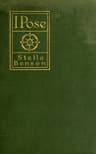
I Pose
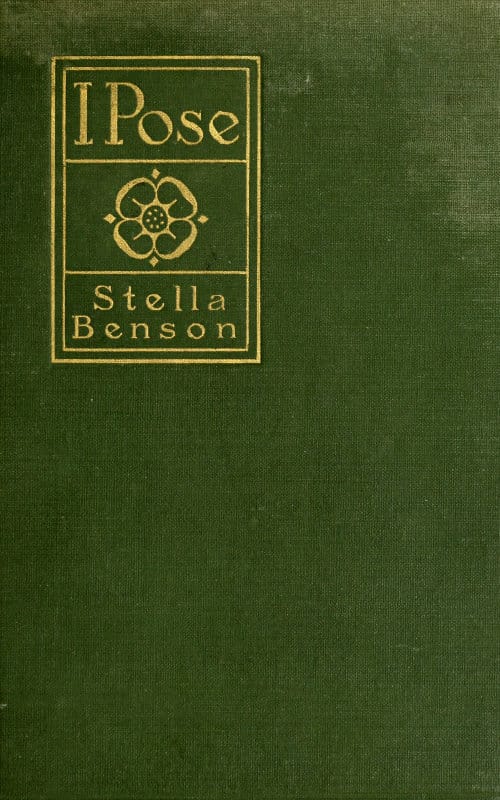
In 1915, Stella Benson announced herself with a novel unlike anything else being written. The Gardener, twenty-three and catastrophically earnest, leaves his shabby London boarding house for a walking journey toward the coast, falling headlong into every trap youth sets. He encounters The Suffragette, a woman burning with political conviction who promptly rejects him. But here's the twist that haunts her: she likes him anyway. Can she carve space in her busy passion for women's rights for something as inconvenient as love? The answer Benson delivers is neither simple nor comfortable. What makes I Pose remarkable is its结构. A sprawling 302-page first chapter followed by a mere 8-page epilogue inverts every convention of narrative economy, mirroring the Gardener's own disproportionate emotional scrambles. Benson speaks directly to readers with cheeky asides, spinning absurd comedy into wise satire. She is blindingly honest about her characters' uncertain parts, their poses and pretensions, the gap between how they present and who they actually are. This is a book about the performance of identity, and the terrifying possibility that someone might see through it. One of the most acclaimed debuts of its generation, I Pose endures because it captures something universal: the comedy and tragedy of wanting, and the ungraceful ways we learn who we are.
Editions
Link to this book
Add a free, dofollow link to Lex on your blog, forum, syllabus, or reading list.

<a href="https://lex-books.com/book/i-pose-1dc66a46-0511-408b-b594-81f9d008a43e"><img src="https://lex-books.com/badges/read-on-lex.svg" alt="Read I Pose by Stella Benson free on Lex" width="160" height="40"></a>[](https://lex-books.com/book/i-pose-1dc66a46-0511-408b-b594-81f9d008a43e)[url=https://lex-books.com/book/i-pose-1dc66a46-0511-408b-b594-81f9d008a43e][img]https://lex-books.com/badges/read-on-lex.svg[/img][/url]Read I Pose by Stella Benson free on Lex: https://lex-books.com/book/i-pose-1dc66a46-0511-408b-b594-81f9d008a43eCite this book
Reading this edition for a paper or guide? Copy a citation.
Benson, Stella. I Pose. Lex, lex-books.com/book/i-pose-1dc66a46-0511-408b-b594-81f9d008a43e.Benson, S. (n.d.). I Pose. Lex. https://lex-books.com/book/i-pose-1dc66a46-0511-408b-b594-81f9d008a43eBenson, Stella. I Pose. Lex. https://lex-books.com/book/i-pose-1dc66a46-0511-408b-b594-81f9d008a43e.