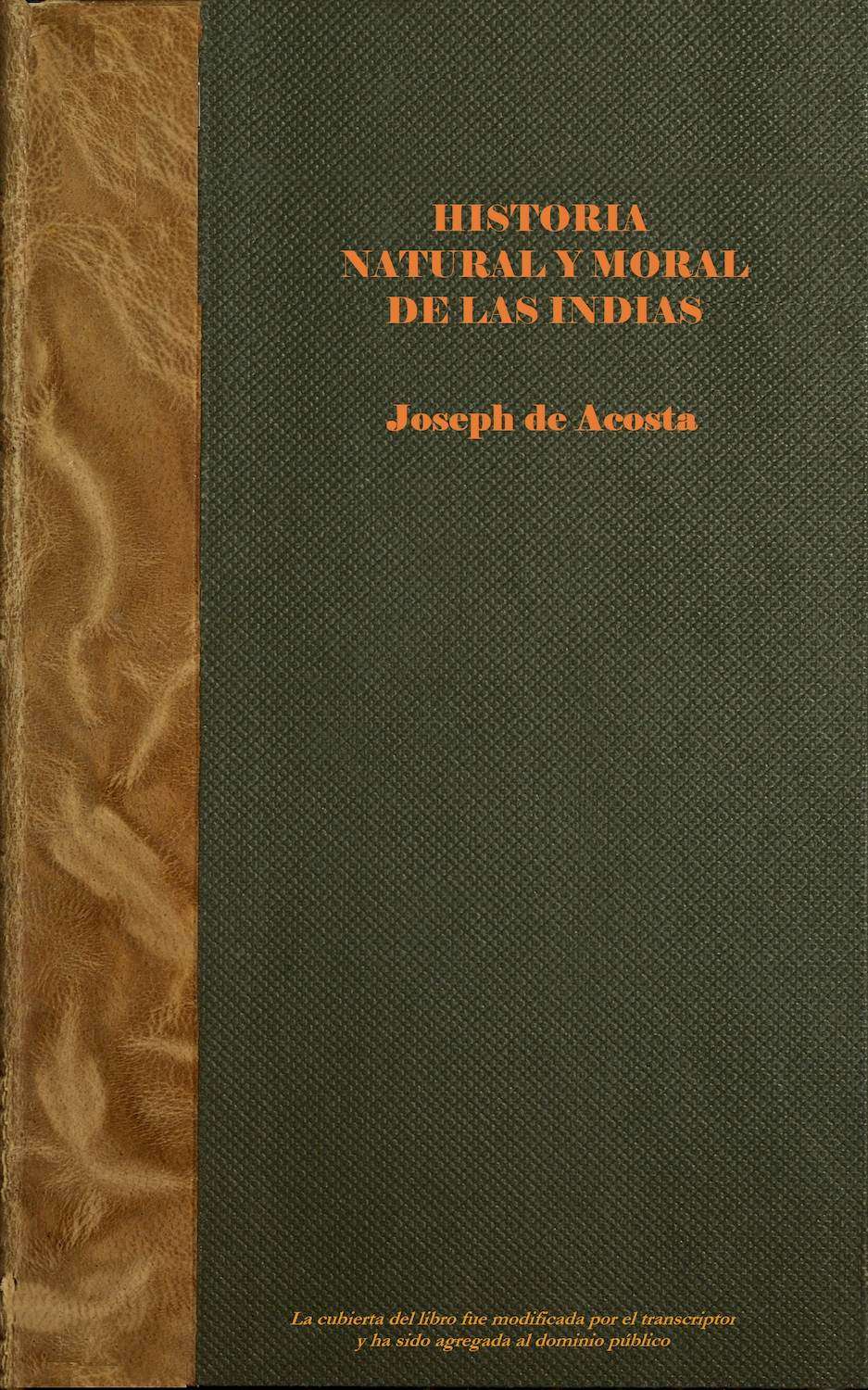
Historia Natural Y Moral De Las Indias (vol. 1 of 2)
1590
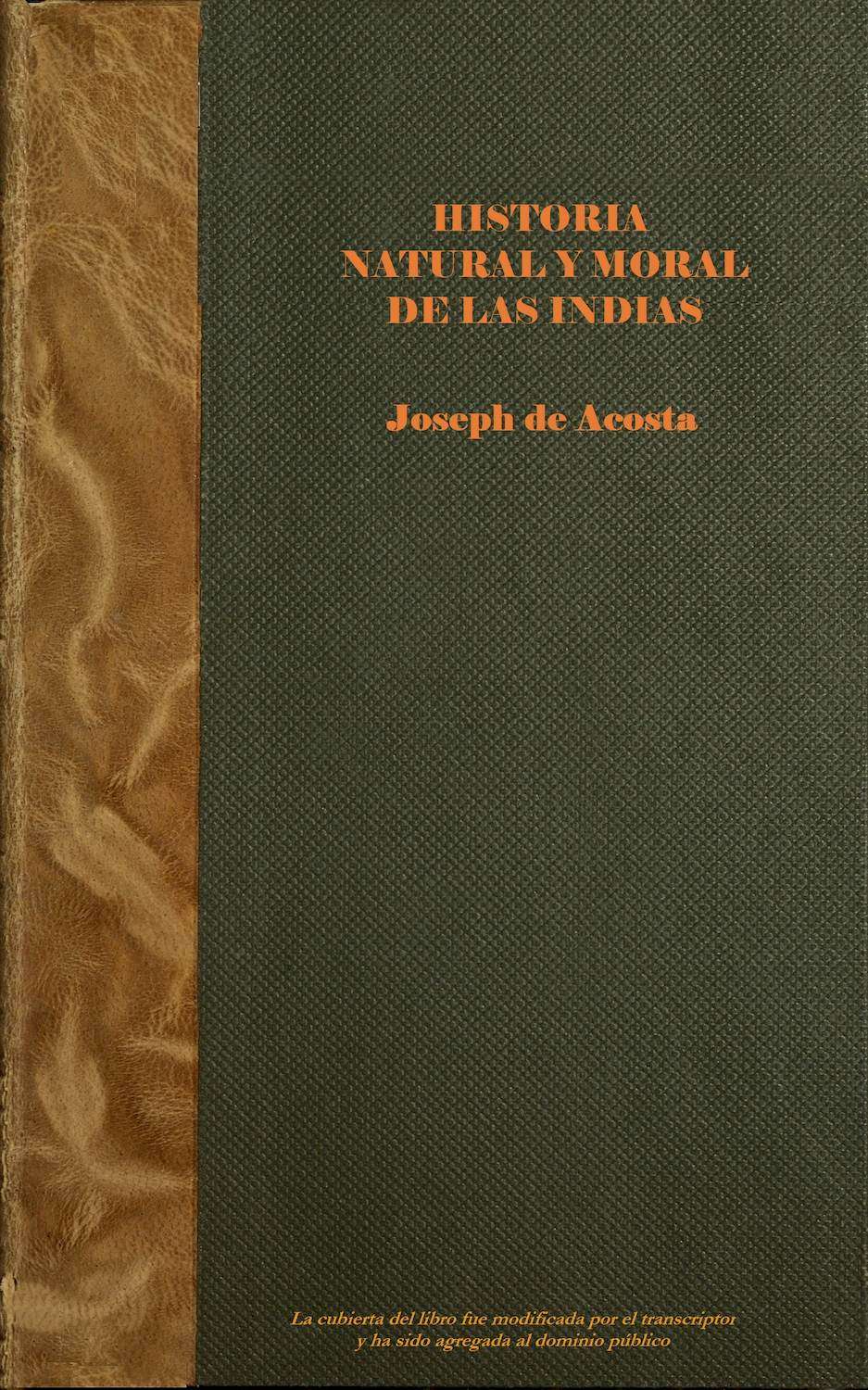
Historia Natural Y Moral De Las Indias (vol. 1 of 2)
1590
One of the first European eyes to truly see the Americas wanted to make sense of it all. José de Acosta, a Spanish Jesuit who spent seventeen years missionary in Peru and Mexico, published this account in 1590, and it reshaped how the Old World understood the New. He describes everything from Andean geology to Amazonian wildlife with an empiricist's curiosity, but he also turns his gaze toward the indigenous peoples themselves: their religions, governments, customs, and societies. Acosta is no neutral observer. He writes from within a colonial framework, seeking to reconcile what he sees with Christian cosmology. Yet his observations are often startling in their precision, and his conclusions occasionally leap centuries ahead of his time. Most remarkably, he hypothesizes that America's indigenous peoples migrated from Asia , an idea he puts forward more than a hundred years before Europeans would learn of the Bering Strait. This is an essential document for anyone interested in the birth of European thinking about the Americas, the collision of worldviews, and the complicated origins of American studies.
Editions

Link to this book
Add a free, dofollow link to Lex on your blog, forum, syllabus, or reading list.

<a href="https://lex-books.com/book/historia-natural-y-moral-de-las-indias-vol-1-of-2-28a0fec1-ca68-4768-b8f2-3cc53f451ba9"><img src="https://lex-books.com/badges/read-on-lex.svg" alt="Read Historia Natural Y Moral De Las Indias (vol. 1 of 2) by José de Acosta free on Lex" width="160" height="40"></a>[](https://lex-books.com/book/historia-natural-y-moral-de-las-indias-vol-1-of-2-28a0fec1-ca68-4768-b8f2-3cc53f451ba9)[url=https://lex-books.com/book/historia-natural-y-moral-de-las-indias-vol-1-of-2-28a0fec1-ca68-4768-b8f2-3cc53f451ba9][img]https://lex-books.com/badges/read-on-lex.svg[/img][/url]Read Historia Natural Y Moral De Las Indias (vol. 1 of 2) by José de Acosta free on Lex: https://lex-books.com/book/historia-natural-y-moral-de-las-indias-vol-1-of-2-28a0fec1-ca68-4768-b8f2-3cc53f451ba9Cite this book
Reading this edition for a paper or guide? Copy a citation.
Acosta, José de. Historia Natural Y Moral De Las Indias (vol. 1 of 2). Lex, lex-books.com/book/historia-natural-y-moral-de-las-indias-vol-1-of-2-28a0fec1-ca68-4768-b8f2-3cc53f451ba9.Acosta, J. D. (1590). Historia Natural Y Moral De Las Indias (vol. 1 of 2). Lex. https://lex-books.com/book/historia-natural-y-moral-de-las-indias-vol-1-of-2-28a0fec1-ca68-4768-b8f2-3cc53f451ba9Acosta, José de. Historia Natural Y Moral De Las Indias (vol. 1 of 2). Lex. https://lex-books.com/book/historia-natural-y-moral-de-las-indias-vol-1-of-2-28a0fec1-ca68-4768-b8f2-3cc53f451ba9.