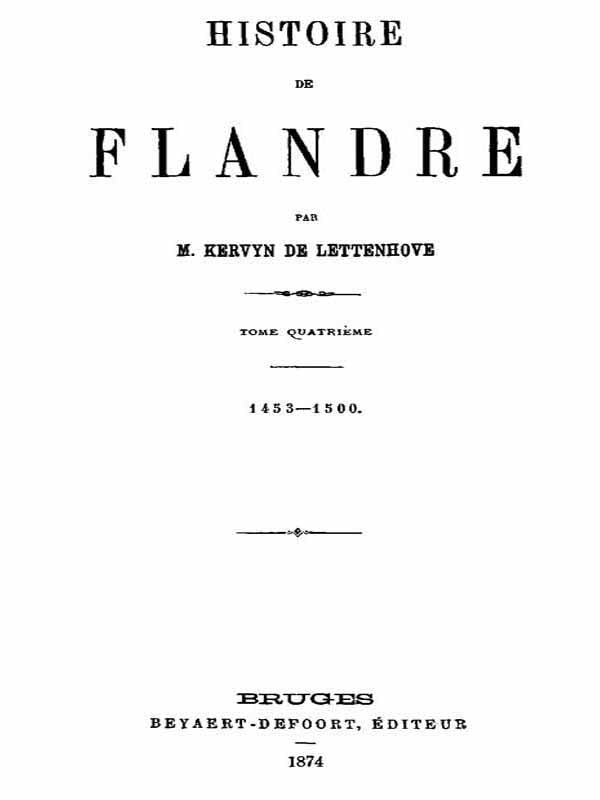
Histoire De Flandre (t. 4/4)
1881
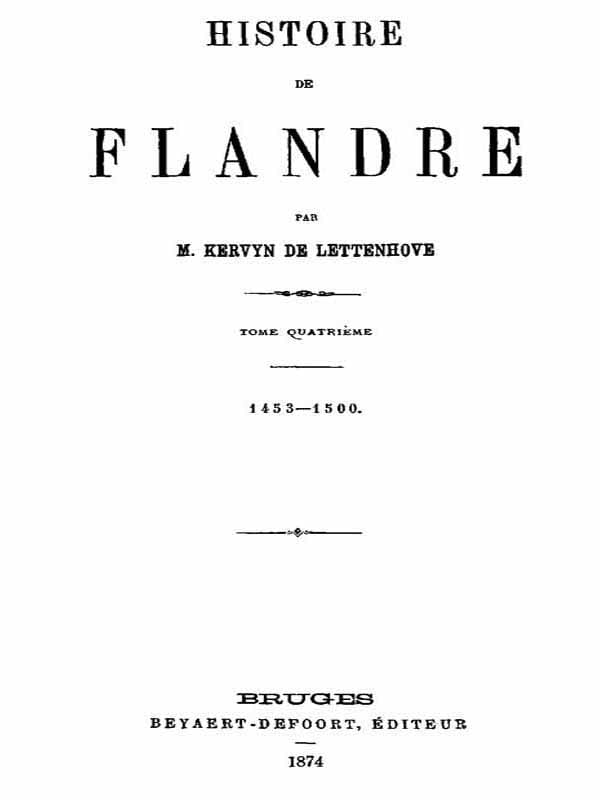
Histoire De Flandre (t. 4/4)
Joseph Marie Bruno Constantin, Baron Kervyn de Lettenhove
1881
A historical account written in the late 19th century. This volume chronicles events in Flanders from 1453 to 1500, focusing on the political landscape and conflicts of the time, particularly the power struggles involving the House of Burgundy and its relations with France and England. The narrative likely delves into significant figures and themes, such as crusades, territorial ambitions, and familial discord. The opening of the narrative begins with the backdrop of new crusade projects initiated by the Duke of Burgundy, showcasing his aim to consolidate power and fulfill his ambitions. It describes a grand banquet at Lille, where the duke pledges support for a crusade against Islamic forces, symbolizing both ambition and religious fervor. As the story unfolds, it introduces key players, including the Dauphin and the Duke of Burgundy, examining their relationships and conflicts, particularly the notable tensions within the ducal family. This opening establishes the book's focus on political intrigue and the complexities of 15th-century European power dynamics.
Editions
X-Ray
The author and historian who compiled this comprehensive history of Flanders. He presents a scholarly and detailed account of the political and social developments in the region during the 15th century.
Duke of Burgundy who ruled for nearly half a century and brought glory to the Burgundian dynasty. Known for his magnificence, diplomatic skills, and the famous Feast of the Pheasant where he vowed to lead a crusade.
Duke of Burgundy, son of Philip the Good. Ambitious, violent, and ultimately tragic figure who died at the Battle of Nancy. Known for his conflicts with Louis XI and harsh treatment of Flemish communes.
King of France, former Dauphin who found refuge in Burgundian lands. Cunning, manipulative ruler who used intrigue and corruption to weaken his enemies, particularly the House of Burgundy.
About Histoire De Flandre (t. 4/4)
Chapter Summaries
- XVIII
- Covers Philip the Good's crusading ambitions including the Feast of the Pheasant, the arrival of the future Louis XI as Dauphin seeking refuge, and the growing conflicts between Philip and his son Charles.
- XIX
- Chronicles Charles the Bold's reign, his conflicts with Louis XI, his harsh suppression of Flemish revolts, his imperial ambitions, and his ultimate defeat and death at Nancy.
- XX
- Details the young Marie's struggle to maintain her inheritance, the execution of Burgundian counselors, the restoration of Flemish privileges, and her marriage to Maximilian of Austria.
Key Themes
- Feudal Decline and Royal Centralization
- The text chronicles the end of feudal fragmentation as Louis XI systematically destroys the great duchies and centralizes power under the French crown, representing a major shift in European political organization.
- Communal Liberty vs. Princely Authority
- The ongoing tension between Flemish cities seeking to maintain their ancient privileges and the increasingly absolute power of their rulers, culminating in the charters granted by Marie de Bourgogne.
- Political Intrigue and Betrayal
- The pervasive use of corruption, espionage, and treachery as tools of statecraft, exemplified by Louis XI's methods and the fate of counselors like Hugonet and Humbercourt.
Characters
- Joseph Marie Bruno Constantin, Baron Kervyn de Lettenhove(protagonist)
- The author and historian who compiled this comprehensive history of Flanders. He presents a scholarly and detailed account of the political and social developments in the region during the 15th century.
- Philippe le Bon (Philip the Good)(major)
- Duke of Burgundy who ruled for nearly half a century and brought glory to the Burgundian dynasty. Known for his magnificence, diplomatic skills, and the famous Feast of the Pheasant where he vowed to lead a crusade.
- Charles le Hardi (Charles the Bold)(major)
- Duke of Burgundy, son of Philip the Good. Ambitious, violent, and ultimately tragic figure who died at the Battle of Nancy. Known for his conflicts with Louis XI and harsh treatment of Flemish communes.
- Louis XI(antagonist)
- King of France, former Dauphin who found refuge in Burgundian lands. Cunning, manipulative ruler who used intrigue and corruption to weaken his enemies, particularly the House of Burgundy.
- Marie de Bourgogne(major)
- Young heiress of Charles the Bold, became Duchess of Burgundy at age 19. Struggled to maintain her inheritance against Louis XI while granting privileges to Flemish communes to secure their support.
- Maximilien d'Autriche(major)
- Young Austrian duke who married Marie de Bourgogne in 1477. Brought imperial support to the Flemish cause against French expansion, though initially inexperienced in governance.
Link to this book
Add a free, dofollow link to Lex on your blog, forum, syllabus, or reading list.

<a href="https://lex-books.com/book/histoire-de-flandre-t-4-4-cb4c279d-0d1c-4054-8c70-7cb9e36e6a10"><img src="https://lex-books.com/badges/read-on-lex.svg" alt="Read Histoire De Flandre (t. 4/4) by Joseph Marie Bruno Constantin, Baron Kervyn de Lettenhove free on Lex" width="160" height="40"></a>[](https://lex-books.com/book/histoire-de-flandre-t-4-4-cb4c279d-0d1c-4054-8c70-7cb9e36e6a10)[url=https://lex-books.com/book/histoire-de-flandre-t-4-4-cb4c279d-0d1c-4054-8c70-7cb9e36e6a10][img]https://lex-books.com/badges/read-on-lex.svg[/img][/url]Read Histoire De Flandre (t. 4/4) by Joseph Marie Bruno Constantin, Baron Kervyn de Lettenhove free on Lex: https://lex-books.com/book/histoire-de-flandre-t-4-4-cb4c279d-0d1c-4054-8c70-7cb9e36e6a10Cite this book
Reading this edition for a paper or guide? Copy a citation.
Joseph Marie Bruno Constantin, Baron Kervyn de Lettenhove. Histoire De Flandre (t. 4/4). Lex, lex-books.com/book/histoire-de-flandre-t-4-4-cb4c279d-0d1c-4054-8c70-7cb9e36e6a10.Joseph Marie Bruno Constantin, B. K. D. L. (1881). Histoire De Flandre (t. 4/4). Lex. https://lex-books.com/book/histoire-de-flandre-t-4-4-cb4c279d-0d1c-4054-8c70-7cb9e36e6a10Joseph Marie Bruno Constantin, Baron Kervyn de Lettenhove. Histoire De Flandre (t. 4/4). Lex. https://lex-books.com/book/histoire-de-flandre-t-4-4-cb4c279d-0d1c-4054-8c70-7cb9e36e6a10.