What would you like to read?Search books, authors, genres, shelves, users...
Search books, authors, genres, shelves, users...Search books, authors, genres, shelves, users...

What would you like to read?Search books, authors, genres, shelves, users...
Search books, authors, genres, shelves, users...Search books, authors, genres, shelves, users...
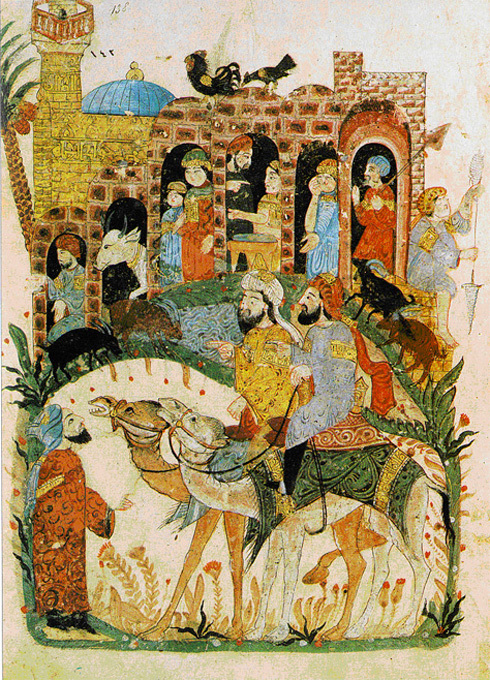
1054-1122
No author biography available.


1832
Hariri
1832
Translated by C. R. S. (Carl Rudolph Samuel) Peiper
A collection of literary narratives likely written in the late 10th century. The work consists of a series of dialogues and stories, primarily featuring characters such as Abu Seid and Haret, who explore themes of eloquence, human experience, and moral instruction through intricate storytelling and verse. The narratives are characterized by their rhymed prose, embodying the tradition of Arabic storytelling known as ''Makamat.'' At the start of the book, we are introduced to the context of its creation, set during gatherings of learned men who shared and critiqued each other's tales. The opening includes discussions on the nature of Hariri's work, emphasizing its stylistic elegance and intricate themes involving humanity's struggles and ethical considerations. We meet the character Haret Hammamita, a wanderer reflecting on his experiences and interactions with others, as well as his admiration for Abu Seid, portrayed as a master of eloquence. The text combines literary aspects with philosophical musings, inviting readers into a rich world of Middle Eastern literature and culture.
