Hanging in Chains
1891
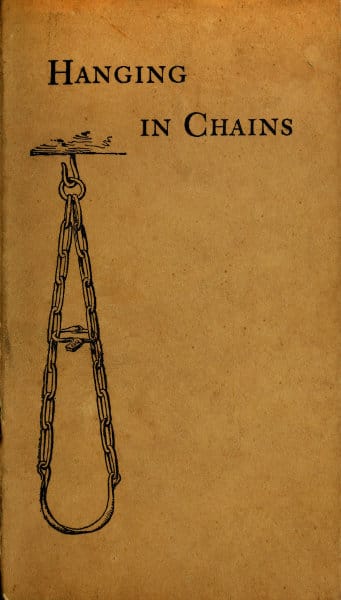
Hanging in Chains
1891
In the annals of criminal justice, few practices are as chilling as gibbeting: the post-execution display of corpses in iron cages, left to rot in public places as a warning to potential criminals. Albert Hartshorne's 1891 study excavates this macabre chapter of English history with scholarly rigor and an undertone of gothic unease. He traces the evolution of capital punishment from ancient burial customs through the full flowering of gibbeting as state terror, examining the legal frameworks that sanctioned these horrors, the notorious cases that captured public imagination, and the cultural logic that made such displays seem not just acceptable but necessary. The book is at its most disturbing when revealing how communities lived alongside these hanging corpses for years, how children played near them, how they became landmarks in the landscape of fear. Hartshorne uses biblical and classical references to contextualize the profound shame attached to improper burial, showing why denying criminals this basic dignity was considered the ultimate punishment. For readers drawn to dark history, true crime, or the evolution of justice, this remains a haunting account of how Enlightenment societies justified the unspeakable in the name of public order.
Editions
X-Ray
The author and narrator, a Fellow of the Society of Antiquaries (F.S.A.) who serves as guide through the historical examination of capital punishment. He approaches the subject with scholarly detachment while maintaining moral sensitivity to the horrors described.
About Hanging in Chains
Chapter Summaries
- Preface
- Hartshorne explains his purpose in documenting the history of gibbeting, noting that while removed by time from these practices, the subject has archaeological and legal interest. He acknowledges the grim nature of the topic but argues for its historical value.
- 1
- Traces gibbeting from ancient Jewish, Egyptian, Greek, and Roman practices. Explores the universal desire for proper burial and horror at exposure, including biblical examples and the crucifixion of Christ.
- 2
- Documents the development of gibbeting in England from Anglo-Saxon times through medieval period. Discusses high treason punishments, drawing and quartering, and the distinction between gallows and gibbet.
Key Themes
- Evolution of Justice and Humanity
- The book traces how concepts of justice have evolved from brutal public spectacles to more humane practices. Hartshorne repeatedly emphasizes how far society has progressed from the 'revolting and disgraceful spectacle' of gibbeting.
- Death and Burial Customs
- Beginning with ancient Jewish, Egyptian, and Greek traditions, the work explores the universal human desire for proper burial and the horror of being denied this dignity through public exposure.
- Deterrence vs. Spectacle
- The book examines whether public punishment actually deterred crime or merely provided entertainment for the masses, noting how gibbets became tourist attractions rather than effective warnings.
Characters
- Albert Hartshorne(protagonist)
- The author and narrator, a Fellow of the Society of Antiquaries (F.S.A.) who serves as guide through the historical examination of capital punishment. He approaches the subject with scholarly detachment while maintaining moral sensitivity to the horrors described.
Link to this book
Add a free, dofollow link to Lex on your blog, forum, syllabus, or reading list.

<a href="https://lex-books.com/book/hanging-in-chains-5e57dfb5-0033-4cd9-82ce-3baee1c967ee"><img src="https://lex-books.com/badges/read-on-lex.svg" alt="Read Hanging in Chains by Albert Hartshorne free on Lex" width="160" height="40"></a>[](https://lex-books.com/book/hanging-in-chains-5e57dfb5-0033-4cd9-82ce-3baee1c967ee)[url=https://lex-books.com/book/hanging-in-chains-5e57dfb5-0033-4cd9-82ce-3baee1c967ee][img]https://lex-books.com/badges/read-on-lex.svg[/img][/url]Read Hanging in Chains by Albert Hartshorne free on Lex: https://lex-books.com/book/hanging-in-chains-5e57dfb5-0033-4cd9-82ce-3baee1c967eeCite this book
Reading this edition for a paper or guide? Copy a citation.
Hartshorne, Albert. Hanging in Chains. Lex, lex-books.com/book/hanging-in-chains-5e57dfb5-0033-4cd9-82ce-3baee1c967ee.Hartshorne, A. (1891). Hanging in Chains. Lex. https://lex-books.com/book/hanging-in-chains-5e57dfb5-0033-4cd9-82ce-3baee1c967eeHartshorne, Albert. Hanging in Chains. Lex. https://lex-books.com/book/hanging-in-chains-5e57dfb5-0033-4cd9-82ce-3baee1c967ee.


