硝子戸の中 (Garasudono uchi)
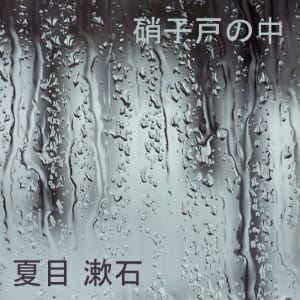
This is Sōseki at his most exposed. Written in the final years of his life, when illness had withdrawn him from the world, these essays are fragments of a great mind taking stock. The title itself, 'Within the Glass Door,' hints at the central image: that permeable barrier between the private self and the outside, between observation and participation. Sōseki writes about his work, his readers, his failing body, and the approaching darkness with a frankness that never tips into self-pity. What emerges is the portrait of an artist confronting his own legacy, asking what it all meant, and finding answers that resonate far beyond their immediate moment. The prose is crystalline in its clarity, each sentence carrying the weight of someone who has no time left for pretension. These essays matter because they offer something rare in literature: the view from inside a great mind as it faces the finite. They are Sōseki's gift to readers, and his reckoning with the reader's memory of him.
Editions

Link to this book
Add a free, dofollow link to Lex on your blog, forum, syllabus, or reading list.

<a href="https://lex-books.com/book/garasudono-uchi-61854d0e-5d51-4bef-b45e-c518aa37a756"><img src="https://lex-books.com/badges/read-on-lex.svg" alt="Read 硝子戸の中 (Garasudono uchi) by Sōseki Natsume free on Lex" width="160" height="40"></a>[](https://lex-books.com/book/garasudono-uchi-61854d0e-5d51-4bef-b45e-c518aa37a756)[url=https://lex-books.com/book/garasudono-uchi-61854d0e-5d51-4bef-b45e-c518aa37a756][img]https://lex-books.com/badges/read-on-lex.svg[/img][/url]Read 硝子戸の中 (Garasudono uchi) by Sōseki Natsume free on Lex: https://lex-books.com/book/garasudono-uchi-61854d0e-5d51-4bef-b45e-c518aa37a756Cite this book
Reading this edition for a paper or guide? Copy a citation.
Natsume, Sōseki. 硝子戸の中 (Garasudono uchi). Lex, lex-books.com/book/garasudono-uchi-61854d0e-5d51-4bef-b45e-c518aa37a756.Natsume, S. (n.d.). 硝子戸の中 (Garasudono uchi). Lex. https://lex-books.com/book/garasudono-uchi-61854d0e-5d51-4bef-b45e-c518aa37a756Natsume, Sōseki. 硝子戸の中 (Garasudono uchi). Lex. https://lex-books.com/book/garasudono-uchi-61854d0e-5d51-4bef-b45e-c518aa37a756.