Fountains Abbey: The Story of a Mediæval Monastery
1904
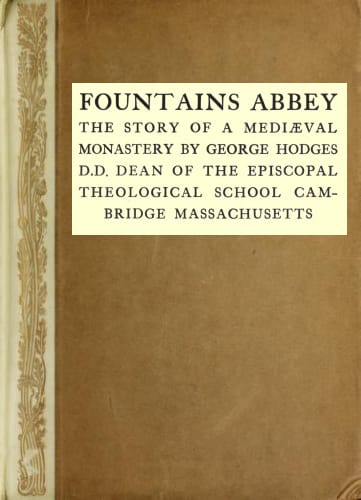
Fountains Abbey: The Story of a Mediæval Monastery
1904
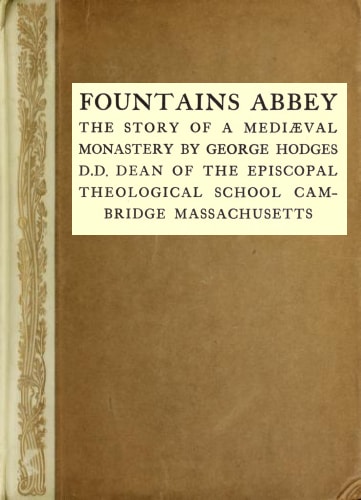
Fountains Abbey: The Story of a Mediæval Monastery, written by George Hodges and first published in 1904, provides a historical account of Fountains Abbey, a Cistercian monastery in North Yorkshire, England. The book details the founding, growth, and decline of the abbey, emphasizing the monastic principles of simplicity and devotion central to the Cistercian Order. It explores the daily lives of the monks, key figures like St. Stephen Harding and St. Bernard, and the abbey's interactions with its surrounding world, reflecting its significance in medieval England's religious and social landscape.
Editions
X-Ray
Englishman from Dorsetshire who founded the Cistercian Order. He established the monastery at Citeaux and enforced strict monastic discipline, rejecting worldly wealth and comfort.
Greatest churchman of his time who led the expansion of the Cistercian Order. He received Fountains Abbey into the Order and sent Geoffrey to teach them Cistercian ways.
Prior of St. Mary's York who led the exodus of thirteen monks to found Fountains Abbey. He became the first abbot and established the monastery's foundations.
Archbishop of York who supported the reforming monks and granted them land in the valley of the Skell. He established Fountains Abbey on his own property.
About Fountains Abbey: The Story of a Mediæval Monastery
Chapter Summaries
- 1
- Describes the founding of Fountains Abbey in 1132 when thirteen monks led by Prior Richard left the wealthy St. Mary's Abbey in York to establish a simpler Cistercian monastery. The chapter covers the origins of the Cistercian Order under Stephen Harding and St. Bernard, the monks' initial hardships under an elm tree, and their eventual prosperity.
- 2
- Chronicles the abbey's expansion through founding daughter monasteries across England and Europe, and the construction of the great buildings. Details the architectural development under various abbots from the 12th to 13th centuries, culminating in the completion of the church, cloister, and other monastic buildings.
- 3
- Provides detailed descriptions of monastic life including the layout and function of abbey buildings, daily routines of prayer and work, the roles of choir monks and lay brothers, dining customs, and the various offices and responsibilities within the community. This chapter brings the medieval monastery to life through specific details of daily existence.
Key Themes
- Religious Reform and Purity
- The Cistercian movement represented a return to primitive monastic simplicity, rejecting the wealth and comfort that had corrupted the Benedictines. This theme runs throughout the abbey's history from its austere founding to its eventual suppression.
- The Tension Between Spiritual and Material Wealth
- The abbey struggled with the paradox of needing material resources to support spiritual life while maintaining poverty as a virtue. This tension ultimately contributed to both its success and downfall.
- Community and Brotherhood
- The monastic community represented an alternative social structure based on shared spiritual purpose, mutual support, and collective labor. The daily life descriptions emphasize the importance of communal living and shared responsibility.
Characters
- Stephen Harding(major)
- Englishman from Dorsetshire who founded the Cistercian Order. He established the monastery at Citeaux and enforced strict monastic discipline, rejecting worldly wealth and comfort.
- St. Bernard(major)
- Greatest churchman of his time who led the expansion of the Cistercian Order. He received Fountains Abbey into the Order and sent Geoffrey to teach them Cistercian ways.
- Richard (Prior)(protagonist)
- Prior of St. Mary's York who led the exodus of thirteen monks to found Fountains Abbey. He became the first abbot and established the monastery's foundations.
- Archbishop Turstin(major)
- Archbishop of York who supported the reforming monks and granted them land in the valley of the Skell. He established Fountains Abbey on his own property.
- Serlo(major)
- Aged monk who lived at Fountains for ten years and later resided at Kirkstall. He provided the primary historical account of the abbey's foundation to Hugh the chronicler.
- Hugh of Kirkstall(major)
- Monk and chronicler who recorded Serlo's memories and continued the abbey's history. He wrote the Narratio de fundatione Fontanis Monasterii.
Link to this book
Add a free, dofollow link to Lex on your blog, forum, syllabus, or reading list.

<a href="https://lex-books.com/book/fountains-abbey-the-story-of-a-medi-val-monastery-a2169a4b-1ebb-4b7d-907d-db9df7e518d5"><img src="https://lex-books.com/badges/read-on-lex.svg" alt="Read Fountains Abbey: The Story of a Mediæval Monastery by George Hodges free on Lex" width="160" height="40"></a>[](https://lex-books.com/book/fountains-abbey-the-story-of-a-medi-val-monastery-a2169a4b-1ebb-4b7d-907d-db9df7e518d5)[url=https://lex-books.com/book/fountains-abbey-the-story-of-a-medi-val-monastery-a2169a4b-1ebb-4b7d-907d-db9df7e518d5][img]https://lex-books.com/badges/read-on-lex.svg[/img][/url]Read Fountains Abbey: The Story of a Mediæval Monastery by George Hodges free on Lex: https://lex-books.com/book/fountains-abbey-the-story-of-a-medi-val-monastery-a2169a4b-1ebb-4b7d-907d-db9df7e518d5Cite this book
Reading this edition for a paper or guide? Copy a citation.
Hodges, George. Fountains Abbey: The Story of a Mediæval Monastery. Lex, lex-books.com/book/fountains-abbey-the-story-of-a-medi-val-monastery-a2169a4b-1ebb-4b7d-907d-db9df7e518d5.Hodges, G. (1904). Fountains Abbey: The Story of a Mediæval Monastery. Lex. https://lex-books.com/book/fountains-abbey-the-story-of-a-medi-val-monastery-a2169a4b-1ebb-4b7d-907d-db9df7e518d5Hodges, George. Fountains Abbey: The Story of a Mediæval Monastery. Lex. https://lex-books.com/book/fountains-abbey-the-story-of-a-medi-val-monastery-a2169a4b-1ebb-4b7d-907d-db9df7e518d5.