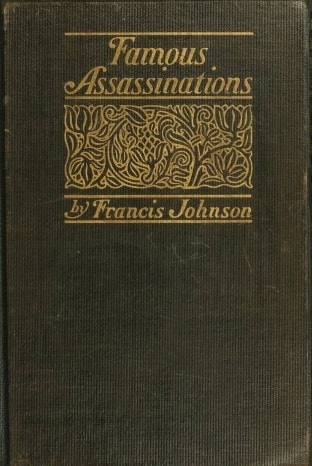
Famous Assassinations of History from Philip of Macedon, 336 B. C., to Alexander of Servia, a. D. 1903
1903
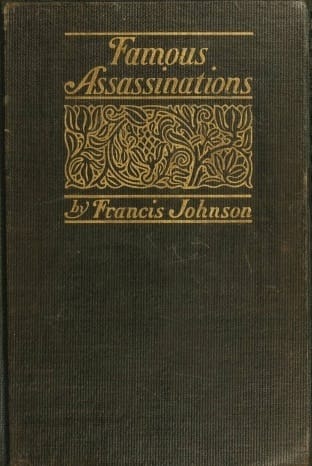
Famous Assassinations of History from Philip of Macedon, 336 B. C., to Alexander of Servia, a. D. 1903
1903
A historical account written in the early 20th century. The book chronicles a selection of notable political assassinations throughout history, spanning nearly 2,500 years, beginning with the assassination of Philip of Macedon and concluding with the murder of King Alexander and Queen Draga of Servia. The opening of the book provides context through a preface where Johnson explains his intention to gather accounts of thirty-one significant historical assassinations into one volume, highlighting their political impact and psychological aspects. He sets the stage by detailing the first assassination of Philip of Macedon, emphasizing its crucial role in paving the way for his son, Alexander the Great. The narrative intertwines the personal conflicts and tensions within Philip's court, particularly involving his wife, Olympias, and their son, creating a dramatic backdrop that culminates in the king's shocking murder during a public festival.
Editions
X-Ray
King of Macedon who conquered Greece and planned to invade Persia. Assassinated by Pausanias at his daughter's wedding in 336 B.C.
Roman tribune who introduced agrarian laws to help the poor. Assassinated by senators in 133 B.C. for his reforms.
Roman dictator and general who conquered Gaul and became supreme ruler. Assassinated by conspirators led by Brutus in 44 B.C.
Archbishop of Canterbury who defended Church rights against King Henry II. Assassinated in Canterbury Cathedral in 1170.
About Famous Assassinations of History from Philip of Macedon, 336 B. C., to Alexander of Servia, a. D. 1903
Chapter Summaries
- 1
- Philip of Macedon, at the height of his power after conquering Greece, is assassinated by Pausanias at his daughter's wedding in 336 B.C. The murder, possibly orchestrated by his ex-wife Olympias, leads to Alexander the Great's accession.
- 2
- Roman tribune Tiberius Gracchus introduces agrarian laws to help the poor but is killed by senators in 133 B.C. His death represents the first time economic class conflict was settled by violence in the Roman Republic.
- 3
- Julius Caesar, having become dictator of Rome, is assassinated by conspirators led by Brutus on the Ides of March, 44 B.C. The murder fails to restore the Republic and instead leads to civil war.
Key Themes
- Power and Corruption
- The book repeatedly demonstrates how absolute power corrupts absolutely, from Ivan the Terrible's monstrous cruelties to the degeneracy of Roman emperors. Many assassinations result from rulers who abuse their power beyond tolerable limits.
- Religious Fanaticism
- Religious conflicts drive many assassinations, from the murder of Hypatia by Christian mobs to Henry IV's death for religious tolerance. The book shows how religious extremism can justify the most brutal acts.
- Political Reform vs. Tradition
- Many victims were reformers trying to change established systems, like the Gracchi brothers advocating for the poor or Thomas à Becket defending church rights. Their deaths often represent the violent resistance to progressive change.
Characters
- Philip of Macedon(major)
- King of Macedon who conquered Greece and planned to invade Persia. Assassinated by Pausanias at his daughter's wedding in 336 B.C.
- Tiberius Gracchus(major)
- Roman tribune who introduced agrarian laws to help the poor. Assassinated by senators in 133 B.C. for his reforms.
- Julius Caesar(major)
- Roman dictator and general who conquered Gaul and became supreme ruler. Assassinated by conspirators led by Brutus in 44 B.C.
- Thomas à Becket(major)
- Archbishop of Canterbury who defended Church rights against King Henry II. Assassinated in Canterbury Cathedral in 1170.
- William Tell(major)
- Swiss patriot who assassinated the Austrian governor Gessler in 1307, sparking Swiss independence.
- Iñez de Castro(major)
- Portuguese noblewoman secretly married to Prince Pedro. Assassinated by King Alfonso's counselors in 1355.
Link to this book
Add a free, dofollow link to Lex on your blog, forum, syllabus, or reading list.

<a href="https://lex-books.com/book/famous-assassinations-of-history-from-philip-of-macedon-336-b-c-to-alexander-of--266647f4-1e01-42a4-b8f1-b9aa48d25ab5"><img src="https://lex-books.com/badges/read-on-lex.svg" alt="Read Famous Assassinations of History from Philip of Macedon, 336 B. C., to Alexander of Servia, a. D. 1903 by Francis Johnson free on Lex" width="160" height="40"></a>[](https://lex-books.com/book/famous-assassinations-of-history-from-philip-of-macedon-336-b-c-to-alexander-of--266647f4-1e01-42a4-b8f1-b9aa48d25ab5)[url=https://lex-books.com/book/famous-assassinations-of-history-from-philip-of-macedon-336-b-c-to-alexander-of--266647f4-1e01-42a4-b8f1-b9aa48d25ab5][img]https://lex-books.com/badges/read-on-lex.svg[/img][/url]Read Famous Assassinations of History from Philip of Macedon, 336 B. C., to Alexander of Servia, a. D. 1903 by Francis Johnson free on Lex: https://lex-books.com/book/famous-assassinations-of-history-from-philip-of-macedon-336-b-c-to-alexander-of--266647f4-1e01-42a4-b8f1-b9aa48d25ab5Cite this book
Reading this edition for a paper or guide? Copy a citation.
Johnson, Francis. Famous Assassinations of History from Philip of Macedon, 336 B. C., to Alexander of Servia, a. D. 1903. Lex, lex-books.com/book/famous-assassinations-of-history-from-philip-of-macedon-336-b-c-to-alexander-of--266647f4-1e01-42a4-b8f1-b9aa48d25ab5.Johnson, F. (1903). Famous Assassinations of History from Philip of Macedon, 336 B. C., to Alexander of Servia, a. D. 1903. Lex. https://lex-books.com/book/famous-assassinations-of-history-from-philip-of-macedon-336-b-c-to-alexander-of--266647f4-1e01-42a4-b8f1-b9aa48d25ab5Johnson, Francis. Famous Assassinations of History from Philip of Macedon, 336 B. C., to Alexander of Servia, a. D. 1903. Lex. https://lex-books.com/book/famous-assassinations-of-history-from-philip-of-macedon-336-b-c-to-alexander-of--266647f4-1e01-42a4-b8f1-b9aa48d25ab5.