Expositions of Holy Scripture: Ezekiel, Daniel, and the Minor Prophets. St. Matthew Chapters I to VIII
1906
Expositions of Holy Scripture: Ezekiel, Daniel, and the Minor Prophets. St. Matthew Chapters I to VIII
1906
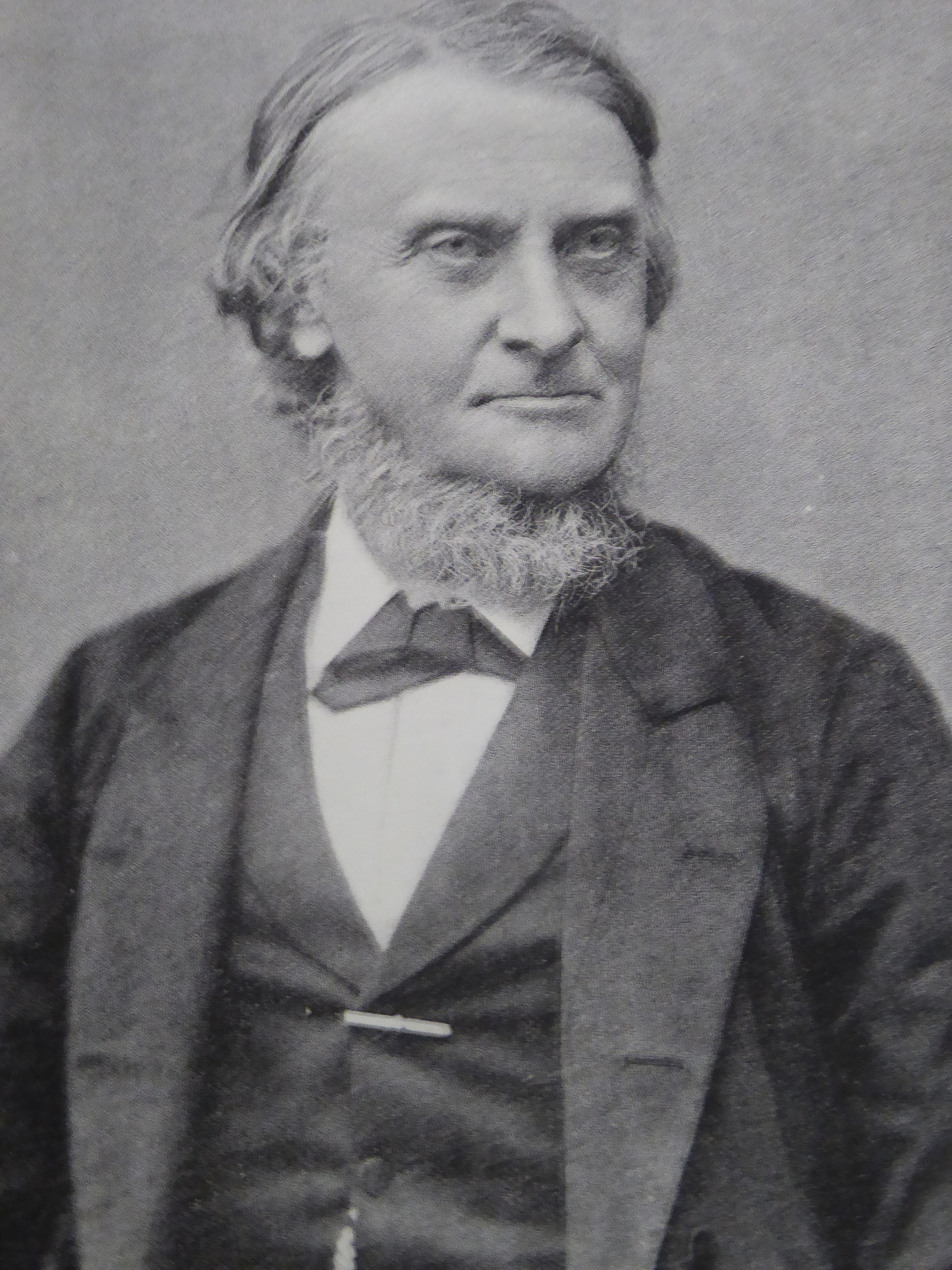
Alexander Maclaren's collected expositions on the Hebrew prophets and the Gospel of Matthew represent the pinnacle of Victorian biblical preaching. This volume gathers his penetrating studies of Ezekiel's visions, Daniel's apocalyptic imagery, and the Minor Prophets' urgent messages, alongside his careful unpacking of Matthew's opening chapters. Maclaren was no mere scholar of scripture; he was a pastor-theologian who read the ancient texts as living words meant to diagnose the human heart. His commentary moves between close textual observation and application, showing how the prophetic condemnation of Israel's hidden idolatry speaks to every generation's secret worship of false things. Whether examining Ezekiel's vision of the glory departing the temple or tracing the young Messiah's genealogy, Maclaren demands that readers confront what actually lies within their own "dark chambers" before offering any comfort. The prose carries the weight of a man who spent decades in the pulpit, wrestling text and congregation toward spiritual honesty. For readers seeking serious, reverent, and intellectually rigorous engagement with scripture, these expositions offer a window into how one of Britain's greatest preachers understood the prophets' enduring challenge: that true worship remains always a private matter between the soul and God.
Editions
X-Ray
“Rich or poor, high or low, all men are equal in sin. There are surface differences and degrees, but a deep identity beneath. So on the same principle all souls are of the same value. Here is the true democracy of Christianity. So there is one ransom for all, for the need of all is identical. III.””
— Alexander Maclaren
“the New Testament writers never hesitate to speak even of such very imperfect Christians as were found in abundance in churches like Corinth and Galatia as being all 'saints,' every man of them. That is not because the writers were minimising their defects, or idealising their persons, but because, if they are Christians at all, they are saints; seeing that no man is a Christian who has not been drawn by Christ's great sacrifice for him to yield himself a sacrifice for Christ. Of””
— Alexander Maclaren
“Body and mind need repose; the soul needs quiet communion with God. No vigorous physical, intellectual, or religious life will long be kept up, if that need be disregarded. The week was meant to be given to work, which is blessed and right if done after the pattern of God's. The Sabbath was meant to lift to a share in His rest, to bring eternity into time, to renew wasted strength 'by a wise passiveness,' and to draw hearts dissipated by contact with fleeting tasks back into the stillness where they can find themselves in fellowship with God. We””
— Alexander Maclaren
“our God is that which we think most precious, for which we are ready to make the greatest sacrifices, which draws our warmest love; which, lost, would leave us desolate; which, possessed, makes us blessed.””
— Alexander Maclaren
“We are plunged into the midst of a scene of things which obviously does not match our capacities. There is a great deal more in every man than can ever find a field of expression, of work, or of satisfaction in anything beneath the stars. And no man that understands, even superficially, his own character, his own requirements, can fail to feel in his sane and quiet moments, when the rush of temptation and the illusions of this fleeting life have lost their grip upon him: 'This is not the place that can bring out all that is in me, or that can yield me all that I desire.””
— Alexander Maclaren
“The Gospel is the savour of life unto life, or of death unto death. The same fire melts wax and hardens clay. The same Christ is salvation and destruction. God is to each of us either our joy or our dread. II.””
— Alexander Maclaren
“There are so many things that seem doubtful because we do not bring the test of the highest motive to bear on them. Complications would fall away when we only wished to know and be like Christ.””
— Alexander Maclaren
“The Passover as a feast is a prophecy of the great Sacrifice, by virtue of whose sprinkled blood we all may be sheltered from the sweep of the divine judgment, and on which we all have to feed if there is to be any life in us. Our propitiation is our food. 'Christ for us' must become 'Christ in us,' received and appropriated by our faith as the strength of our lives. The Christian life is meant to be a joyful feast on the Sacrifice, and communion with God based upon it. We feast on Christ when the mind feeds on Him as truth, when the heart is filled and satisfied with His love, when the conscience clings to Him as its peace, when the will esteems the 'words of His mouth more than' its 'necessary food,' when all desires, hopes, and inward powers draw their supplies from Him, and find their object in His sweet sufficiency. Nor””
— Alexander Maclaren
“Self-confidence is not the temper which God uses for His instruments. He works with 'bruised reeds,' and breathes His strength into them. It is when a man says 'I can do nothing,' that he is fit for God to employ. 'When I am weak, then I am strong.' Moses””
— Alexander Maclaren
Link to this book
Add a free, dofollow link to Lex on your blog, forum, syllabus, or reading list.

<a href="https://lex-books.com/book/expositions-of-holy-scripture-ezekiel-daniel-and-the-minor-prophets-st-matthew-c-30d47d8b-fbac-43f3-90e4-c7f016d6152a"><img src="https://lex-books.com/badges/read-on-lex.svg" alt="Read Expositions of Holy Scripture: Ezekiel, Daniel, and the Minor Prophets. St. Matthew Chapters I to VIII by Alexander Maclaren free on Lex" width="160" height="40"></a>[](https://lex-books.com/book/expositions-of-holy-scripture-ezekiel-daniel-and-the-minor-prophets-st-matthew-c-30d47d8b-fbac-43f3-90e4-c7f016d6152a)[url=https://lex-books.com/book/expositions-of-holy-scripture-ezekiel-daniel-and-the-minor-prophets-st-matthew-c-30d47d8b-fbac-43f3-90e4-c7f016d6152a][img]https://lex-books.com/badges/read-on-lex.svg[/img][/url]Read Expositions of Holy Scripture: Ezekiel, Daniel, and the Minor Prophets. St. Matthew Chapters I to VIII by Alexander Maclaren free on Lex: https://lex-books.com/book/expositions-of-holy-scripture-ezekiel-daniel-and-the-minor-prophets-st-matthew-c-30d47d8b-fbac-43f3-90e4-c7f016d6152aCite this book
Reading this edition for a paper or guide? Copy a citation.
Maclaren, Alexander. Expositions of Holy Scripture: Ezekiel, Daniel, and the Minor Prophets. St. Matthew Chapters I to VIII. Lex, lex-books.com/book/expositions-of-holy-scripture-ezekiel-daniel-and-the-minor-prophets-st-matthew-c-30d47d8b-fbac-43f3-90e4-c7f016d6152a.Maclaren, A. (1906). Expositions of Holy Scripture: Ezekiel, Daniel, and the Minor Prophets. St. Matthew Chapters I to VIII. Lex. https://lex-books.com/book/expositions-of-holy-scripture-ezekiel-daniel-and-the-minor-prophets-st-matthew-c-30d47d8b-fbac-43f3-90e4-c7f016d6152aMaclaren, Alexander. Expositions of Holy Scripture: Ezekiel, Daniel, and the Minor Prophets. St. Matthew Chapters I to VIII. Lex. https://lex-books.com/book/expositions-of-holy-scripture-ezekiel-daniel-and-the-minor-prophets-st-matthew-c-30d47d8b-fbac-43f3-90e4-c7f016d6152a.