English Industries of the Middle Ages: Being an Introduction to the Industrial History of Medieval England
1913

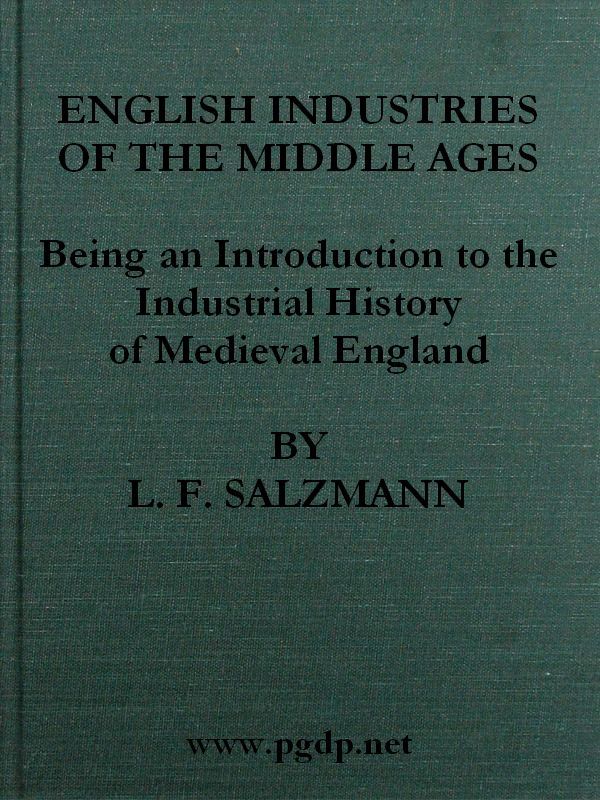
English Industries of the Middle Ages: Being an Introduction to the Industrial History of Medieval England
1913
We imagine the Middle Ages as primitive, but medieval England hummed with industry. L.F. Salzman's 1913 landmark study reveals a world of coal mines descending into dark earth, iron forges blazing, and woolen cloth traveling from workshop to export. Beginning with coal mining and its surprising post-Roman revival, Salzman traces how these trades shaped not just economy but society itself: the relationships between masters and workers, the guilds that regulated quality, the markets that fed growing towns. Written as an introduction for students yet meticulous enough to still satisfy scholars a century later, this book answers questions we rarely think to ask: how did ordinary medieval people earn their living, and what did that labor build? For anyone curious about the actual machinery of medieval life, beyond knights and castles, this remains an essential window into the workshops, mines, and merchants who made England.
Editions

X-Ray
The author and historian who compiled this comprehensive study of medieval English industries. He serves as the scholarly guide through the industrial landscape of pre-Elizabethan England.
About English Industries of the Middle Ages: Being an Introduction to the Industrial History of Medieval England
Chapter Summaries
- Preface
- Salzmann outlines his methodology and limitations, explaining this work as an introduction rather than comprehensive history. He defines the medieval period as ending roughly in the sixteenth century when new methods and social changes transformed traditional industries.
- 1
- Traces coal mining from Roman times through medieval development, covering the evolution from surface quarrying to deep pit mining. Details the technical challenges, regional variations, and the growing export trade centered on Newcastle.
- 2
- Examines iron production from prehistoric times through the medieval period, focusing on the transition from Roman methods to medieval techniques. Covers the rise of the Weald as a major iron-producing region and the organization of free miners in the Forest of Dean.
Key Themes
- Industrial Evolution
- The gradual transformation from medieval craft-based production to early modern industrial methods, marking the end of traditional guild systems and the rise of capitalist employers.
- Technological Innovation
- The introduction of new techniques and tools across industries, from water-powered machinery in cloth-making to improved mining methods and metallurgical processes.
- Guild System and Labor Organization
- The complex relationship between craft guilds, municipal authorities, and workers, showing how medieval society regulated trade and protected both producers and consumers.
Characters
- L. F. Salzmann(protagonist)
- The author and historian who compiled this comprehensive study of medieval English industries. He serves as the scholarly guide through the industrial landscape of pre-Elizabethan England.
Link to this book
Add a free, dofollow link to Lex on your blog, forum, syllabus, or reading list.

<a href="https://lex-books.com/book/english-industries-of-the-middle-ages-being-an-introduction-to-the-industrial-hi-2b846228-555c-45d4-9d29-eae0c3e1a6b5"><img src="https://lex-books.com/badges/read-on-lex.svg" alt="Read English Industries of the Middle Ages: Being an Introduction to the Industrial History of Medieval England by L. F. Salzman free on Lex" width="160" height="40"></a>[](https://lex-books.com/book/english-industries-of-the-middle-ages-being-an-introduction-to-the-industrial-hi-2b846228-555c-45d4-9d29-eae0c3e1a6b5)[url=https://lex-books.com/book/english-industries-of-the-middle-ages-being-an-introduction-to-the-industrial-hi-2b846228-555c-45d4-9d29-eae0c3e1a6b5][img]https://lex-books.com/badges/read-on-lex.svg[/img][/url]Read English Industries of the Middle Ages: Being an Introduction to the Industrial History of Medieval England by L. F. Salzman free on Lex: https://lex-books.com/book/english-industries-of-the-middle-ages-being-an-introduction-to-the-industrial-hi-2b846228-555c-45d4-9d29-eae0c3e1a6b5Cite this book
Reading this edition for a paper or guide? Copy a citation.
Salzman, L. F.. English Industries of the Middle Ages: Being an Introduction to the Industrial History of Medieval England. Lex, lex-books.com/book/english-industries-of-the-middle-ages-being-an-introduction-to-the-industrial-hi-2b846228-555c-45d4-9d29-eae0c3e1a6b5.Salzman, L. F. (1913). English Industries of the Middle Ages: Being an Introduction to the Industrial History of Medieval England. Lex. https://lex-books.com/book/english-industries-of-the-middle-ages-being-an-introduction-to-the-industrial-hi-2b846228-555c-45d4-9d29-eae0c3e1a6b5Salzman, L. F.. English Industries of the Middle Ages: Being an Introduction to the Industrial History of Medieval England. Lex. https://lex-books.com/book/english-industries-of-the-middle-ages-being-an-introduction-to-the-industrial-hi-2b846228-555c-45d4-9d29-eae0c3e1a6b5.