Ending the Depression Through Planned Obsolescence
1932
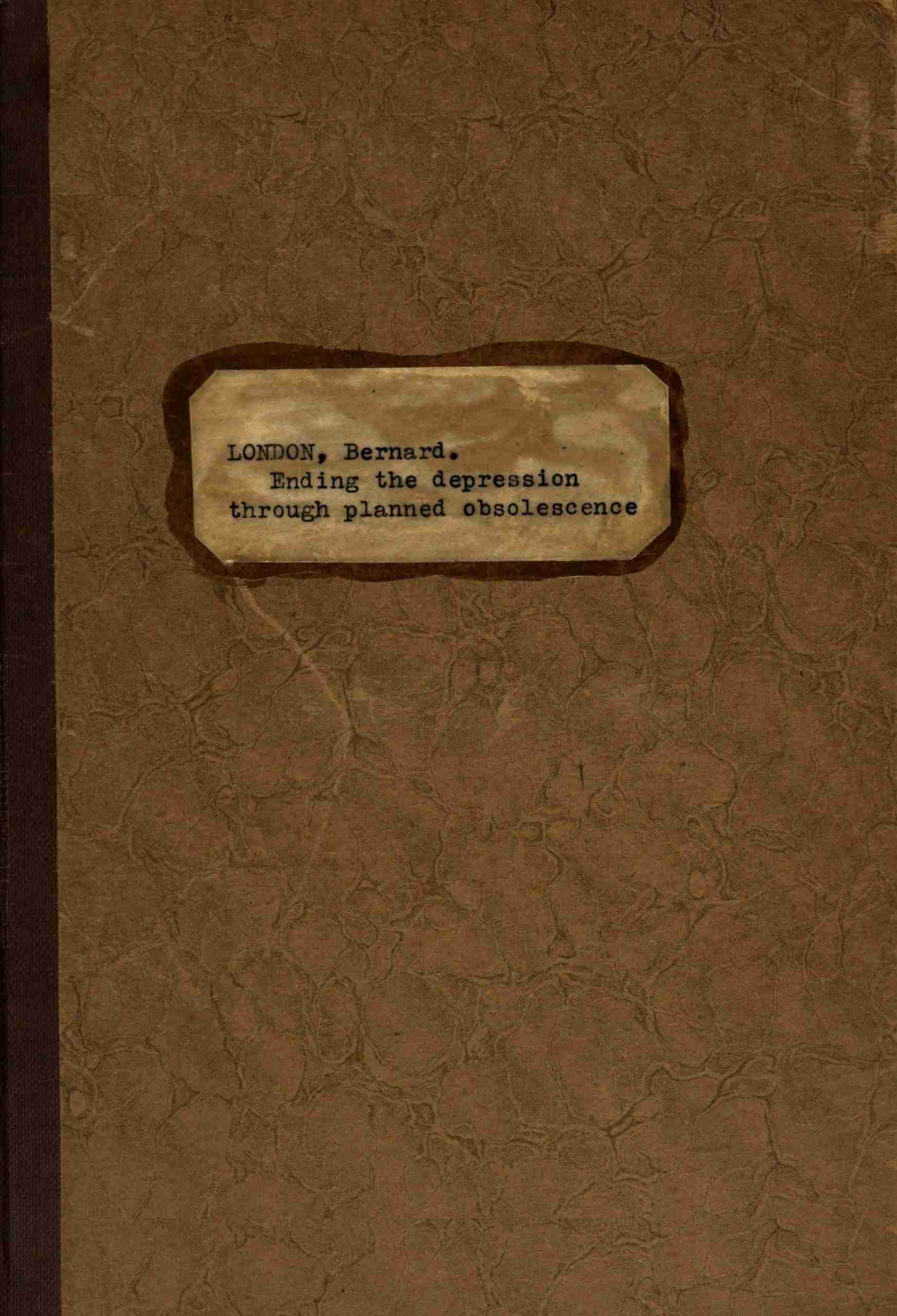
In 1932, with America in the grip of the Great Depression, a Chicago economist proposed something radical: what if we deliberately made things stop working? Bernard London's essay is the origin story of planned obsolescence, the economic theory that would eventually shape the disposable world we inhabit. London saw a paradox at the heart of American capitalism: factories overflowing with goods, yet masses of unemployed unable to buy them. His solution was audacious. Assign every product a lease of life at the moment of manufacture. When the lease expires, the goods are retired, destroyed, replaced. This keeps factories humming, workers employed, and consumption constant. What makes London's treatise remarkable isn't just its boldness, but its sincerity. He believed this system would create a more equitable society, with government collecting taxes on obsolete goods to fund public welfare. Reading it now feels like watching someone invent the monster while calling it a miracle. Essential for anyone curious about where our throwaway economy actually came from.
Editions
Link to this book
Add a free, dofollow link to Lex on your blog, forum, syllabus, or reading list.

<a href="https://lex-books.com/book/ending-the-depression-through-planned-obsolescence-3bec47a2-0463-4e4b-a375-cff32eea3eef"><img src="https://lex-books.com/badges/read-on-lex.svg" alt="Read Ending the Depression Through Planned Obsolescence by Bernard London free on Lex" width="160" height="40"></a>[](https://lex-books.com/book/ending-the-depression-through-planned-obsolescence-3bec47a2-0463-4e4b-a375-cff32eea3eef)[url=https://lex-books.com/book/ending-the-depression-through-planned-obsolescence-3bec47a2-0463-4e4b-a375-cff32eea3eef][img]https://lex-books.com/badges/read-on-lex.svg[/img][/url]Read Ending the Depression Through Planned Obsolescence by Bernard London free on Lex: https://lex-books.com/book/ending-the-depression-through-planned-obsolescence-3bec47a2-0463-4e4b-a375-cff32eea3eefCite this book
Reading this edition for a paper or guide? Copy a citation.
London, Bernard. Ending the Depression Through Planned Obsolescence. Lex, lex-books.com/book/ending-the-depression-through-planned-obsolescence-3bec47a2-0463-4e4b-a375-cff32eea3eef.London, B. (1932). Ending the Depression Through Planned Obsolescence. Lex. https://lex-books.com/book/ending-the-depression-through-planned-obsolescence-3bec47a2-0463-4e4b-a375-cff32eea3eefLondon, Bernard. Ending the Depression Through Planned Obsolescence. Lex. https://lex-books.com/book/ending-the-depression-through-planned-obsolescence-3bec47a2-0463-4e4b-a375-cff32eea3eef.