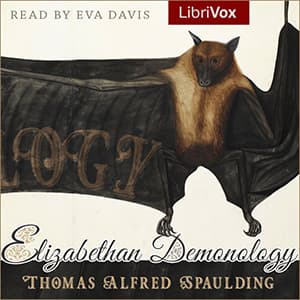
Elizabethan Demonology: An Essay in Illustration of the Belief in the Existence of Devils, and the Powers Possessed by Them, as It Was Generally Held During the Period of the Reformation, and the Times Immediately Succeeding; with Special Reference to Shakspere and His Works
1603
Elizabethan Demonology: An Essay in Illustration of the Belief in the Existence of Devils, and the Powers Possessed by Them, as It Was Generally Held During the Period of the Reformation, and the Times Immediately Succeeding; with Special Reference to Shakspere and His Works
1603
Thomas Alfred Spalding's fascinating 1880 study argues that to understand Shakespeare, one must first inhabit the mind of Elizabethan England, a world where demons were not mere stage props but terrifying realities. Spalding meticulously reconstructs the era's supernatural cosmology: the Reformation's anxiety about Satan's influence, the widespread belief in witchcraft, and the theological frameworks that made figures like Macbeth's witches or Hamlet's Ghost dramatically believable to their original audience. This isn't dry scholarship but a journey into a vanished worldview, where the line between the natural and supernatural remained genuinely porous. Spalding demonstrates how Shakespeare's genius lay partly in his ability to tap these deep currents of popular belief, creating characters and scenes that resonated with the fears and assumptions of his time. For anyone seeking to deepen their appreciation of the plays, this work offers an indispensable key to the Elizabethan imagination.
Editions
Link to this book
Add a free, dofollow link to Lex on your blog, forum, syllabus, or reading list.

<a href="https://lex-books.com/book/elizabethan-demonology-an-essay-in-illustration-of-the-belief-in-the-existence-o-6d09ca1f-b579-4593-94ea-c90ed6cdbf4c"><img src="https://lex-books.com/badges/read-on-lex.svg" alt="Read Elizabethan Demonology: An Essay in Illustration of the Belief in the Existence of Devils, and the Powers Possessed by Them, as It Was Generally Held During the Period of the Reformation, and the Times Immediately Succeeding; with Special Reference to Shakspere and His Works by Thomas Alfred Spalding free on Lex" width="160" height="40"></a>[](https://lex-books.com/book/elizabethan-demonology-an-essay-in-illustration-of-the-belief-in-the-existence-o-6d09ca1f-b579-4593-94ea-c90ed6cdbf4c)[url=https://lex-books.com/book/elizabethan-demonology-an-essay-in-illustration-of-the-belief-in-the-existence-o-6d09ca1f-b579-4593-94ea-c90ed6cdbf4c][img]https://lex-books.com/badges/read-on-lex.svg[/img][/url]Read Elizabethan Demonology: An Essay in Illustration of the Belief in the Existence of Devils, and the Powers Possessed by Them, as It Was Generally Held During the Period of the Reformation, and the Times Immediately Succeeding; with Special Reference to Shakspere and His Works by Thomas Alfred Spalding free on Lex: https://lex-books.com/book/elizabethan-demonology-an-essay-in-illustration-of-the-belief-in-the-existence-o-6d09ca1f-b579-4593-94ea-c90ed6cdbf4cCite this book
Reading this edition for a paper or guide? Copy a citation.
Spalding, Thomas Alfred. Elizabethan Demonology: An Essay in Illustration of the Belief in the Existence of Devils, and the Powers Possessed by Them, as It Was Generally Held During the Period of the Reformation, and the Times Immediately Succeeding; with Special Reference to Shakspere and His Works. Lex, lex-books.com/book/elizabethan-demonology-an-essay-in-illustration-of-the-belief-in-the-existence-o-6d09ca1f-b579-4593-94ea-c90ed6cdbf4c.Spalding, T. A. (1603). Elizabethan Demonology: An Essay in Illustration of the Belief in the Existence of Devils, and the Powers Possessed by Them, as It Was Generally Held During the Period of the Reformation, and the Times Immediately Succeeding; with Special Reference to Shakspere and His Works. Lex. https://lex-books.com/book/elizabethan-demonology-an-essay-in-illustration-of-the-belief-in-the-existence-o-6d09ca1f-b579-4593-94ea-c90ed6cdbf4cSpalding, Thomas Alfred. Elizabethan Demonology: An Essay in Illustration of the Belief in the Existence of Devils, and the Powers Possessed by Them, as It Was Generally Held During the Period of the Reformation, and the Times Immediately Succeeding; with Special Reference to Shakspere and His Works. Lex. https://lex-books.com/book/elizabethan-demonology-an-essay-in-illustration-of-the-belief-in-the-existence-o-6d09ca1f-b579-4593-94ea-c90ed6cdbf4c.