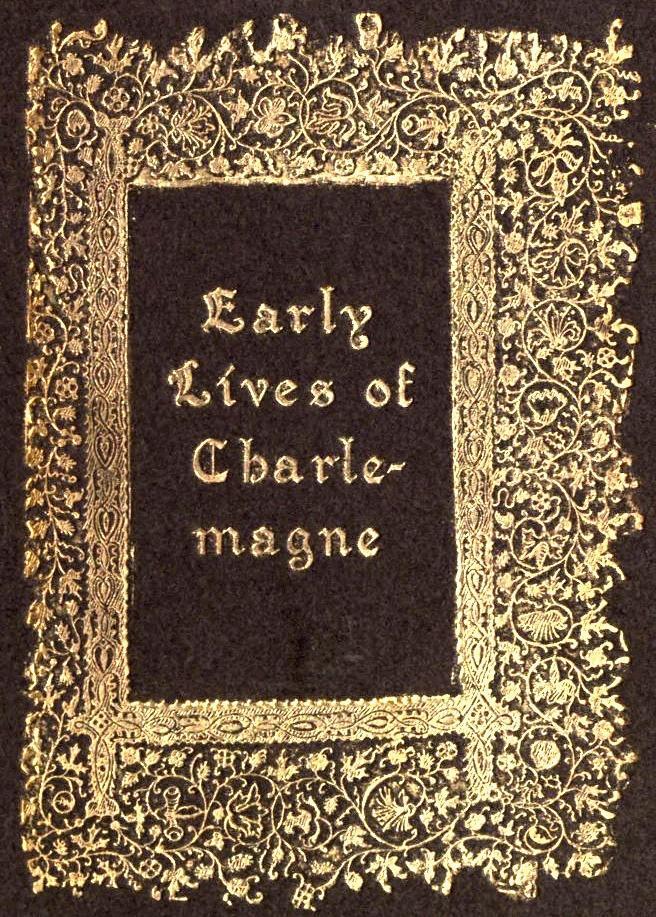
Early Lives of Charlemagne by Eginhard and the Monk of St Gall Edited by Prof. a. J. Grant
1922
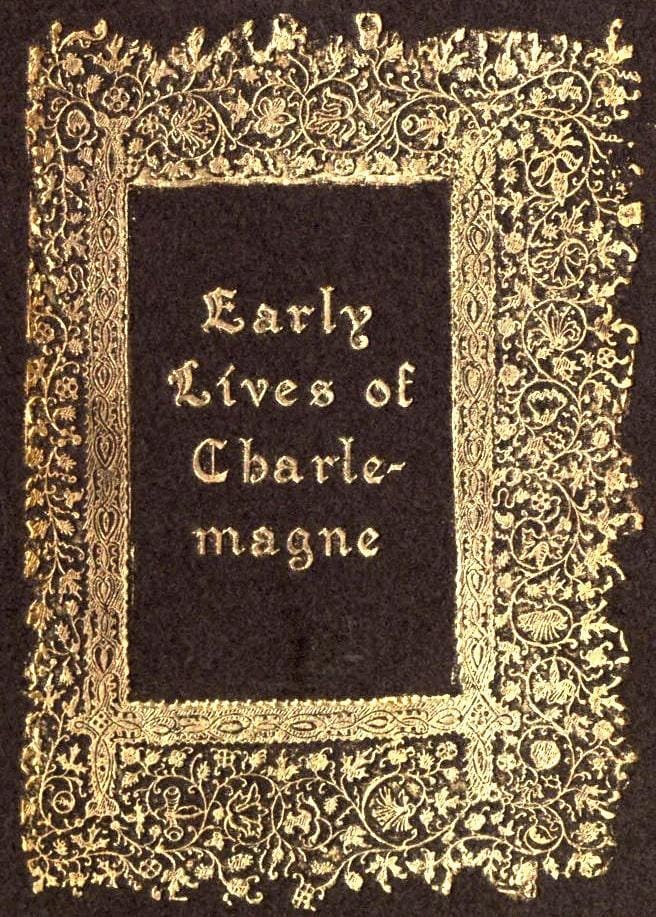
Early Lives of Charlemagne by Eginhard and the Monk of St Gall Edited by Prof. a. J. Grant
1922
Translated by A. J. (Arthur James) Grant
Here are two radically different portraits of the same man. Einhard was Charlemagne's close friend and adviser, a courtier who lived in the emperor's household and knew the man behind the myth. His biography, written shortly after Charlemagne's death in 814, offers an intimate, factual account of the ruler who united Western Europe and sparked the Carolingian Renaissance. Then there is Notker, the Monk of St Gall, composing his version roughly fifty years later, by which time legend had already begun to outpace memory. His account is embellished, miraculous, larger than life. Together these two texts do something remarkable: they show history becoming legend in real time. You see the same life rendered plain and the same life rendered magnificent, and you understand how medieval people remembered their greatest king. This is essential reading for anyone curious about how we construct the past, and what gets lost and gained when we do.
Editions
X-Ray
“Despite its lack of size, the bee makes fine honey.””
— Einhard
About Early Lives of Charlemagne by Eginhard and the Monk of St Gall Edited by Prof. a. J. Grant
Chapter Summaries
- Introduction
- Professor Grant introduces the two contrasting biographies of Charlemagne - Eginhard's factual, restrained account versus the Monk of Saint Gall's legendary, credulous narrative. He explains their historical context and different approaches to truth and storytelling.
- Prologue of Walafrid
- Walafrid Strabo vouches for Eginhard's reliability as a biographer, describing his education, small stature, and close relationship with Charlemagne. He emphasizes Eginhard's firsthand knowledge and high character.
- Eginhard's Preface
- Eginhard explains his motivation for writing Charlemagne's biography, emphasizing his personal debt to the emperor and his unique position as an eyewitness. He acknowledges his limitations as a 'barbarian' writing in Latin.
Key Themes
- Divine Kingship and Christian Rule
- Both biographies present Charlemagne as a ruler chosen by God to restore Christian civilization. His coronation as Emperor is portrayed as divinely ordained, and his military victories are seen as God's will.
- Education and Learning
- The Carolingian Renaissance is a central theme, showing Charlemagne's dedication to reviving classical learning and establishing schools. Both authors emphasize his role as patron of scholars and education.
- Historical Truth vs. Legend
- The contrast between Eginhard's factual approach and the Monk's legendary tales illustrates the tension between historical accuracy and mythmaking in medieval biography.
Characters
- Charlemagne (Charles the Great)(protagonist)
- The central figure of both biographies, King of the Franks and later Emperor. Portrayed as a great military leader, patron of learning, and devout Christian ruler who expanded the Frankish kingdom and promoted education and religious reform.
- Eginhard (Einhard)(major)
- The primary biographer of Charlemagne, a scholar and courtier who served at Charlemagne's court. Small in stature but highly educated, he was nicknamed 'Bezaleel' and served as secretary and confidant to the emperor.
- The Monk of Saint Gall(major)
- The anonymous second biographer, a German monk who wrote a more legendary and anecdotal account of Charlemagne's life. He relied on oral traditions and stories passed down through monastery connections.
- Alcuin(major)
- An English scholar from York who became Charlemagne's chief educational advisor and teacher. He was instrumental in the Carolingian Renaissance and educational reforms.
- Pippin the Short(major)
- Charlemagne's father, who became King of the Franks after deposing the last Merovingian king. He established the Carolingian dynasty and began many of the wars Charlemagne would complete.
- Carloman(major)
- Charlemagne's younger brother who co-ruled the Frankish kingdom for two years before dying of disease. His death allowed Charlemagne to become sole ruler.
Link to this book
Add a free, dofollow link to Lex on your blog, forum, syllabus, or reading list.

<a href="https://lex-books.com/book/early-lives-of-charlemagne-by-eginhard-and-the-monk-of-st-gall-edited-by-prof-a--74c4357e-07ff-43f3-b7f9-7476cd9b3d2e"><img src="https://lex-books.com/badges/read-on-lex.svg" alt="Read Early Lives of Charlemagne by Eginhard and the Monk of St Gall Edited by Prof. a. J. Grant by Einhard free on Lex" width="160" height="40"></a>[](https://lex-books.com/book/early-lives-of-charlemagne-by-eginhard-and-the-monk-of-st-gall-edited-by-prof-a--74c4357e-07ff-43f3-b7f9-7476cd9b3d2e)[url=https://lex-books.com/book/early-lives-of-charlemagne-by-eginhard-and-the-monk-of-st-gall-edited-by-prof-a--74c4357e-07ff-43f3-b7f9-7476cd9b3d2e][img]https://lex-books.com/badges/read-on-lex.svg[/img][/url]Read Early Lives of Charlemagne by Eginhard and the Monk of St Gall Edited by Prof. a. J. Grant by Einhard free on Lex: https://lex-books.com/book/early-lives-of-charlemagne-by-eginhard-and-the-monk-of-st-gall-edited-by-prof-a--74c4357e-07ff-43f3-b7f9-7476cd9b3d2eCite this book
Reading this edition for a paper or guide? Copy a citation.
Einhard. Early Lives of Charlemagne by Eginhard and the Monk of St Gall Edited by Prof. a. J. Grant. Lex, lex-books.com/book/early-lives-of-charlemagne-by-eginhard-and-the-monk-of-st-gall-edited-by-prof-a--74c4357e-07ff-43f3-b7f9-7476cd9b3d2e.Einhard (1922). Early Lives of Charlemagne by Eginhard and the Monk of St Gall Edited by Prof. a. J. Grant. Lex. https://lex-books.com/book/early-lives-of-charlemagne-by-eginhard-and-the-monk-of-st-gall-edited-by-prof-a--74c4357e-07ff-43f3-b7f9-7476cd9b3d2eEinhard. Early Lives of Charlemagne by Eginhard and the Monk of St Gall Edited by Prof. a. J. Grant. Lex. https://lex-books.com/book/early-lives-of-charlemagne-by-eginhard-and-the-monk-of-st-gall-edited-by-prof-a--74c4357e-07ff-43f3-b7f9-7476cd9b3d2e.