The Lost Book of Elizabeth Barton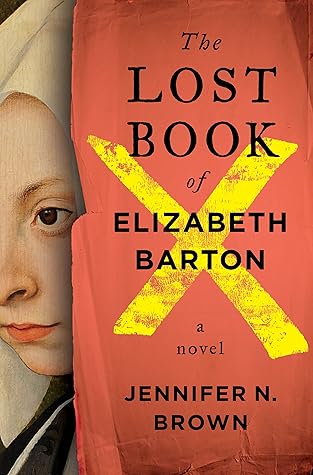
The Lost Book of Elizabeth Barton1508
Jennifer N. Brown · Livraria J. Olympio · 135 pages
About this book
A dual-timeline murder mystery set in an English country manor, when an ambitious professor discovers the long-lost manuscript of a Reformation-era prophetess Historian Alison Sage has made a groundbreaking archival discovery—she found a manuscript containing the prophecies of a 16th century nun, Elizabeth Barton. Barton’s prophecy condemning Henry VIII and Anne Boleyn led to her execution and the destruction of all copies of her prophecies—or so the world believed. With Alison’s discovery, she is catapulted to academic superstardom and scores an invitation to the exclusive Codex Consortium, a week of research among a select handful of fellow historians at a crumbling manor in England, located next to the ruins of the priory where Elizabeth herself once lived. What begins as a promising conference turns into a nightmare as the eerie house becomes the site of a murder. Suddenly, everyone is a suspect, and it seems that answers lie at the root of a local legend about centuries-old hidden treasure. Alison’s research makes her best-suited to solve the mystery—but when old feelings resurface for a former colleague, and the stakes of the search skyrocket, everyone's motives become murky. Alison’s cutthroat world of academia is almost as dangerous as Elizabeth Barton’s sixteenth-century England, where heretics are beheaded, visions can kill, and knowing who to trust is a deadly art. The Lost Book of Elizabeth Barton is a thrilling novel, crackling with the voices of the past and propelled by a mystery that will leave readers in suspense until the very last page.
Details
- Published
- 1508
- Publisher
- Livraria J. Olympio
- Pages
- 135
- ISBN-13
- 9780050025956
About Jennifer N. Brown
William Shakespeare was an English poet and playwright, widely regarded as the greatest writer in the English language and the world's pre-eminent dramatist. He is often called England's national poet and the "Bard of Avon". His surviving works, including some collaborations, consist of 38 plays,[c] 154 sonnets, two long narrative poems, and several other poems. His plays have been translated into every major living language and are performed more often than those of any other playwright. He has invented over 1700 words some of which are common. ([Source][1].) [1]:https://en.wikipedia.or...
Full author profile