Dutch and Flemish Furniture
1907
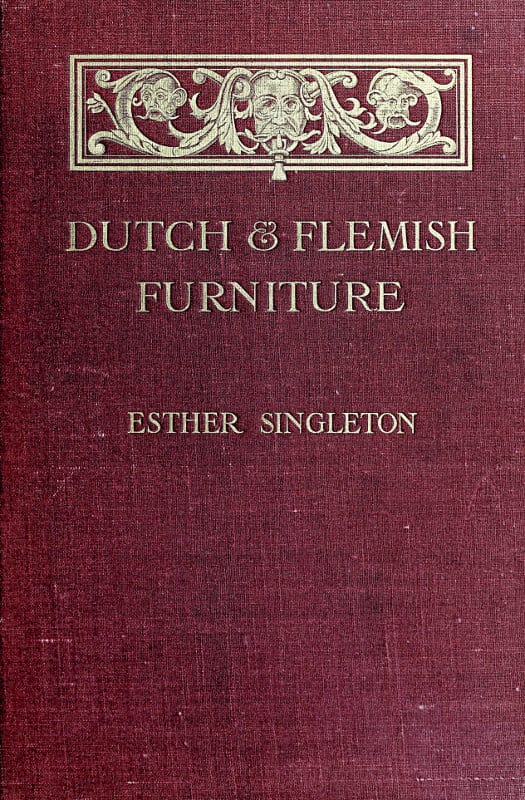
Singleton's 1907 study remains the definitive exploration of how furniture became the visual autobiography of the Low Countries. Beginning in the medieval workshops where Flemish carpenters first developed the joined lumber techniques that would influence all of Northern Europe, she traces the evolution through the Calvinist simplicity of Dutch burgher homes and the baroque abundance of Flemish clergy houses. The book illuminates the surprising ways political revolution, religious reform, and trade competition literally shaped what chairs looked like in Amsterdam versus Antwerp. Singleton argues that Dutch and Flemish furniture never simply copied French or English trends but transformed foreign influences into something distinctly their own, whether through the utilitarian honesty prized by Calvinists or the sculptural richness favored by Catholic patrons. For collectors, design historians, and anyone curious about how everyday objects carry the weight of civilization, this volume reveals that a cabinet is never merely a cabinet.
Editions
Link to this book
Add a free, dofollow link to Lex on your blog, forum, syllabus, or reading list.

<a href="https://lex-books.com/book/dutch-and-flemish-furniture-b0207aeb-b2c3-42d1-8a68-af80b2b42c28"><img src="https://lex-books.com/badges/read-on-lex.svg" alt="Read Dutch and Flemish Furniture by Esther Singleton free on Lex" width="160" height="40"></a>[](https://lex-books.com/book/dutch-and-flemish-furniture-b0207aeb-b2c3-42d1-8a68-af80b2b42c28)[url=https://lex-books.com/book/dutch-and-flemish-furniture-b0207aeb-b2c3-42d1-8a68-af80b2b42c28][img]https://lex-books.com/badges/read-on-lex.svg[/img][/url]Read Dutch and Flemish Furniture by Esther Singleton free on Lex: https://lex-books.com/book/dutch-and-flemish-furniture-b0207aeb-b2c3-42d1-8a68-af80b2b42c28Cite this book
Reading this edition for a paper or guide? Copy a citation.
Singleton, Esther. Dutch and Flemish Furniture. Lex, lex-books.com/book/dutch-and-flemish-furniture-b0207aeb-b2c3-42d1-8a68-af80b2b42c28.Singleton, E. (1907). Dutch and Flemish Furniture. Lex. https://lex-books.com/book/dutch-and-flemish-furniture-b0207aeb-b2c3-42d1-8a68-af80b2b42c28Singleton, Esther. Dutch and Flemish Furniture. Lex. https://lex-books.com/book/dutch-and-flemish-furniture-b0207aeb-b2c3-42d1-8a68-af80b2b42c28.