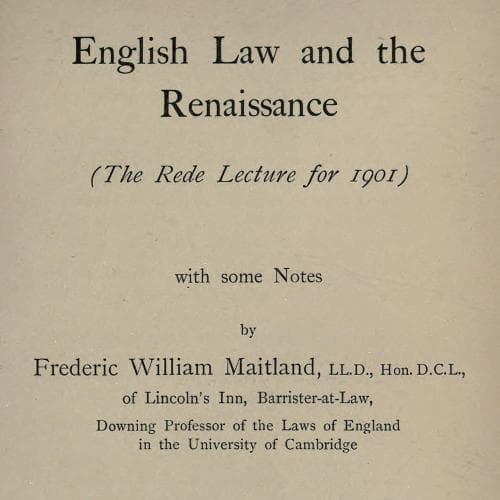
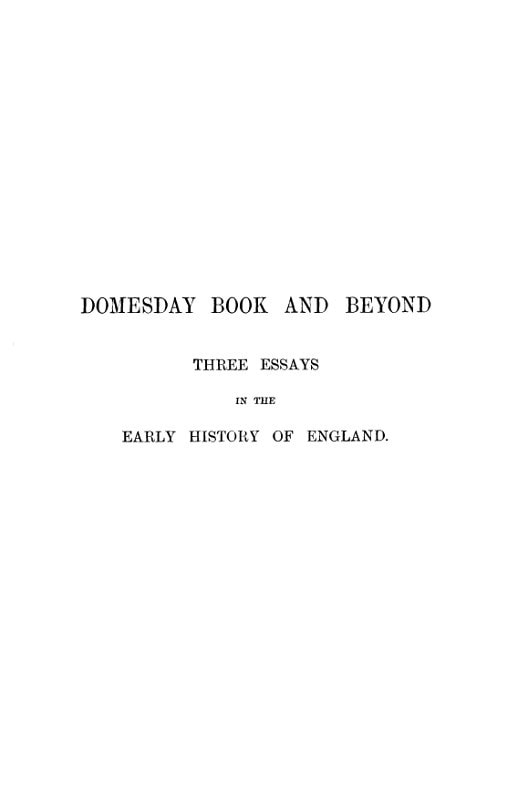
Domesday Book and Beyond: Three Essays in the Early History of England
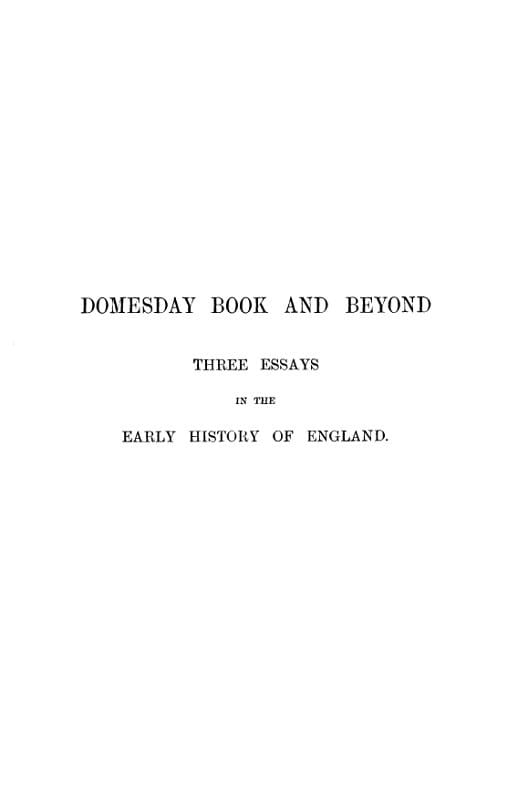
Domesday Book and Beyond: Three Essays in the Early History of England
Maitland's masterpiece unravels the most extraordinary document in English history: William the Conqueror's Domesday Book, a comprehensive survey of landholdings compiled in 1085. But this is no dry chronicle of medieval bureaucracy. Instead, Maitland treats the Domesday Book as a portal into the turbulent moment when Norman and Anglo-Saxon England collided, revealing what the survey tells us about power, property, and the roots of English law. With characteristic precision, he examines how royal commissioners extracted information from sheriffs and tenants-in-chief, what categories of people existed in this newly conquered land, and how feudal obligations took shape. The title's "Beyond" is key: Maitland pushes past the document itself to ask what legal and social structures made such a survey possible, and what they reveal about the emergence of the English state. Nearly 130 years later, this remains the essential starting point for anyone who wants to understand Norman England and the deep origins of English legal traditions.
Editions
X-Ray
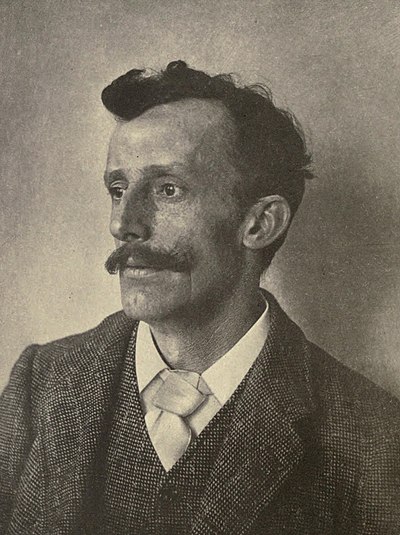
The author and legal historian who analyzes English medieval history through Domesday Book and other sources. He serves as the scholarly voice examining the transition from Anglo-Saxon to Norman England.
The Norman king who commissioned the Domesday Survey in 1085-86. His conquest fundamentally transformed English land tenure and social structure.
The last Anglo-Saxon king before the Norman Conquest. His reign (1042-1066) represents the pre-Conquest baseline against which Norman changes are measured.
Maitland's collaborator on the History of English Law. His partnership with Maitland represents the scholarly tradition of legal history.
About Domesday Book and Beyond: Three Essays in the Early History of England
Chapter Summaries
- Preface
- Maitland explains the origins of this work, originally intended for his collaboration with Pollock on English legal history. He acknowledges debts to contemporary scholars like Round and outlines his retrogressive method of working from the known (Domesday) to the unknown (earlier periods).
- Essay I
- A comprehensive analysis of the Domesday Survey as primarily a tax assessment document. Maitland examines the social hierarchy from serfs to thegns, the nature of manors and vills, and the complex relationships between lords and tenants in Norman England.
- Essay II
- An examination of Anglo-Saxon England focusing on land tenure, the role of the church in acquiring vast estates, and the development of seignorial justice. Maitland argues against theories that see English society as fundamentally Roman in origin.
Key Themes
- Legal Evolution and Continuity
- Maitland explores how legal concepts evolve over time, showing how Norman conquest both disrupted and built upon Anglo-Saxon legal traditions. The complexity of this evolution challenges simple narratives of progress or decline.
- The Feudalization Process
- The transformation from a society of relatively free peasant proprietors to a manorialized system under Norman rule. Maitland argues this was not necessarily retrogression but a natural stage in civilization's development.
- Social Stratification and Class
- The intricate hierarchy of medieval society from serfs to sokemen to thegns, showing how legal status, economic position, and personal freedom intersected in complex ways that defy simple categorization.
Characters
- Frederic William Maitland(protagonist)
- The author and legal historian who analyzes English medieval history through Domesday Book and other sources. He serves as the scholarly voice examining the transition from Anglo-Saxon to Norman England.
- William the Conqueror(major)
- The Norman king who commissioned the Domesday Survey in 1085-86. His conquest fundamentally transformed English land tenure and social structure.
- King Edward the Confessor(major)
- The last Anglo-Saxon king before the Norman Conquest. His reign (1042-1066) represents the pre-Conquest baseline against which Norman changes are measured.
- Sir Frederick Pollock(minor)
- Maitland's collaborator on the History of English Law. His partnership with Maitland represents the scholarly tradition of legal history.
- J.H. Round(minor)
- Contemporary historian whose work 'Feudal England' influenced Maitland's understanding of Domesday Book. Represents the collaborative nature of historical scholarship.
Link to this book
Add a free, dofollow link to Lex on your blog, forum, syllabus, or reading list.

<a href="https://lex-books.com/book/domesday-book-and-beyond-three-essays-in-the-early-history-of-england-7e9fbb73-8718-46d4-9606-143fa784b8eb"><img src="https://lex-books.com/badges/read-on-lex.svg" alt="Read Domesday Book and Beyond: Three Essays in the Early History of England by Frederic William Maitland free on Lex" width="160" height="40"></a>[](https://lex-books.com/book/domesday-book-and-beyond-three-essays-in-the-early-history-of-england-7e9fbb73-8718-46d4-9606-143fa784b8eb)[url=https://lex-books.com/book/domesday-book-and-beyond-three-essays-in-the-early-history-of-england-7e9fbb73-8718-46d4-9606-143fa784b8eb][img]https://lex-books.com/badges/read-on-lex.svg[/img][/url]Read Domesday Book and Beyond: Three Essays in the Early History of England by Frederic William Maitland free on Lex: https://lex-books.com/book/domesday-book-and-beyond-three-essays-in-the-early-history-of-england-7e9fbb73-8718-46d4-9606-143fa784b8ebCite this book
Reading this edition for a paper or guide? Copy a citation.
Maitland, Frederic William. Domesday Book and Beyond: Three Essays in the Early History of England. Lex, lex-books.com/book/domesday-book-and-beyond-three-essays-in-the-early-history-of-england-7e9fbb73-8718-46d4-9606-143fa784b8eb.Maitland, F. W. (n.d.). Domesday Book and Beyond: Three Essays in the Early History of England. Lex. https://lex-books.com/book/domesday-book-and-beyond-three-essays-in-the-early-history-of-england-7e9fbb73-8718-46d4-9606-143fa784b8ebMaitland, Frederic William. Domesday Book and Beyond: Three Essays in the Early History of England. Lex. https://lex-books.com/book/domesday-book-and-beyond-three-essays-in-the-early-history-of-england-7e9fbb73-8718-46d4-9606-143fa784b8eb.