Diamond Sutra (Chin-Kang-Ching) or Prajna-Paramita
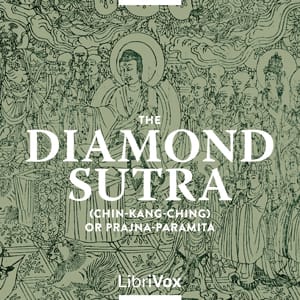
In 868 CE, an anonymous printer in China carved thousands of characters onto woodblocks and produced copies of a Buddhist teaching. In 1900, explorers discovered one of those copies sealed inside a cave in Dunhuang, hidden for over a millennium. It became the world's oldest dated printed book, but its age is only part of the story. The Diamond Sutra records a dialogue between the Buddha and his disciple Subhuti. Their conversation cuts to the heart of Buddhist teaching: what if everything we perceive as solid is empty of inherent existence? What if the self, the world, even the teachings themselves are like dreams, like reflections, like diamonds that cut through illusion? The text doesn't offer comfort in the usual sense. It offers something sharper: a demolition of everything we cling to, including the tools meant to free us. This is philosophy as performance, not just proposition. The Buddha's answers loop back on themselves, refusing to settle into doctrine. For readers willing to sit with uncertainty, the sutra has been a guide for two and a half thousand years. It speaks to anyone who has ever suspected that reality is stranger and more permeable than it appears.
Editions

Link to this book
Add a free, dofollow link to Lex on your blog, forum, syllabus, or reading list.

<a href="https://lex-books.com/book/diamond-sutra-chin-kang-ching-or-prajna-paramita-0d166265-4328-44e7-971a-e3366c6ff8eb"><img src="https://lex-books.com/badges/read-on-lex.svg" alt="Read Diamond Sutra (Chin-Kang-Ching) or Prajna-Paramita by Unknown free on Lex" width="160" height="40"></a>[](https://lex-books.com/book/diamond-sutra-chin-kang-ching-or-prajna-paramita-0d166265-4328-44e7-971a-e3366c6ff8eb)[url=https://lex-books.com/book/diamond-sutra-chin-kang-ching-or-prajna-paramita-0d166265-4328-44e7-971a-e3366c6ff8eb][img]https://lex-books.com/badges/read-on-lex.svg[/img][/url]Read Diamond Sutra (Chin-Kang-Ching) or Prajna-Paramita by Unknown free on Lex: https://lex-books.com/book/diamond-sutra-chin-kang-ching-or-prajna-paramita-0d166265-4328-44e7-971a-e3366c6ff8ebCite this book
Reading this edition for a paper or guide? Copy a citation.
Unknown. Diamond Sutra (Chin-Kang-Ching) or Prajna-Paramita. Lex, lex-books.com/book/diamond-sutra-chin-kang-ching-or-prajna-paramita-0d166265-4328-44e7-971a-e3366c6ff8eb.Unknown (n.d.). Diamond Sutra (Chin-Kang-Ching) or Prajna-Paramita. Lex. https://lex-books.com/book/diamond-sutra-chin-kang-ching-or-prajna-paramita-0d166265-4328-44e7-971a-e3366c6ff8ebUnknown. Diamond Sutra (Chin-Kang-Ching) or Prajna-Paramita. Lex. https://lex-books.com/book/diamond-sutra-chin-kang-ching-or-prajna-paramita-0d166265-4328-44e7-971a-e3366c6ff8eb.