Cry From An Indian Wife
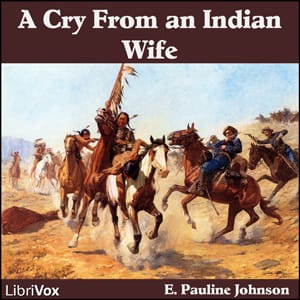
In the aftermath of the 1885 North-West Rebellion, an Indigenous wife watches the prairie for her husband's return, her heart caught between loyalty to her people and the terror of what war has wrought. E. Pauline Johnson renders this moment of waiting in verse that cracks open the seldom-told perspective of the Métis and First Nations women who bore the cost of resistance. The poem moves between tender memory and sharp anguish, between pride in her husband's courage and the unbearable silence of not knowing whether he will walk through the door or be carried home on a stretcher. Johnson, herself of Mohawk heritage, gave voice to a community rendered voiceless in the dominant histories of the conflict, and she did so with a poet's precision and a daughter's intimate understanding. When she recited this poem without notes at a Toronto literary evening in 1892, she was the only presenter to receive an encore. The poem endures because it refuses to let readers look away from the human wreckage of empire, and because its grief remains fresh: a wife on the plains, waiting for news that might never come.
Editions

Read by
Group Narration
13 readers
Chris Caron, David Lawrence, fshort, Jason Mills +9 more
Link to this book
Add a free, dofollow link to Lex on your blog, forum, syllabus, or reading list.

<a href="https://lex-books.com/book/cry-from-an-indian-wife-4baf83bb-c5c6-40e5-9836-e6f31007d803"><img src="https://lex-books.com/badges/read-on-lex.svg" alt="Read Cry From An Indian Wife by E. Pauline Johnson free on Lex" width="160" height="40"></a>[](https://lex-books.com/book/cry-from-an-indian-wife-4baf83bb-c5c6-40e5-9836-e6f31007d803)[url=https://lex-books.com/book/cry-from-an-indian-wife-4baf83bb-c5c6-40e5-9836-e6f31007d803][img]https://lex-books.com/badges/read-on-lex.svg[/img][/url]Read Cry From An Indian Wife by E. Pauline Johnson free on Lex: https://lex-books.com/book/cry-from-an-indian-wife-4baf83bb-c5c6-40e5-9836-e6f31007d803Cite this book
Reading this edition for a paper or guide? Copy a citation.
Johnson, E. Pauline. Cry From An Indian Wife. Lex, lex-books.com/book/cry-from-an-indian-wife-4baf83bb-c5c6-40e5-9836-e6f31007d803.Johnson, E. P. (n.d.). Cry From An Indian Wife. Lex. https://lex-books.com/book/cry-from-an-indian-wife-4baf83bb-c5c6-40e5-9836-e6f31007d803Johnson, E. Pauline. Cry From An Indian Wife. Lex. https://lex-books.com/book/cry-from-an-indian-wife-4baf83bb-c5c6-40e5-9836-e6f31007d803.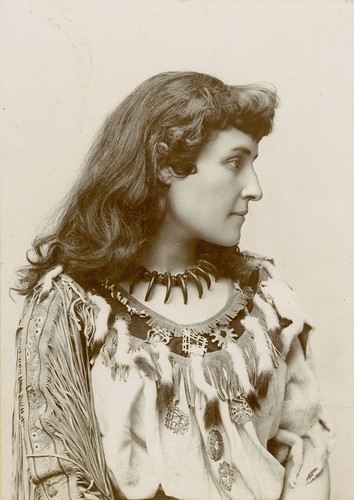




![Birds and Nature, Vol. 12 No. 1 [June 1902]illustrated by Color Photography](/_next/image?url=https%3A%2F%2Fd3b2n8gj62qnwr.cloudfront.net%2FCOVERS%2Fgutenberg_covers75k%2Febook-47881.png&w=3840&q=75)