Cruikshank's Water Colours
1903
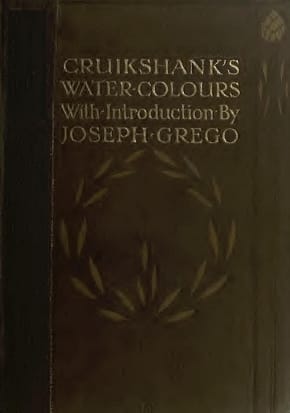
George Cruikshank's watercolours bring Oliver Twist into vivid, unsettling life. Created decades after his famous wood engravings for the original Dickens novel, these paintings reveal an artist at the height of his powers, reimagining the streets of Victorian London with theatrical intensity. The workhouses, the thieves' den, the rain-slicked alleys all glow with colour that feels both faithful to Dickens and entirely Cruikshank's own. Here is the grim comedy, the grotesque faces, the aching poverty rendered in pigment rather than ink. The introduction by Joseph Grego provides crucial context: Cruikshank himself considered these watercolours his truest response to Dickens, a chance to revisit characters he had helped make famous and finally colour them as he always imagined. The result is a document of remarkable historical and artistic value, showing how one master interpreted another across decades of shifting aesthetics. For anyone who has ever marveled at Dickens' London, Cruikshank's watercolours offer that city made visible.
Editions
Link to this book
Add a free, dofollow link to Lex on your blog, forum, syllabus, or reading list.

<a href="https://lex-books.com/book/cruikshank-s-water-colours-064bd72a-bbc8-4abc-8b66-deab0ce83b15"><img src="https://lex-books.com/badges/read-on-lex.svg" alt="Read Cruikshank's Water Colours by William Harrison Ainsworth free on Lex" width="160" height="40"></a>[](https://lex-books.com/book/cruikshank-s-water-colours-064bd72a-bbc8-4abc-8b66-deab0ce83b15)[url=https://lex-books.com/book/cruikshank-s-water-colours-064bd72a-bbc8-4abc-8b66-deab0ce83b15][img]https://lex-books.com/badges/read-on-lex.svg[/img][/url]Read Cruikshank's Water Colours by William Harrison Ainsworth free on Lex: https://lex-books.com/book/cruikshank-s-water-colours-064bd72a-bbc8-4abc-8b66-deab0ce83b15Cite this book
Reading this edition for a paper or guide? Copy a citation.
Ainsworth, William Harrison. Cruikshank's Water Colours. Lex, lex-books.com/book/cruikshank-s-water-colours-064bd72a-bbc8-4abc-8b66-deab0ce83b15.Ainsworth, W. H. (1903). Cruikshank's Water Colours. Lex. https://lex-books.com/book/cruikshank-s-water-colours-064bd72a-bbc8-4abc-8b66-deab0ce83b15Ainsworth, William Harrison. Cruikshank's Water Colours. Lex. https://lex-books.com/book/cruikshank-s-water-colours-064bd72a-bbc8-4abc-8b66-deab0ce83b15.