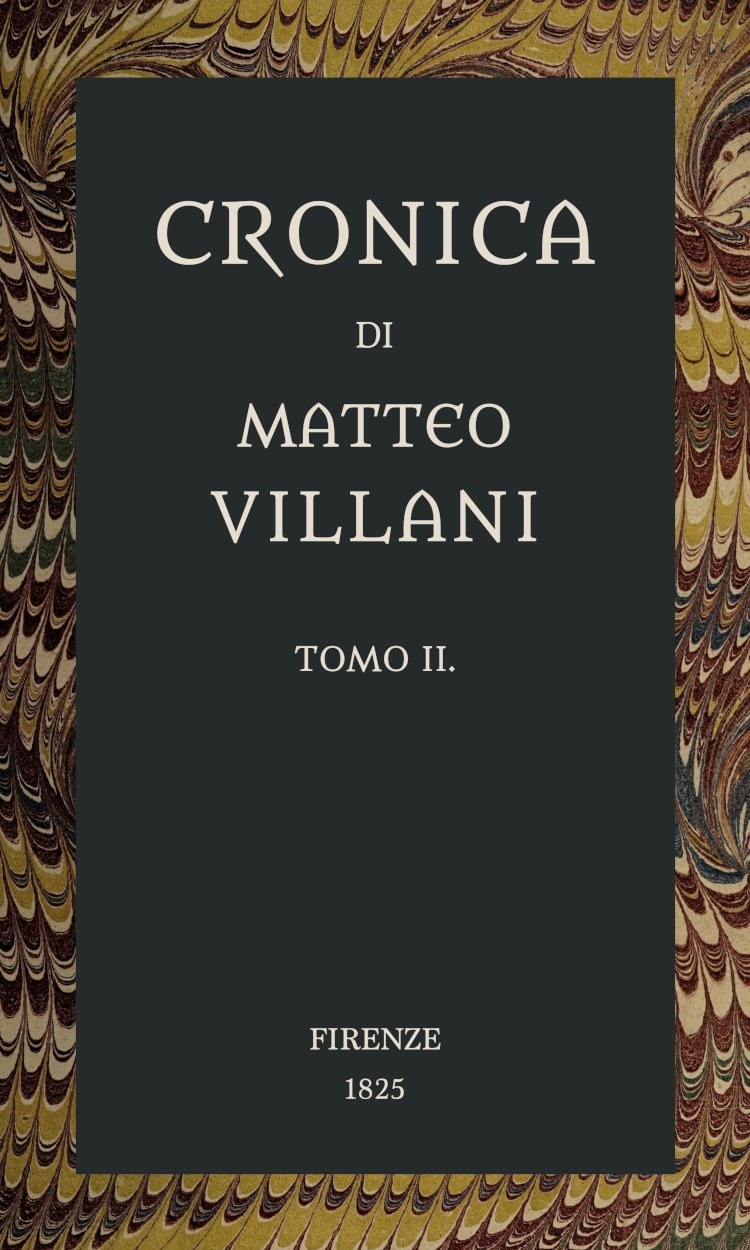
Cronica Di Matteo Villani, Vol. 2a Miglior Lezione Ridotta Coll'aiuto De' Testi a Penna
1554
Cronica Di Matteo Villani, Vol. 2a Miglior Lezione Ridotta Coll'aiuto De' Testi a Penna
1554
A historical account written in the 14th century. The work continues the detailed chronicle of its author, chronicling significant events in Italian history, particularly focusing on the political intrigues and conflicts involving cities such as Florence, Perugia, and Siena during a time of turmoil and shifting power dynamics in Italy. The opening portion of the chronicle introduces the third book, beginning with reflections on the instability of human affairs and the power struggles centered around the imperial authority in Rome. Villani sets the stage for conflict, detailing characters such as Giovanni de' Visconti, the powerful archbishop of Milan, who seeks to maintain his dominion over an expansive territory. The narrative quickly dives into political maneuvers and alliances—illustrating how various Italian towns respond to the threat of tyranny while balancing their relationships with the church and imperial authority, culminating in intricate plots, battles, and a series of diplomatic engagements among the key players of the time.
Editions
X-Ray
The chronicler and narrator of these historical events. Brother of Giovanni Villani, he continues the family chronicle of Florence and Italian affairs.
Powerful tyrant and archbishop who controlled Milan and much of northern Italy. Dies suddenly from a small carbuncle, leading to succession by his nephews.
King of Bohemia and elected Holy Roman Emperor. Comes to Italy for coronation, showing diplomatic skill and humility rather than force.
French pope based in Avignon who dies during the narrative. Known for his worldly lifestyle and favoritism toward France.
About Cronica Di Matteo Villani, Vol. 2a Miglior Lezione Ridotta Coll'aiuto De' Testi a Penna
Chapter Summaries
- 1
- Villani reflects on the mutability of worldly affairs and introduces the theme of how Florence and other Tuscan cities maintained their freedom against imperial tyranny.
- 2
- Details the extensive territories controlled by Archbishop Giovanni de' Visconti and his efforts to gain papal reconciliation through bribery.
- 3
- The Pope offers Tuscan communes three options: peace with the Archbishop, league with the Church, or bringing the Emperor to Italy.
Key Themes
- Political Instability
- The chronicle depicts constant warfare, shifting alliances, and political upheaval across Italian city-states. Power changes hands frequently through betrayal, force, and diplomatic maneuvering.
- Corruption of Power
- Religious and secular leaders alike are shown succumbing to greed, violence, and moral decay. The Archbishop of Milan and Pope Clement VI exemplify how power corrupts even church officials.
- Divine Providence vs. Human Agency
- Villani frequently attributes events to God's will while also analyzing human motivations and political calculations. Natural disasters and military defeats are seen as divine judgment.
Characters
- Matteo Villani(protagonist)
- The chronicler and narrator of these historical events. Brother of Giovanni Villani, he continues the family chronicle of Florence and Italian affairs.
- Archbishop Giovanni de' Visconti of Milan(major)
- Powerful tyrant and archbishop who controlled Milan and much of northern Italy. Dies suddenly from a small carbuncle, leading to succession by his nephews.
- Emperor Charles IV (Carlo)(major)
- King of Bohemia and elected Holy Roman Emperor. Comes to Italy for coronation, showing diplomatic skill and humility rather than force.
- Pope Clement VI(major)
- French pope based in Avignon who dies during the narrative. Known for his worldly lifestyle and favoritism toward France.
- Fra Moriale(antagonist)
- Provençal friar who becomes leader of the Great Company of mercenaries, terrorizing Italy until executed by the Roman tribune.
- Niccolò Acciaiuoli(major)
- Florentine citizen who becomes grand seneschal of the Kingdom of Sicily, praised for his loyalty and skill in serving King Louis.
Link to this book
Add a free, dofollow link to Lex on your blog, forum, syllabus, or reading list.

<a href="https://lex-books.com/book/cronica-di-matteo-villani-vol-2a-miglior-lezione-ridotta-coll-aiuto-de-testi-a-p-422f280f-e57f-45a7-9bc0-d8e761f21732"><img src="https://lex-books.com/badges/read-on-lex.svg" alt="Read Cronica Di Matteo Villani, Vol. 2a Miglior Lezione Ridotta Coll'aiuto De' Testi a Penna by Matteo,Villani free on Lex" width="160" height="40"></a>[](https://lex-books.com/book/cronica-di-matteo-villani-vol-2a-miglior-lezione-ridotta-coll-aiuto-de-testi-a-p-422f280f-e57f-45a7-9bc0-d8e761f21732)[url=https://lex-books.com/book/cronica-di-matteo-villani-vol-2a-miglior-lezione-ridotta-coll-aiuto-de-testi-a-p-422f280f-e57f-45a7-9bc0-d8e761f21732][img]https://lex-books.com/badges/read-on-lex.svg[/img][/url]Read Cronica Di Matteo Villani, Vol. 2a Miglior Lezione Ridotta Coll'aiuto De' Testi a Penna by Matteo,Villani free on Lex: https://lex-books.com/book/cronica-di-matteo-villani-vol-2a-miglior-lezione-ridotta-coll-aiuto-de-testi-a-p-422f280f-e57f-45a7-9bc0-d8e761f21732Cite this book
Reading this edition for a paper or guide? Copy a citation.
Matteo,Villani. Cronica Di Matteo Villani, Vol. 2a Miglior Lezione Ridotta Coll'aiuto De' Testi a Penna. Lex, lex-books.com/book/cronica-di-matteo-villani-vol-2a-miglior-lezione-ridotta-coll-aiuto-de-testi-a-p-422f280f-e57f-45a7-9bc0-d8e761f21732.Matteo, V. (1554). Cronica Di Matteo Villani, Vol. 2a Miglior Lezione Ridotta Coll'aiuto De' Testi a Penna. Lex. https://lex-books.com/book/cronica-di-matteo-villani-vol-2a-miglior-lezione-ridotta-coll-aiuto-de-testi-a-p-422f280f-e57f-45a7-9bc0-d8e761f21732Matteo,Villani. Cronica Di Matteo Villani, Vol. 2a Miglior Lezione Ridotta Coll'aiuto De' Testi a Penna. Lex. https://lex-books.com/book/cronica-di-matteo-villani-vol-2a-miglior-lezione-ridotta-coll-aiuto-de-testi-a-p-422f280f-e57f-45a7-9bc0-d8e761f21732.