Chronicles (3 of 6): Historie of England (1 of 9)henrie IV
1807
Chronicles (3 of 6): Historie of England (1 of 9)henrie IV
1807
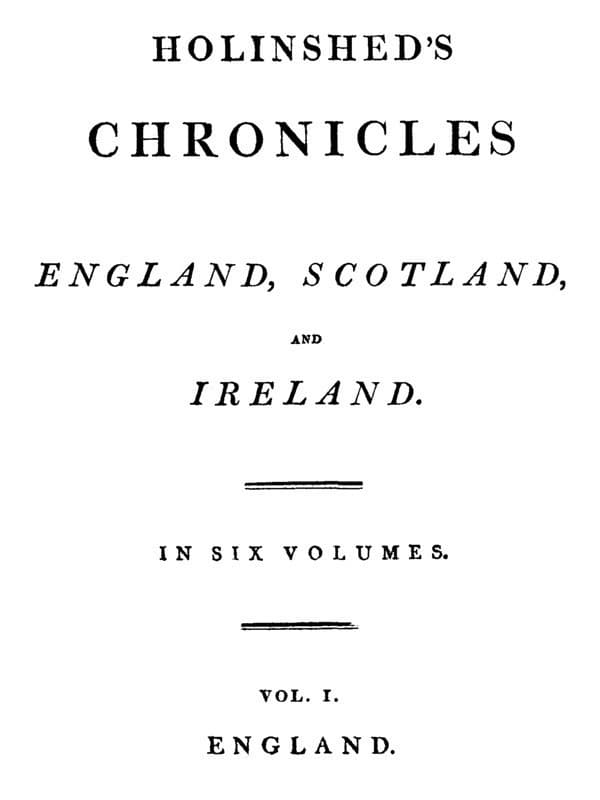
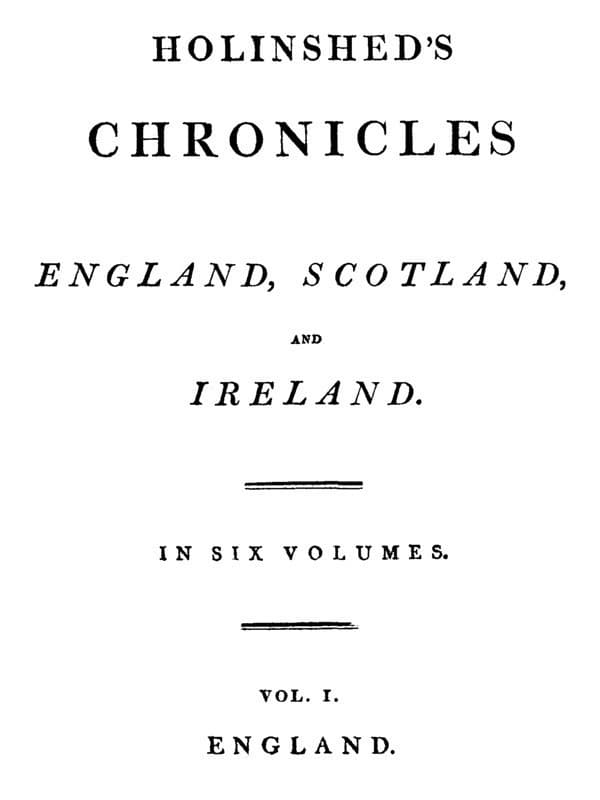
Chronicles (3 of 6): Historie of England (1 of 9) by Raphael Holinshed, first published in 1807, is a historical account detailing the reign of Henry IV from 1399 to 1413. This volume provides an in-depth narrative of the political and social events surrounding Henry's ascension to the throne, following Richard II's deposition. Holinshed's work is notable for its influence on William Shakespeare and serves as a critical resource for understanding the complexities of medieval English governance and nobility conflicts.
Editions
X-Ray
The newly crowned King of England, who seized the throne from Richard II and spends his reign battling rebellions and external threats.
The deposed King, whose continued existence and potential restoration fuel numerous conspiracies and rebellions against Henry IV.
Henry IV's eldest son, who proves his military prowess and eventually reconciles with his father despite initial suspicions.
A Welsh esquire who leads a persistent and troublesome rebellion against English rule, often allying with Henry IV's enemies.
About Chronicles (3 of 6): Historie of England (1 of 9)henrie IV
Chapter Summaries
- Introduction
- This section introduces the text as part of Holinshed's Chronicles, detailing its publication history and encoding requirements. It sets the stage for the narrative of Henry IV's reign, following the deposition of Richard II.
- Year 1 (1399): Accession and Early Reign
- Henry Plantagenet, Duke of Lancaster, is proclaimed King after Richard II's resignation. New officers are appointed, and claims for coronation offices are heard. Edmund Mortimer, Earl of March, is noted as a potential rival. The Bishop of Carleill boldly speaks against Henry's claim, leading to his arrest. Richard II is condemned to perpetual imprisonment, and a new parliament repeals old acts and confirms others, creating Prince Henry as Prince of Wales.
- Year 1 (1399-1400): The Abbot's Conspiracy and Richard II's Death
- The Abbot of Westminster, fearing Henry IV's policies towards religious wealth, conspires with several lords (Huntington, Kent, Rutland, Spenser, Salisbury, Bishop of Carleill) to assassinate the king at a joust. The plot is revealed by the Earl of Rutland to his father, the Duke of York, who then informs Henry IV. The conspirators are pursued, leading to battles and executions. Richard II dies in Pomfret Castle, with various accounts given for his death, including forced famine and murder by Sir Piers Exton.
Key Themes
- Legitimacy of Rule
- Henry IV's reign is constantly plagued by questions of his legitimacy, having usurped the throne from Richard II. This theme manifests in the numerous conspiracies aimed at restoring Richard or advancing the claim of Edmund Mortimer, forcing Henry to repeatedly assert his right through force and political maneuvering.
- Conspiracy and Rebellion
- The narrative is replete with plots, betrayals, and open rebellions, illustrating the deep instability of the period. From the Abbot of Westminster's plot to the Percy uprising and the Archbishop of York's rebellion, the constant threat of internal dissent defines Henry IV's kingship.
- Divine Providence vs. Human Agency
- The text frequently invokes divine will as an explanation for events, particularly Henry IV's survival and the failure of his enemies. However, it also details the intricate human machinations, political cunning, and military actions that shape outcomes, creating a tension between fate and individual effort.
Characters
- Henry IV(protagonist)
- The newly crowned King of England, who seized the throne from Richard II and spends his reign battling rebellions and external threats.
- Richard II(antagonist)
- The deposed King, whose continued existence and potential restoration fuel numerous conspiracies and rebellions against Henry IV.
- Henry, Prince of Wales(supporting)
- Henry IV's eldest son, who proves his military prowess and eventually reconciles with his father despite initial suspicions.
- Owen Glendower(antagonist)
- A Welsh esquire who leads a persistent and troublesome rebellion against English rule, often allying with Henry IV's enemies.
- Henry Percy, Earl of Northumberland(antagonist)
- A powerful northern lord who initially supported Henry IV but later became a formidable rebel, leading multiple uprisings.
- Henry Percy, Lord Hotspur(antagonist)
- The valiant and impetuous son of the Earl of Northumberland, a key figure in the rebellion against Henry IV, slain at Shrewsbury.
Link to this book
Add a free, dofollow link to Lex on your blog, forum, syllabus, or reading list.

<a href="https://lex-books.com/book/chronicles-3-of-6-historie-of-england-1-of-9-henrie-iv-be3b994f-05a2-4058-89ab-9e72e2083077"><img src="https://lex-books.com/badges/read-on-lex.svg" alt="Read Chronicles (3 of 6): Historie of England (1 of 9)henrie IV by Raphael,Holinshed free on Lex" width="160" height="40"></a>[](https://lex-books.com/book/chronicles-3-of-6-historie-of-england-1-of-9-henrie-iv-be3b994f-05a2-4058-89ab-9e72e2083077)[url=https://lex-books.com/book/chronicles-3-of-6-historie-of-england-1-of-9-henrie-iv-be3b994f-05a2-4058-89ab-9e72e2083077][img]https://lex-books.com/badges/read-on-lex.svg[/img][/url]Read Chronicles (3 of 6): Historie of England (1 of 9)henrie IV by Raphael,Holinshed free on Lex: https://lex-books.com/book/chronicles-3-of-6-historie-of-england-1-of-9-henrie-iv-be3b994f-05a2-4058-89ab-9e72e2083077Cite this book
Reading this edition for a paper or guide? Copy a citation.
Raphael,Holinshed. Chronicles (3 of 6): Historie of England (1 of 9)henrie IV. Lex, lex-books.com/book/chronicles-3-of-6-historie-of-england-1-of-9-henrie-iv-be3b994f-05a2-4058-89ab-9e72e2083077.Raphael, H. (1807). Chronicles (3 of 6): Historie of England (1 of 9)henrie IV. Lex. https://lex-books.com/book/chronicles-3-of-6-historie-of-england-1-of-9-henrie-iv-be3b994f-05a2-4058-89ab-9e72e2083077Raphael,Holinshed. Chronicles (3 of 6): Historie of England (1 of 9)henrie IV. Lex. https://lex-books.com/book/chronicles-3-of-6-historie-of-england-1-of-9-henrie-iv-be3b994f-05a2-4058-89ab-9e72e2083077.