Barbara Frietchie
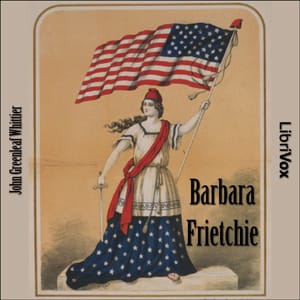
In September 1862, as Confederate troops march through Frederick, Maryland, an elderly woman named Barbara Frietchie stands at her window with the Stars and Stripes draped above her. Soldiers command her to take it down. She refuses. 'Shoot, if you must, this old gray head, / But spare your country's flag,' she says. What happens next what stays the soldiers' hands has made this poem one of the most memorable in American literature. Whittier wrote this narrative poem in 1863, basing it on a story that may be more legend than history. Yet the truth of the poem lies not in its facts but in what it captures: that moment when one unarmed person, armed only with conviction, meets armed force and does not look away. The flag becomes something more than cloth. It becomes a question asked of every soldier who passes beneath it: what are you willing to do for an idea? The poem endures because it distills a faith central to American mythology that individual conscience can stand against armies, that moral courage has its own power, and that sometimes the bravest thing a person can do is simply to refuse to be afraid.
Editions

Read by
Group Narration
4 readers
Kristin Hughes (1974-2021), Kymm Zuckert, Fox in the Stars, Westwinds12
Link to this book
Add a free, dofollow link to Lex on your blog, forum, syllabus, or reading list.

<a href="https://lex-books.com/book/barbara-frietchie-3e8e3455-c2fc-4871-b229-928d1aa5a4ef"><img src="https://lex-books.com/badges/read-on-lex.svg" alt="Read Barbara Frietchie by John Greenleaf Whittier free on Lex" width="160" height="40"></a>[](https://lex-books.com/book/barbara-frietchie-3e8e3455-c2fc-4871-b229-928d1aa5a4ef)[url=https://lex-books.com/book/barbara-frietchie-3e8e3455-c2fc-4871-b229-928d1aa5a4ef][img]https://lex-books.com/badges/read-on-lex.svg[/img][/url]Read Barbara Frietchie by John Greenleaf Whittier free on Lex: https://lex-books.com/book/barbara-frietchie-3e8e3455-c2fc-4871-b229-928d1aa5a4efCite this book
Reading this edition for a paper or guide? Copy a citation.
Whittier, John Greenleaf. Barbara Frietchie. Lex, lex-books.com/book/barbara-frietchie-3e8e3455-c2fc-4871-b229-928d1aa5a4ef.Whittier, J. G. (n.d.). Barbara Frietchie. Lex. https://lex-books.com/book/barbara-frietchie-3e8e3455-c2fc-4871-b229-928d1aa5a4efWhittier, John Greenleaf. Barbara Frietchie. Lex. https://lex-books.com/book/barbara-frietchie-3e8e3455-c2fc-4871-b229-928d1aa5a4ef.



![Birds and Nature, Vol. 12 No. 1 [June 1902]illustrated by Color Photography](/_next/image?url=https%3A%2F%2Fd3b2n8gj62qnwr.cloudfront.net%2FCOVERS%2Fgutenberg_covers75k%2Febook-47881.png&w=3840&q=75)