Audrey: Or, Children of Light
1897
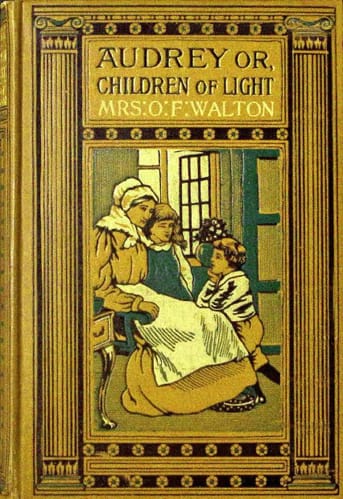
In a neglected churchyard on the outskirts of a quiet village, a young girl named Audrey discovers that the most sacred places are often the ones the world has forgotten. Living with her practical Aunt Cordelia, who insists on clean pinafores and proper behavior, Audrey rebels against the constraints of tidy domesticity, finding instead a world of wonder among the tombstones and wildflowers, the crumbling pews and ancient stones. There she befriends Stephen, a boy whose physical disability has kept him separate from other children, and together they forge a bond that transcends the limitations society places on both the able-bodied and the differently-abled. The elderly Mrs. Robin and her husband, keepers of the old church, become guides to a spiritual landscape where light functions as both literal illumination and metaphor for faith, hope, and the interior life of the soul. Written in 1897, this is Victorian children's literature at its most nuanced: a story that honors childhood's imagination while gently exploring loss, the longing to belong, and the way light can be found even in the darkest, most abandoned places.
Editions
Link to this book
Add a free, dofollow link to Lex on your blog, forum, syllabus, or reading list.

<a href="https://lex-books.com/book/audrey-or-children-of-light-5d2e4c23-5852-4d62-838f-4b7dbcbdc4af"><img src="https://lex-books.com/badges/read-on-lex.svg" alt="Read Audrey: Or, Children of Light by O. F., Mrs. Walton free on Lex" width="160" height="40"></a>[](https://lex-books.com/book/audrey-or-children-of-light-5d2e4c23-5852-4d62-838f-4b7dbcbdc4af)[url=https://lex-books.com/book/audrey-or-children-of-light-5d2e4c23-5852-4d62-838f-4b7dbcbdc4af][img]https://lex-books.com/badges/read-on-lex.svg[/img][/url]Read Audrey: Or, Children of Light by O. F., Mrs. Walton free on Lex: https://lex-books.com/book/audrey-or-children-of-light-5d2e4c23-5852-4d62-838f-4b7dbcbdc4afCite this book
Reading this edition for a paper or guide? Copy a citation.
O. F., Mrs. Walton. Audrey: Or, Children of Light. Lex, lex-books.com/book/audrey-or-children-of-light-5d2e4c23-5852-4d62-838f-4b7dbcbdc4af.O. F., M. W. (1897). Audrey: Or, Children of Light. Lex. https://lex-books.com/book/audrey-or-children-of-light-5d2e4c23-5852-4d62-838f-4b7dbcbdc4afO. F., Mrs. Walton. Audrey: Or, Children of Light. Lex. https://lex-books.com/book/audrey-or-children-of-light-5d2e4c23-5852-4d62-838f-4b7dbcbdc4af.