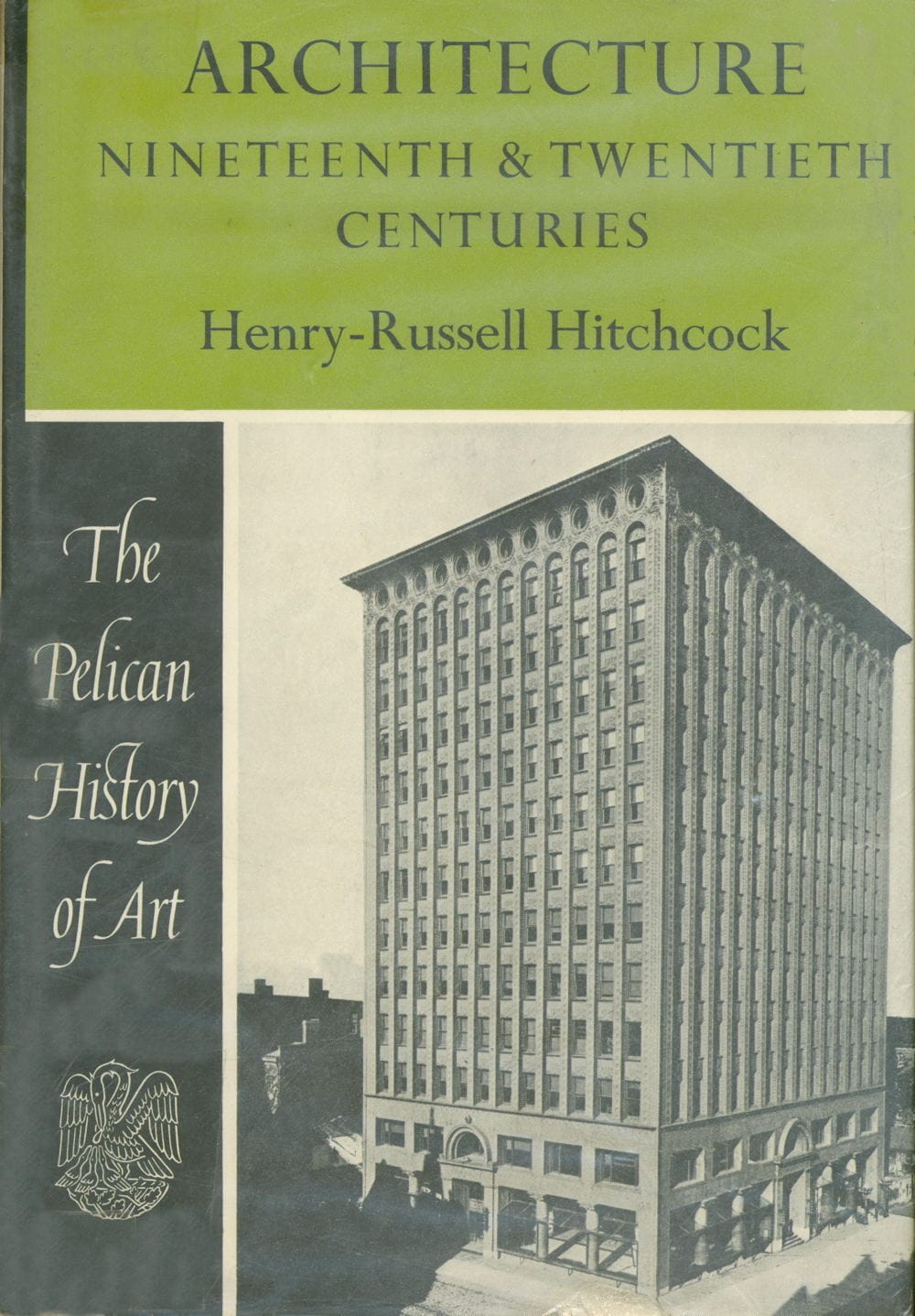
Architecture: Nineteenth and Twentieth Centuries
1929
Architecture: Nineteenth and Twentieth Centuries
1929
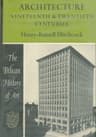
Written in 1929 by one of the century's most distinguished architectural historians, this book captures a pivotal moment: the end of an era that had witnessed the complete transformation of the built world. Hitchcock argues persuasively that the nineteenth and twentieth centuries constitute far more than a mere prologue to the age of steel and concrete. Beginning with Romantic Classicism's elegant departure from Baroque excess, he traces the remarkable journey through the revolutionary iron-and-glass structures of the Crystal Palace, the revivalist movements that reimagined historical traditions, the sinuous organic curves of Art Nouveau, and finally the emergence of modernism's titans: Perret, Wright, Gropius, Corbusier, and Mies van der Rohe. What emerges is not a simple march of progress but a complex dialogue between past and present, national traditions and international exchange, ornament and purity. Hitchcock writes with the authority of someone who witnessed these developments firsthand, making this both a scholarly achievement and a primary document. For anyone seeking to understand how we arrived at the architectural landscape of the twentieth century, this remains an indispensable foundation.
Editions
Link to this book
Add a free, dofollow link to Lex on your blog, forum, syllabus, or reading list.

<a href="https://lex-books.com/book/architecture-nineteenth-and-twentieth-centuries-f1da3c20-1bcb-4c3d-857d-4557e62ab28e"><img src="https://lex-books.com/badges/read-on-lex.svg" alt="Read Architecture: Nineteenth and Twentieth Centuries by Henry-Russell Hitchcock free on Lex" width="160" height="40"></a>[](https://lex-books.com/book/architecture-nineteenth-and-twentieth-centuries-f1da3c20-1bcb-4c3d-857d-4557e62ab28e)[url=https://lex-books.com/book/architecture-nineteenth-and-twentieth-centuries-f1da3c20-1bcb-4c3d-857d-4557e62ab28e][img]https://lex-books.com/badges/read-on-lex.svg[/img][/url]Read Architecture: Nineteenth and Twentieth Centuries by Henry-Russell Hitchcock free on Lex: https://lex-books.com/book/architecture-nineteenth-and-twentieth-centuries-f1da3c20-1bcb-4c3d-857d-4557e62ab28eCite this book
Reading this edition for a paper or guide? Copy a citation.
Hitchcock, Henry-Russell. Architecture: Nineteenth and Twentieth Centuries. Lex, lex-books.com/book/architecture-nineteenth-and-twentieth-centuries-f1da3c20-1bcb-4c3d-857d-4557e62ab28e.Hitchcock, H. (1929). Architecture: Nineteenth and Twentieth Centuries. Lex. https://lex-books.com/book/architecture-nineteenth-and-twentieth-centuries-f1da3c20-1bcb-4c3d-857d-4557e62ab28eHitchcock, Henry-Russell. Architecture: Nineteenth and Twentieth Centuries. Lex. https://lex-books.com/book/architecture-nineteenth-and-twentieth-centuries-f1da3c20-1bcb-4c3d-857d-4557e62ab28e.