Anglo-Dutch Rivalry During the First Half of the Seventeenth Century: Being the Ford Lectures Delivered at Oxford in 1910
1911
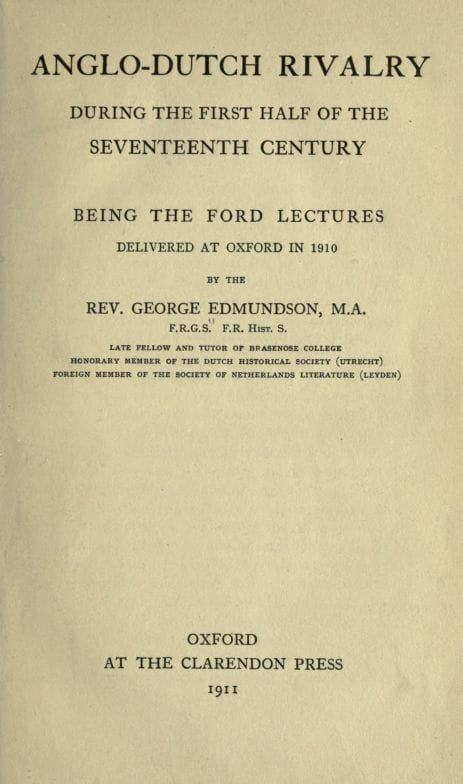
Anglo-Dutch Rivalry During the First Half of the Seventeenth Century: Being the Ford Lectures Delivered at Oxford in 1910
1911
In the seventeenth century, two small nations on the North Sea coast carved out an empire of commerce that would reshape the world. The Dutch Republic, with its revolutionary financial instruments and unrivaled shipping, had become the warehouse of Europe. England, under the Stuarts, watched with growing resentment as Dutch ships dominated the fishing grounds of the North Sea and the lucrative trade routes that fed London's own ambitions. George Edmundson's 1910 Ford Lectures trace the arc of this rivalry from its roots in shared Protestant resistance against Spain to the explosions of the three Anglo-Dutch Wars. This is not merely a chronicle of battles, but a careful examination of how economic self-interest, ideological confidence, and strategic miscalculation transformed allies into enemies. Edmundson writes with the precision of a scholar who understood that understanding this conflict is essential to grasping the foundations of modern commercial power. The lectures remain valuable not because they offer simple answers, but because they illuminate the complex forces that launched Britain toward global empire.
Editions
Link to this book
Add a free, dofollow link to Lex on your blog, forum, syllabus, or reading list.

<a href="https://lex-books.com/book/anglo-dutch-rivalry-during-the-first-half-of-the-seventeenth-century-being-the-f-16bcc65f-60dc-4df3-b8f2-d7850ef6e9d7"><img src="https://lex-books.com/badges/read-on-lex.svg" alt="Read Anglo-Dutch Rivalry During the First Half of the Seventeenth Century: Being the Ford Lectures Delivered at Oxford in 1910 by George Edmundson free on Lex" width="160" height="40"></a>[](https://lex-books.com/book/anglo-dutch-rivalry-during-the-first-half-of-the-seventeenth-century-being-the-f-16bcc65f-60dc-4df3-b8f2-d7850ef6e9d7)[url=https://lex-books.com/book/anglo-dutch-rivalry-during-the-first-half-of-the-seventeenth-century-being-the-f-16bcc65f-60dc-4df3-b8f2-d7850ef6e9d7][img]https://lex-books.com/badges/read-on-lex.svg[/img][/url]Read Anglo-Dutch Rivalry During the First Half of the Seventeenth Century: Being the Ford Lectures Delivered at Oxford in 1910 by George Edmundson free on Lex: https://lex-books.com/book/anglo-dutch-rivalry-during-the-first-half-of-the-seventeenth-century-being-the-f-16bcc65f-60dc-4df3-b8f2-d7850ef6e9d7Cite this book
Reading this edition for a paper or guide? Copy a citation.
Edmundson, George. Anglo-Dutch Rivalry During the First Half of the Seventeenth Century: Being the Ford Lectures Delivered at Oxford in 1910. Lex, lex-books.com/book/anglo-dutch-rivalry-during-the-first-half-of-the-seventeenth-century-being-the-f-16bcc65f-60dc-4df3-b8f2-d7850ef6e9d7.Edmundson, G. (1911). Anglo-Dutch Rivalry During the First Half of the Seventeenth Century: Being the Ford Lectures Delivered at Oxford in 1910. Lex. https://lex-books.com/book/anglo-dutch-rivalry-during-the-first-half-of-the-seventeenth-century-being-the-f-16bcc65f-60dc-4df3-b8f2-d7850ef6e9d7Edmundson, George. Anglo-Dutch Rivalry During the First Half of the Seventeenth Century: Being the Ford Lectures Delivered at Oxford in 1910. Lex. https://lex-books.com/book/anglo-dutch-rivalry-during-the-first-half-of-the-seventeenth-century-being-the-f-16bcc65f-60dc-4df3-b8f2-d7850ef6e9d7.