Advertising by Motion Pictures
1916
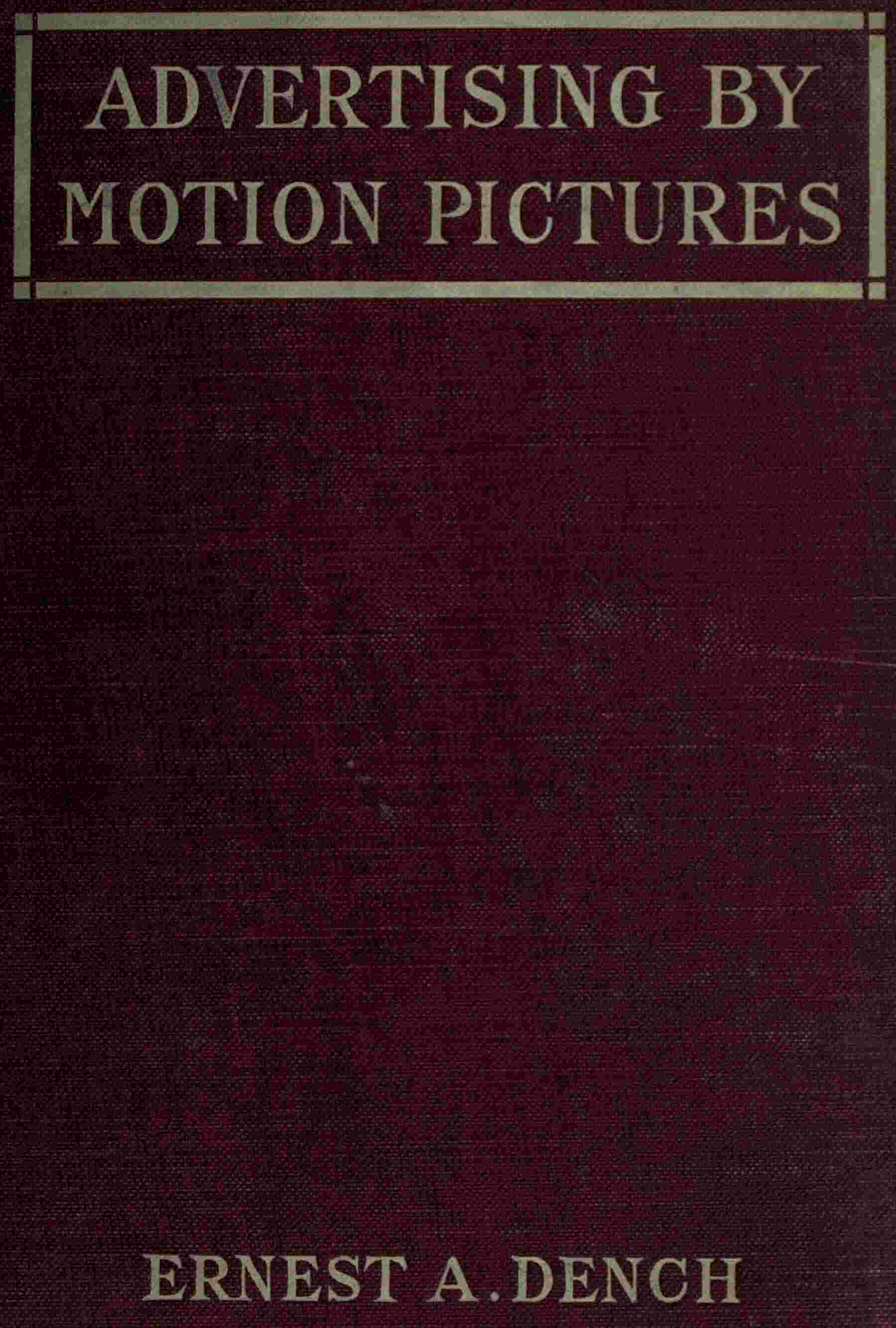
In 1916, motion pictures were still a teenager's invention, and the idea of using them to sell soap or automobiles seemed either brilliant or absurd depending on whom you asked. Ernest A. Dench, a journalist who had watched the film industry explode from sideshow to national obsession, wrote the first serious attempt to systematize what many advertisers were only beginning to glimpse: that moving pictures could do something no newspaper advertisement ever could. This book captures that electric moment before feature films, before television, before anyone knew what mass media would become. Dench maps the terrain of a medium in its awkward, exhilarating youth, offering practical advice while wrestling with questions that would outlive him: How do you tell a story that also sells? What ethical boundaries exist when you can shape reality on film? The book matters less as a manual than as a time capsule. Here is someone thinking in real time about the dawn of visual persuasion, decades before anyone used the phrase 'content is king.' For readers curious about where modern advertising came from, or how new media always finds its way to the marketplace, Dench offers a front-row seat to the invention of an industry that now spends half a trillion dollars annually.
Editions
Link to this book
Add a free, dofollow link to Lex on your blog, forum, syllabus, or reading list.

<a href="https://lex-books.com/book/advertising-by-motion-pictures-0b907a55-02d4-4643-8a8a-2152d99eb837"><img src="https://lex-books.com/badges/read-on-lex.svg" alt="Read Advertising by Motion Pictures by Ernest A. Dench free on Lex" width="160" height="40"></a>[](https://lex-books.com/book/advertising-by-motion-pictures-0b907a55-02d4-4643-8a8a-2152d99eb837)[url=https://lex-books.com/book/advertising-by-motion-pictures-0b907a55-02d4-4643-8a8a-2152d99eb837][img]https://lex-books.com/badges/read-on-lex.svg[/img][/url]Read Advertising by Motion Pictures by Ernest A. Dench free on Lex: https://lex-books.com/book/advertising-by-motion-pictures-0b907a55-02d4-4643-8a8a-2152d99eb837Cite this book
Reading this edition for a paper or guide? Copy a citation.
Dench, Ernest A.. Advertising by Motion Pictures. Lex, lex-books.com/book/advertising-by-motion-pictures-0b907a55-02d4-4643-8a8a-2152d99eb837.Dench, E. A. (1916). Advertising by Motion Pictures. Lex. https://lex-books.com/book/advertising-by-motion-pictures-0b907a55-02d4-4643-8a8a-2152d99eb837Dench, Ernest A.. Advertising by Motion Pictures. Lex. https://lex-books.com/book/advertising-by-motion-pictures-0b907a55-02d4-4643-8a8a-2152d99eb837.