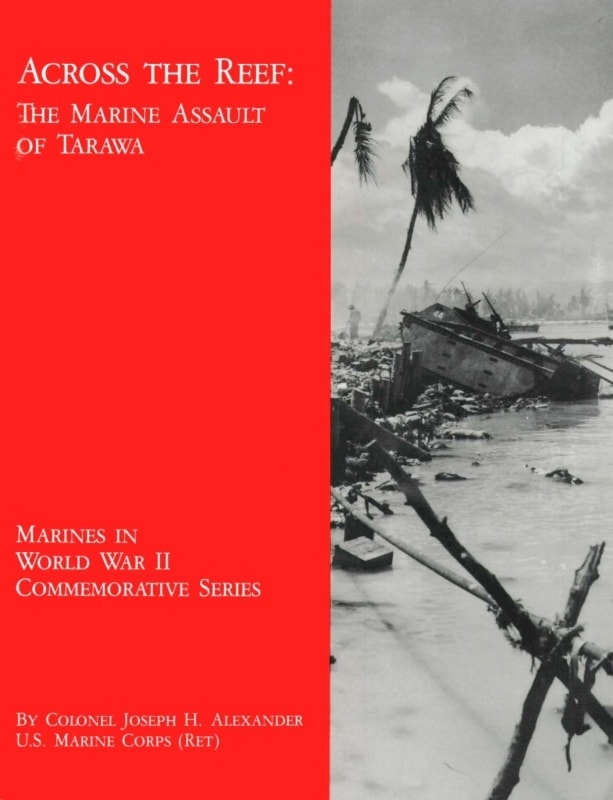
Across the Reef: The Marine Assault of Tarawa
1993
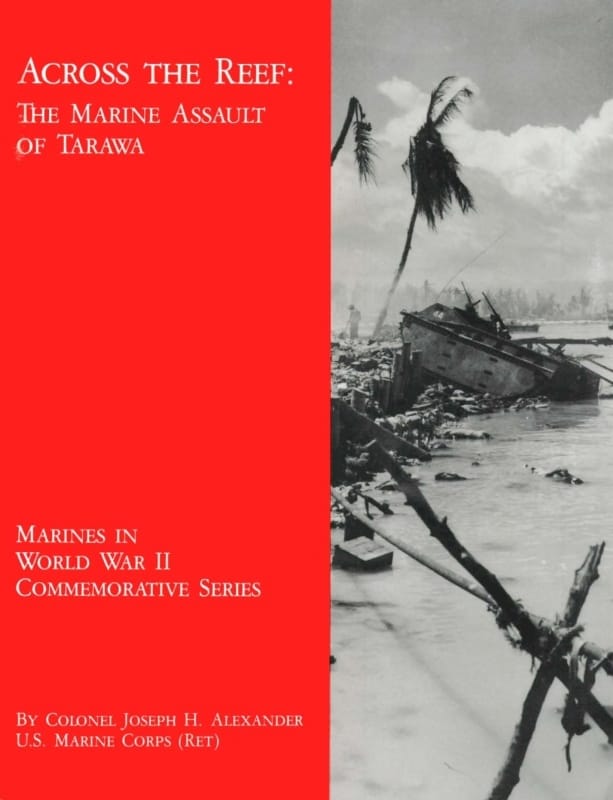
Across the Reef: The Marine Assault of Tarawa
1993
In November 1943, the U.S. Marine Corps faced its gravest challenge yet: a heavily fortified island in the Pacific, ringed by a deadly coral reef, defended by thousands of entrenched Japanese soldiers who had spent months fortifying every inch of Betio. What unfolded over three days of brutal combat would become the first large-scale test of American amphibious doctrine and a blooding that shocked the nation. Lieutenant Colonel David M. Shoup's improvised plan to overcome the reef the Navy could not provide boats for would either work or cost thousands of Marine lives. It worked. Barely. Time magazine would later write that 2,000 or 3,000 Marines, most dead or wounded, gave America a name to stand beside Concord Bridge, the Alamo, and Little Bighorn. The name was Tarawa. Alexander's account renders this pivotal battle with tactical precision and human immediacy, showing how raw courage and improvisation overcame catastrophic planning failures, forever changing how America wage amphibious war.
Editions
Link to this book
Add a free, dofollow link to Lex on your blog, forum, syllabus, or reading list.

<a href="https://lex-books.com/book/across-the-reef-the-marine-assault-of-tarawa-0a99226b-68fe-4732-a00d-2eb79ca546a7"><img src="https://lex-books.com/badges/read-on-lex.svg" alt="Read Across the Reef: The Marine Assault of Tarawa by Joseph H. Alexander free on Lex" width="160" height="40"></a>[](https://lex-books.com/book/across-the-reef-the-marine-assault-of-tarawa-0a99226b-68fe-4732-a00d-2eb79ca546a7)[url=https://lex-books.com/book/across-the-reef-the-marine-assault-of-tarawa-0a99226b-68fe-4732-a00d-2eb79ca546a7][img]https://lex-books.com/badges/read-on-lex.svg[/img][/url]Read Across the Reef: The Marine Assault of Tarawa by Joseph H. Alexander free on Lex: https://lex-books.com/book/across-the-reef-the-marine-assault-of-tarawa-0a99226b-68fe-4732-a00d-2eb79ca546a7Cite this book
Reading this edition for a paper or guide? Copy a citation.
Alexander, Joseph H.. Across the Reef: The Marine Assault of Tarawa. Lex, lex-books.com/book/across-the-reef-the-marine-assault-of-tarawa-0a99226b-68fe-4732-a00d-2eb79ca546a7.Alexander, J. H. (1993). Across the Reef: The Marine Assault of Tarawa. Lex. https://lex-books.com/book/across-the-reef-the-marine-assault-of-tarawa-0a99226b-68fe-4732-a00d-2eb79ca546a7Alexander, Joseph H.. Across the Reef: The Marine Assault of Tarawa. Lex. https://lex-books.com/book/across-the-reef-the-marine-assault-of-tarawa-0a99226b-68fe-4732-a00d-2eb79ca546a7.