A Plain Introduction to the Criticism of the New Testament, Vol. I.
1874
A Plain Introduction to the Criticism of the New Testament, Vol. I.
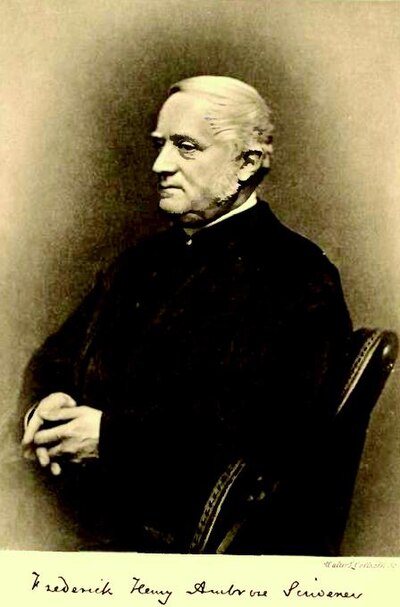
Frederick Henry Ambrose Scrivener
1874
In an era before computers, databases, or digital facsimiles, one man spent decades traveling through European libraries, examining ancient manuscripts by candlelight and hand-copying their variations. That man was Frederick Henry Ambrose Scrivener, and his monumental catalog of over 3,000 Greek New Testament manuscripts stood as the definitive reference for generations of biblical scholars. First published in the nineteenth century, this Plain Introduction became the bedrock upon which modern textual criticism was built, its influence echoing through the work of later giants like Caspar René Gregory. Scrivener's volume is not merely a list. It is a meticulous reckoning with the physical evidence of how the New Testament text was transmitted, corrupted, and preserved across fifteen centuries of copying by monks, scribes, and scholars. The book details manuscript characteristics, traces provenance, and outlines the principles by which variant readings can be evaluated. For anyone seeking to understand how we know what the New Testament says and why uncertainties remain, this volume remains essential reading. It is a masterclass in patience, precision, and the humble admission that the text we read today is the product of thousands of small human choices.
Editions
Link to this book
Add a free, dofollow link to Lex on your blog, forum, syllabus, or reading list.

<a href="https://lex-books.com/book/a-plain-introduction-to-the-criticism-of-the-new-testament-vol-i-e06a2657-3669-4fb1-bf81-32dda664a52c"><img src="https://lex-books.com/badges/read-on-lex.svg" alt="Read A Plain Introduction to the Criticism of the New Testament, Vol. I. by Frederick Henry Ambrose Scrivener free on Lex" width="160" height="40"></a>[](https://lex-books.com/book/a-plain-introduction-to-the-criticism-of-the-new-testament-vol-i-e06a2657-3669-4fb1-bf81-32dda664a52c)[url=https://lex-books.com/book/a-plain-introduction-to-the-criticism-of-the-new-testament-vol-i-e06a2657-3669-4fb1-bf81-32dda664a52c][img]https://lex-books.com/badges/read-on-lex.svg[/img][/url]Read A Plain Introduction to the Criticism of the New Testament, Vol. I. by Frederick Henry Ambrose Scrivener free on Lex: https://lex-books.com/book/a-plain-introduction-to-the-criticism-of-the-new-testament-vol-i-e06a2657-3669-4fb1-bf81-32dda664a52cCite this book
Reading this edition for a paper or guide? Copy a citation.
Scrivener, Frederick Henry Ambrose. A Plain Introduction to the Criticism of the New Testament, Vol. I.. Lex, lex-books.com/book/a-plain-introduction-to-the-criticism-of-the-new-testament-vol-i-e06a2657-3669-4fb1-bf81-32dda664a52c.Scrivener, F. H. A. (1874). A Plain Introduction to the Criticism of the New Testament, Vol. I.. Lex. https://lex-books.com/book/a-plain-introduction-to-the-criticism-of-the-new-testament-vol-i-e06a2657-3669-4fb1-bf81-32dda664a52cScrivener, Frederick Henry Ambrose. A Plain Introduction to the Criticism of the New Testament, Vol. I.. Lex. https://lex-books.com/book/a-plain-introduction-to-the-criticism-of-the-new-testament-vol-i-e06a2657-3669-4fb1-bf81-32dda664a52c.