A Pál-Utcai Fiúk: Regény Kis Diákok Számára
1907
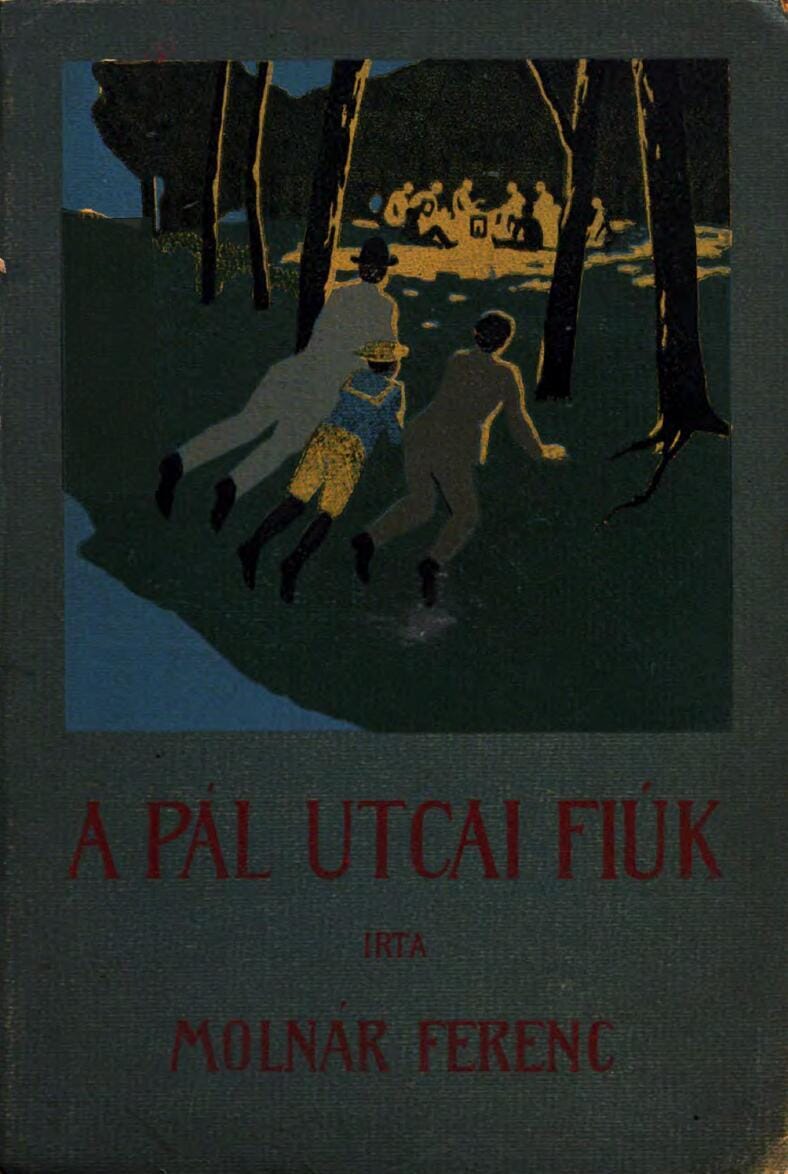
In the cramped courtyards of Budapest, two armies wage war over a patch of dirt and rubble. The prize is the grund, a vacant lot trapped between apartment buildings, a fence, and a sawmill. For the boys of Pál Street, this patch of earth is everything: nation, fortress, kingdom. They organize themselves like generals and officers, except for one small, blond boy named Nemecsek, the only private in an army of aristocrats. He is poor and slight and often overlooked, but his loyalty is absolute. Ferenc Molnár transforms a child's territorial dispute into an epic of belonging, betrayal, and courage. The boys fight with sticks and stones and fierce imagination, their battles as consequential to them as any historical conflict. When Nemecsek finally gets his chance to prove himself, the results are both triumphant and devastating. Written in 1907, this novel captures something eternal about the serious business of childhood: how territories matter, how friends matter, how being the one who is overlooked can break you or make you.
Editions
X-Ray
“Was it good?Nemecsek fixed his blue eyes on Gereb and replied:Yes, and quietly added: Much better than to be standing on the bank, laughing at me. I'd rather stay in the water neck-deep until New Year than be hand-in-hand with my friends' enemies. I don't mind having dipped in the water. The other day I fell in there by myself. I saw you then, too, with these strangers on the island. But you fellows can invite me as long as you like, you can flatter me and shower me with presents - yet I won't have a thing to do with you. And if you give me another ducking, if you throw me in the water a hundred times, or even a thousand times, I'll come here tomorrow and the day after just the same. I'll find a hiding place where you won't get me. I'm not afraid of anyone of you. And if you'll come to Paul Street, to take our ground away, we'll be on the spot! And don't you forget that either! I'll show you that with ten of us against your ten, you'll hear a different sort of talk from what I'm giving you now. It was easy enough to get the better of me! The one that's stronger always wins! The Pasztor boys stole my marbles in the Museum Garden because they were stronger. Now I got a ducking because you are stronger! Easy enough when ten are against one! But I don't care! You can even beat me up, if it'll do you good. I could have saved myself from the ducking, but I wouldn't join you. I'd rather be drowned or have my brains knocked out than be a traitor...like....somebody standing over...there....””
— Ferenc Molnár
“...Basit çocuk ruhunda derinden derine bir şeyler değişiyordu: Hayata dair, hani içinde hepimizin bazen kederli, bazen neşeli köleler olduğumuz hayata dair, bazı gerçekleri kavramaya başladığını hissediyordu.””
— Ferenc Molnár
“Giờ này trong tâm hồn thơ ngây của đứa trẻ hửng lên một chút phỏng đoán về cuộc đời. Cuộc đời thực ra là cái mà tất cả chúng ta đều phụng sự, đấu tranh cho nó khi buồn rầu, khi thì vui vẻ.””
— Ferenc Molnár
“Boka was a shrewd lad, but he did not as yet know that other people are quite different from us, and that we usually learn of this at the cost of some feeling of anguish.””
— Ferenc Molnár
“Boka sentia que nesse momento tudo dependia dele - o bem-estar daquela minúscula sociedade, as tardes alegres, as partidas de péla e de outros jogos, os divertimentos de seus amigos - e enchia-se de orgulho por ter-se encarregado de uma tarefa tão bela.””
— Ferenc Molnár
“Gerçekten, şu yaşam nasıl bir şey ki hepimiz onun, durmadan savaşan, bazen üzüntülü, bazen neşeli hizmetçileriyiz !””
— Ferenc Molnár
“Şu yaşam delilen şey, ne biçim şeydi? Kimi zaman sevinçler veren, kimi zaman içimizi acılarla dolduran, kölesi olduğumuz şu yaşam neyin nesi böyle ?””
— Ferenc Molnár
“Nemecsek herkesin emirlerini memnuniyetle yerine getirirdi. Evet, kendinden istenenleri yapmaktan zevk alan böyle çocuklar da vardır, ama çocukların çoğunluğu emir almak değil, emir vermekten hoşlanırdı. İnsanlar sonuçta böyleydi.””
— Ferenc Molnár
“Ama ben kahraman değilim. Buraya gelmemin ne kadar önemli olduğunu bilmiyordum. Ben sadece diğer arkadaşlar gibi savaşmaya geldim. Onlar gibi, aynen arkadaşlarım gibi... Sonra birden önünde Feri Áts’ı görünce çok öfkelendim. Ona çok kızgındım! Çünkü onun yüzünden, onun beni havuza attırması nedeniyle hasta olmuştum ve bu yüzden savaşta sizin yanınızda değildim! Şöyle düşündüm: “Ernö! Ya şimdi ya da hiçbir zaman!” Gözlerimi yumdum ve... Ve... Üstüne atladım.””
— Ferenc Molnár
Link to this book
Add a free, dofollow link to Lex on your blog, forum, syllabus, or reading list.

<a href="https://lex-books.com/book/a-p-l-utcai-fi-k-reg-ny-kis-di-kok-sz-m-ra-40ba8294-2d52-41b9-b848-84d178554876"><img src="https://lex-books.com/badges/read-on-lex.svg" alt="Read A Pál-Utcai Fiúk: Regény Kis Diákok Számára by Ferenc Molnár free on Lex" width="160" height="40"></a>[](https://lex-books.com/book/a-p-l-utcai-fi-k-reg-ny-kis-di-kok-sz-m-ra-40ba8294-2d52-41b9-b848-84d178554876)[url=https://lex-books.com/book/a-p-l-utcai-fi-k-reg-ny-kis-di-kok-sz-m-ra-40ba8294-2d52-41b9-b848-84d178554876][img]https://lex-books.com/badges/read-on-lex.svg[/img][/url]Read A Pál-Utcai Fiúk: Regény Kis Diákok Számára by Ferenc Molnár free on Lex: https://lex-books.com/book/a-p-l-utcai-fi-k-reg-ny-kis-di-kok-sz-m-ra-40ba8294-2d52-41b9-b848-84d178554876Cite this book
Reading this edition for a paper or guide? Copy a citation.
Molnár, Ferenc. A Pál-Utcai Fiúk: Regény Kis Diákok Számára. Lex, lex-books.com/book/a-p-l-utcai-fi-k-reg-ny-kis-di-kok-sz-m-ra-40ba8294-2d52-41b9-b848-84d178554876.Molnár, F. (1907). A Pál-Utcai Fiúk: Regény Kis Diákok Számára. Lex. https://lex-books.com/book/a-p-l-utcai-fi-k-reg-ny-kis-di-kok-sz-m-ra-40ba8294-2d52-41b9-b848-84d178554876Molnár, Ferenc. A Pál-Utcai Fiúk: Regény Kis Diákok Számára. Lex. https://lex-books.com/book/a-p-l-utcai-fi-k-reg-ny-kis-di-kok-sz-m-ra-40ba8294-2d52-41b9-b848-84d178554876.