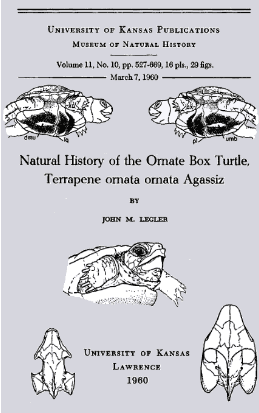
A New Tortoise, Genus Gopherus, from North-Central Mexico
1959
A New Tortoise, Genus Gopherus, from North-Central Mexico
1959
In 1959, herpetologist John M. Legler published this landmark taxonomic study that introduced the scientific world to Gopherus flavomarginatus, the Bolson tortoise. Drawing on specimens collected across the desert landscapes of north-central Mexico, Legler meticulously documented the physical characteristics that set this creature apart from its relatives: a distinctive yellowish marginal shell, a domed carapace, and proportions that distinguished it from every known Gopherus species at the time. Through careful measurement, comparative analysis, and field observations gathered from historical references and his own expeditions, Legler established the diagnostic criteria that would allow future researchers to identify and study this species. The monograph also ventures into the tortoise's likely distribution range, piecing together anecdotal accounts and ecological evidence to paint a picture of this desert dweller's habitat. Though the Bolson tortoise would later be reclassified within the Gopherus genus as understanding evolved, this original description remains a foundational document in herpetology, capturing a moment when a new species emerged from the scientific unknown into taxonomic recognition.
Editions
Link to this book
Add a free, dofollow link to Lex on your blog, forum, syllabus, or reading list.

<a href="https://lex-books.com/book/a-new-tortoise-genus-gopherus-from-north-central-mexico-2b3d3dee-7404-46e2-9afe-3cac46a711f9"><img src="https://lex-books.com/badges/read-on-lex.svg" alt="Read A New Tortoise, Genus Gopherus, from North-Central Mexico by John M. Legler free on Lex" width="160" height="40"></a>[](https://lex-books.com/book/a-new-tortoise-genus-gopherus-from-north-central-mexico-2b3d3dee-7404-46e2-9afe-3cac46a711f9)[url=https://lex-books.com/book/a-new-tortoise-genus-gopherus-from-north-central-mexico-2b3d3dee-7404-46e2-9afe-3cac46a711f9][img]https://lex-books.com/badges/read-on-lex.svg[/img][/url]Read A New Tortoise, Genus Gopherus, from North-Central Mexico by John M. Legler free on Lex: https://lex-books.com/book/a-new-tortoise-genus-gopherus-from-north-central-mexico-2b3d3dee-7404-46e2-9afe-3cac46a711f9Cite this book
Reading this edition for a paper or guide? Copy a citation.
Legler, John M.. A New Tortoise, Genus Gopherus, from North-Central Mexico. Lex, lex-books.com/book/a-new-tortoise-genus-gopherus-from-north-central-mexico-2b3d3dee-7404-46e2-9afe-3cac46a711f9.Legler, J. M. (1959). A New Tortoise, Genus Gopherus, from North-Central Mexico. Lex. https://lex-books.com/book/a-new-tortoise-genus-gopherus-from-north-central-mexico-2b3d3dee-7404-46e2-9afe-3cac46a711f9Legler, John M.. A New Tortoise, Genus Gopherus, from North-Central Mexico. Lex. https://lex-books.com/book/a-new-tortoise-genus-gopherus-from-north-central-mexico-2b3d3dee-7404-46e2-9afe-3cac46a711f9.