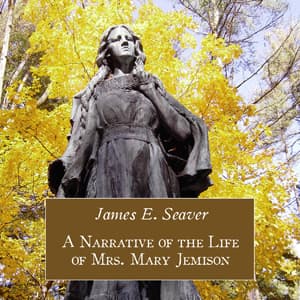
A Narrative of the Life of Mrs. Mary Jemison
1826
In 1758, when Mary Jemison was fifteen, Shawnee and French raiders murdered her family and took her captive. She could have returned to white society - offers came - but she chose to stay among the Seneca who adopted her. She married two Indian husbands, bore eight children, and lived seventy-five years among the people who destroyed her childhood. She survived the Revolution, the War of 1812, and the transformation of upstate New York, dying in 1833 at nearly ninety. Recorded when she was in her seventies, this narrative poses a question no captivity story wants to answer: what happens when the captive doesn't want rescue? It's a document of remarkable psychological complexity - a woman who found freedom in the culture that stole her life, and who refused to call her captors anything but family. The prose is plain, direct, sometimes brutal. It doesn't sentimentalize her loss or romanticize indigenous life. It simply tells what happened to one body moving between worlds.
Editions
X-Ray
“Time, the destroyer of every affection, wore away my unpleasant feelings, and I became as contented as before. We””
— James E. Seaver
Link to this book
Add a free, dofollow link to Lex on your blog, forum, syllabus, or reading list.

<a href="https://lex-books.com/book/a-narrative-of-the-life-of-mrs-mary-jemison-32df8079-e791-4c1b-acda-50bd9ed5d3cd"><img src="https://lex-books.com/badges/read-on-lex.svg" alt="Read A Narrative of the Life of Mrs. Mary Jemison by James E. Seaver free on Lex" width="160" height="40"></a>[](https://lex-books.com/book/a-narrative-of-the-life-of-mrs-mary-jemison-32df8079-e791-4c1b-acda-50bd9ed5d3cd)[url=https://lex-books.com/book/a-narrative-of-the-life-of-mrs-mary-jemison-32df8079-e791-4c1b-acda-50bd9ed5d3cd][img]https://lex-books.com/badges/read-on-lex.svg[/img][/url]Read A Narrative of the Life of Mrs. Mary Jemison by James E. Seaver free on Lex: https://lex-books.com/book/a-narrative-of-the-life-of-mrs-mary-jemison-32df8079-e791-4c1b-acda-50bd9ed5d3cdCite this book
Reading this edition for a paper or guide? Copy a citation.
Seaver, James E.. A Narrative of the Life of Mrs. Mary Jemison. Lex, lex-books.com/book/a-narrative-of-the-life-of-mrs-mary-jemison-32df8079-e791-4c1b-acda-50bd9ed5d3cd.Seaver, J. E. (1826). A Narrative of the Life of Mrs. Mary Jemison. Lex. https://lex-books.com/book/a-narrative-of-the-life-of-mrs-mary-jemison-32df8079-e791-4c1b-acda-50bd9ed5d3cdSeaver, James E.. A Narrative of the Life of Mrs. Mary Jemison. Lex. https://lex-books.com/book/a-narrative-of-the-life-of-mrs-mary-jemison-32df8079-e791-4c1b-acda-50bd9ed5d3cd.