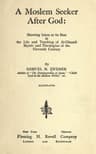
A Moslem Seeker After God: Showing Islam at Its Best in the Life and Teaching of Al-Ghazali, Mystic and Theologian of the Eleventh Century
1920

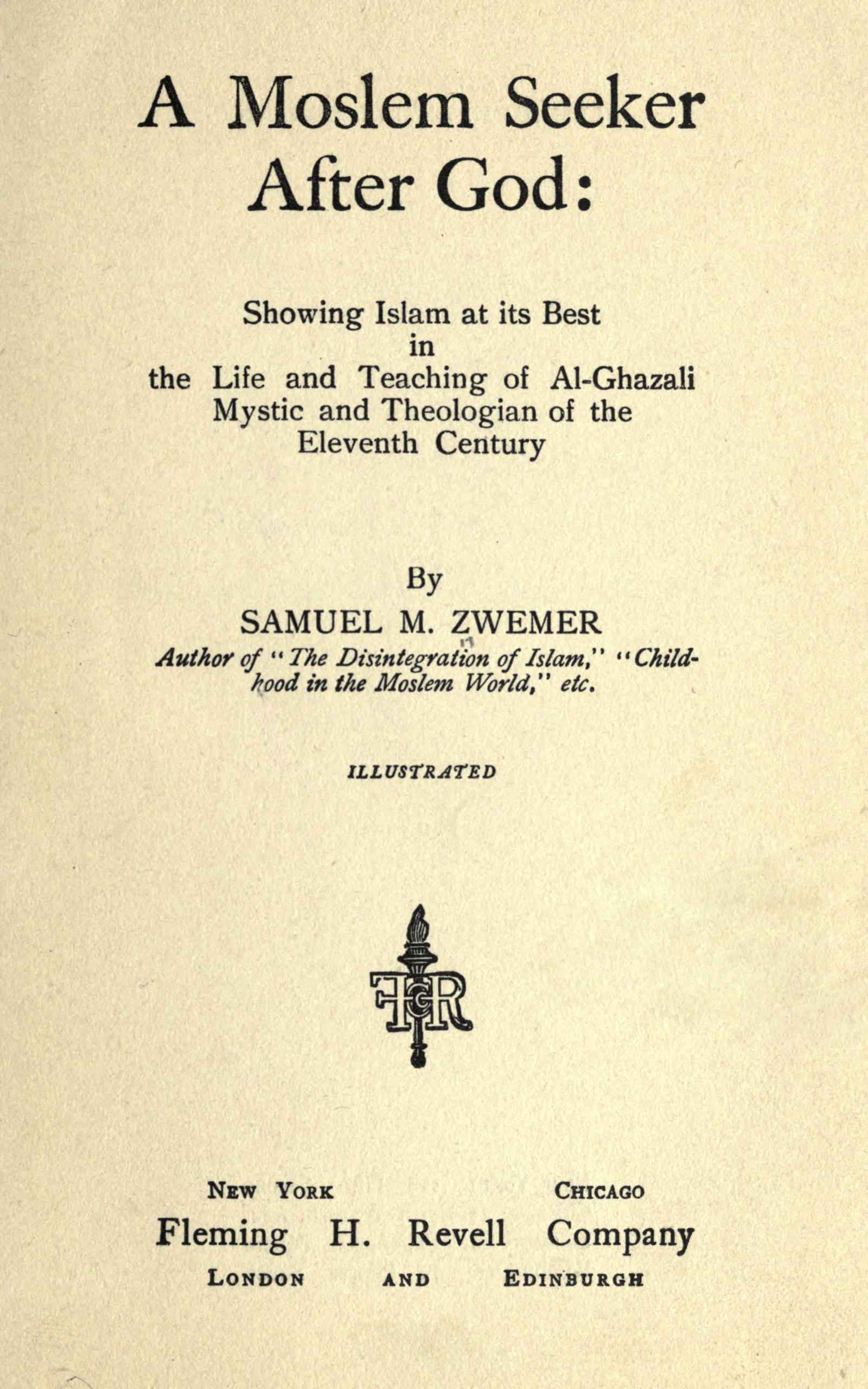
A Moslem Seeker After God: Showing Islam at Its Best in the Life and Teaching of Al-Ghazali, Mystic and Theologian of the Eleventh Century
1920
In 1920, missionary-scholar Samuel Marinus Zwemer turned his gaze toward one of Islamic history's most extraordinary figures: Abu Hamid Muhammad ibn Muhammad al-Ghazali, the 11th-century theologian whose spiritual crisis and subsequent mystical awakening shook the foundations of medieval Islamic thought. Zwemer, writing from a Protestant missionary perspective, sought to present "Islam at its best" through al-Ghazali's life and teachings, offering Western readers a rare window into Islamic mysticism at a moment when such understanding was rare. The book traces al-Ghazali's journey from celebrated professor at Baghdad's Nizamiyya University through his dramatic abandonment of public life to his years of spiritual retreat and eventual return as a transformed mystic. Zwemer presents al-Ghazali as a kindred seeker after divine truth, a figure whose struggle between reason and faith, outward success and inward emptiness, resonates across religious traditions. This slim volume stands as a fascinating artifact of early interfaith engagement: a Christian scholar's attempt to find common ground with Islamic spirituality, flawed by the limitations of its era but genuine in its admiration for a man often called "the Proof of Islam."
Editions
X-Ray
The central figure of the book, an 11th-century Islamic mystic and theologian whose life, teachings, and spiritual journey are thoroughly explored.
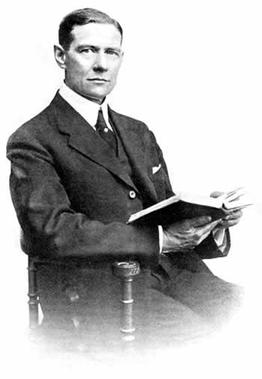
The author of the book, a missionary who presents Al-Ghazali's life and teachings from a Christian perspective.
Wrote the Introduction, highlighting Al-Ghazali's blend of scholar and saint, orthodox Moslem and Sufi, and the relevance of Sufism.
A scholar whose thorough study of Al-Ghazali's life and writings is heavily cited and acknowledged by Zwemer, providing key insights into Al-Ghazali's philosophy.
About A Moslem Seeker After God: Showing Islam at Its Best in the Life and Teaching of Al-Ghazali, Mystic and Theologian of the Eleventh Century
Chapter Summaries
- I
- This chapter introduces the historical context of Al-Ghazali's life, detailing the political dominance of the Seljuk Turks, the decline of the Abbasside Caliphate, and the impact of the Crusades on the Moslem world. It also describes the social and religious conditions, including the presence of Christian communities and the general moral looseness of the era.
- II
- This chapter focuses on Al-Ghazali's origins in Khorasan, Persia, emphasizing the region's Aryan intellectual genius and its mystical traditions. It details his early education, his father's desire for his sons to be learned, and his studies in Jurjan and Nishapur under the renowned Imam al-Haramain, including a formative experience with robbers that led him to memorize his notes.
- III
- This chapter describes Al-Ghazali's successful career as a lecturer at the Nizamiyya College in Bagdad, where he gained immense fame. It then delves into his profound spiritual crisis, characterized by skepticism and mental unrest, which ultimately led him to abandon his prestigious position and worldly possessions for a life of ascetic retirement and a quest for experiential truth in Sufism.
Key Themes
- Spiritual Quest and Scepticism
- Al-Ghazali's personal journey from profound intellectual doubt to spiritual certainty through experiential mysticism is a core theme, reflecting a universal human search for meaning and truth beyond conventional dogma. His 'Confessions' detail this internal struggle and his eventual resolution.
- Orthodoxy vs. Heterodoxy in Islam
- The book highlights the tensions between various schools of Islamic thought—rationalists, literalists, and mystics—and Al-Ghazali's pivotal role in integrating ethical Sufism into orthodox Islam. He sought to bridge the gap between external religious law and inner spiritual experience.
- The Nature of God and Revelation
- Al-Ghazali's detailed creed explores God's unity, attributes, and actions, emphasizing His transcendence and unknowability, yet also His nearness to humanity. The theme delves into the role of divine revelation through prophets and saints as the ultimate source of knowledge.
Characters
- Al-Ghazali(protagonist)
- The central figure of the book, an 11th-century Islamic mystic and theologian whose life, teachings, and spiritual journey are thoroughly explored.
- Samuel Marinus Zwemer(author)
- The author of the book, a missionary who presents Al-Ghazali's life and teachings from a Christian perspective.
- J. Rendel Harris(supporting)
- Wrote the Introduction, highlighting Al-Ghazali's blend of scholar and saint, orthodox Moslem and Sufi, and the relevance of Sufism.
- Professor Duncan B. Macdonald(supporting)
- A scholar whose thorough study of Al-Ghazali's life and writings is heavily cited and acknowledged by Zwemer, providing key insights into Al-Ghazali's philosophy.
- Mohammed(supporting)
- The Prophet of Islam, whose life and teachings form the foundation of Al-Ghazali's faith and are frequently referenced as the ultimate standard.
- Al-Bokhari(minor)
- The most celebrated collector of Islamic Traditions, mentioned as one of the four prominent names in Islam's historical study.
Link to this book
Add a free, dofollow link to Lex on your blog, forum, syllabus, or reading list.

<a href="https://lex-books.com/book/a-moslem-seeker-after-god-showing-islam-at-its-best-in-the-life-and-teaching-of--16cc43b1-d70a-4a1d-a764-43d29d80d710"><img src="https://lex-books.com/badges/read-on-lex.svg" alt="Read A Moslem Seeker After God: Showing Islam at Its Best in the Life and Teaching of Al-Ghazali, Mystic and Theologian of the Eleventh Century by Samuel Marinus Zwemer free on Lex" width="160" height="40"></a>[](https://lex-books.com/book/a-moslem-seeker-after-god-showing-islam-at-its-best-in-the-life-and-teaching-of--16cc43b1-d70a-4a1d-a764-43d29d80d710)[url=https://lex-books.com/book/a-moslem-seeker-after-god-showing-islam-at-its-best-in-the-life-and-teaching-of--16cc43b1-d70a-4a1d-a764-43d29d80d710][img]https://lex-books.com/badges/read-on-lex.svg[/img][/url]Read A Moslem Seeker After God: Showing Islam at Its Best in the Life and Teaching of Al-Ghazali, Mystic and Theologian of the Eleventh Century by Samuel Marinus Zwemer free on Lex: https://lex-books.com/book/a-moslem-seeker-after-god-showing-islam-at-its-best-in-the-life-and-teaching-of--16cc43b1-d70a-4a1d-a764-43d29d80d710Cite this book
Reading this edition for a paper or guide? Copy a citation.
Zwemer, Samuel Marinus. A Moslem Seeker After God: Showing Islam at Its Best in the Life and Teaching of Al-Ghazali, Mystic and Theologian of the Eleventh Century. Lex, lex-books.com/book/a-moslem-seeker-after-god-showing-islam-at-its-best-in-the-life-and-teaching-of--16cc43b1-d70a-4a1d-a764-43d29d80d710.Zwemer, S. M. (1920). A Moslem Seeker After God: Showing Islam at Its Best in the Life and Teaching of Al-Ghazali, Mystic and Theologian of the Eleventh Century. Lex. https://lex-books.com/book/a-moslem-seeker-after-god-showing-islam-at-its-best-in-the-life-and-teaching-of--16cc43b1-d70a-4a1d-a764-43d29d80d710Zwemer, Samuel Marinus. A Moslem Seeker After God: Showing Islam at Its Best in the Life and Teaching of Al-Ghazali, Mystic and Theologian of the Eleventh Century. Lex. https://lex-books.com/book/a-moslem-seeker-after-god-showing-islam-at-its-best-in-the-life-and-teaching-of--16cc43b1-d70a-4a1d-a764-43d29d80d710.