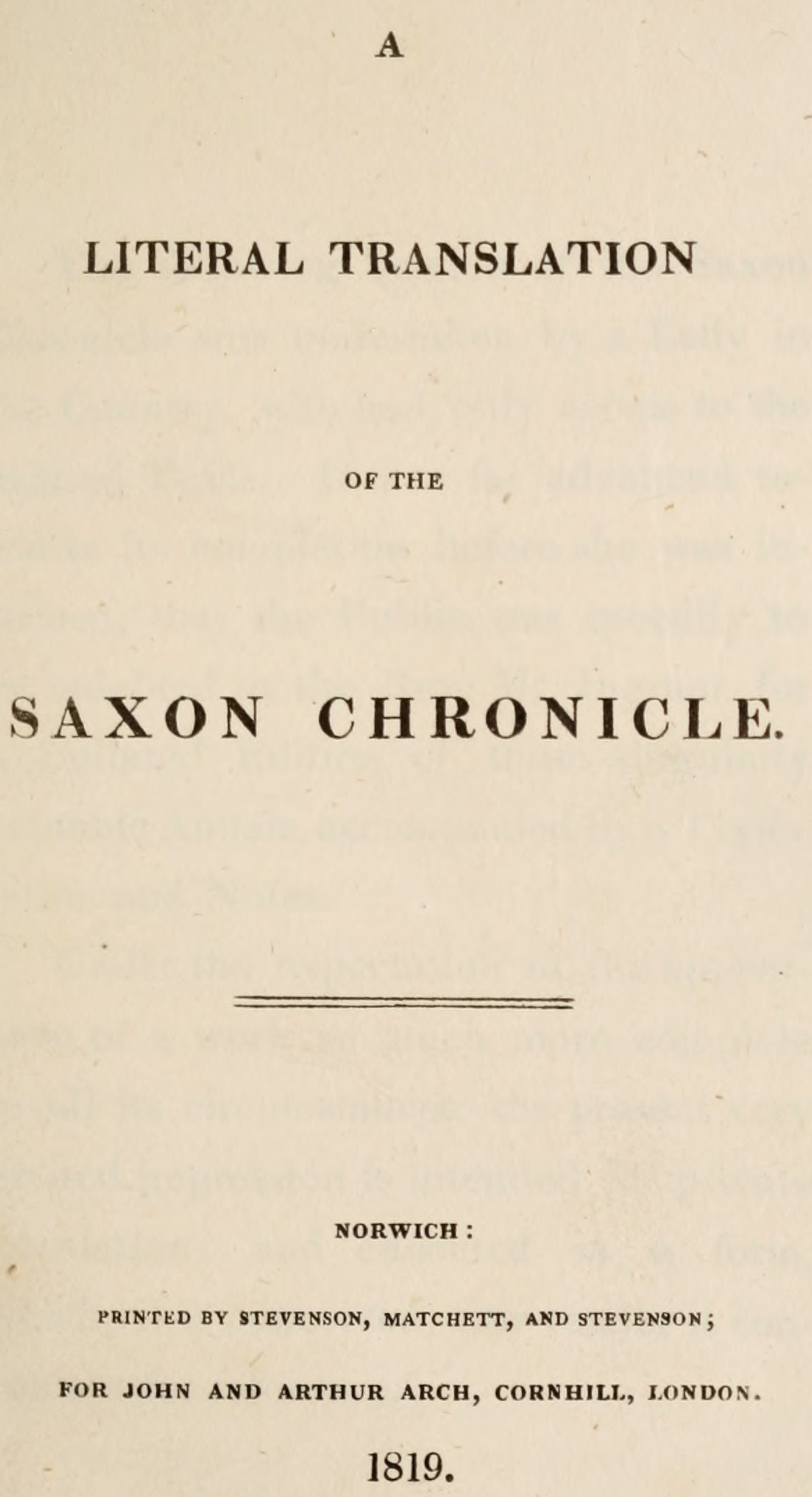
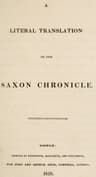
A Literal Translation of the Saxon Chronicle
1819
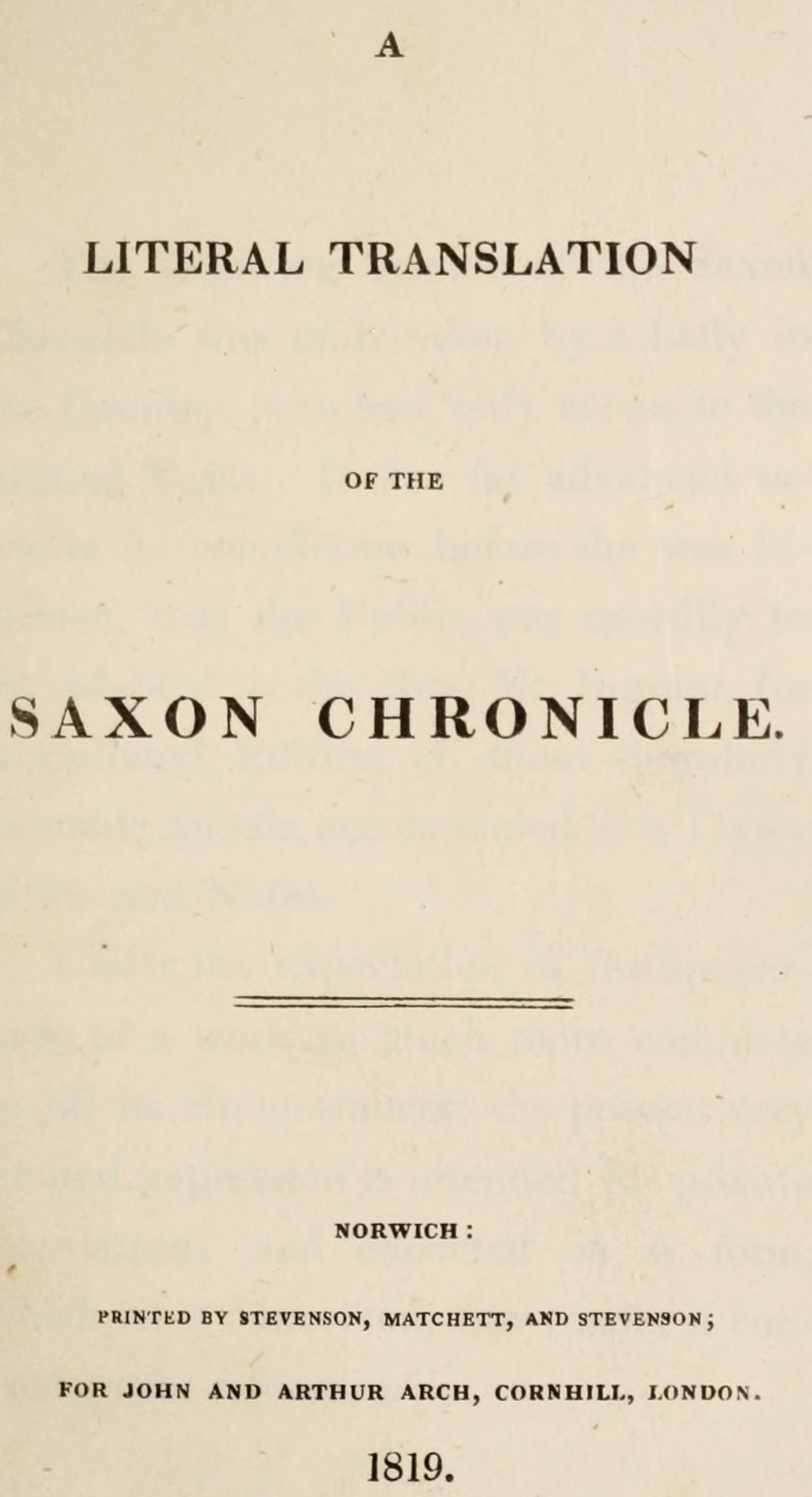
A Literal Translation of the Saxon Chronicle
1819
Translated by Anna Gurney
The Anglo-Saxon Chronicle is not a book you read for narrative pleasure. It is something closer to a fossil: the skeletal record of a nation's birth, preserved in the handwriting of medieval monks who were themselves living through the end of one world and the beginning another. This 1819 translation captures those annals in their raw, brutal simplicity: here is Julius Caesar's arrival in 55 BC, here are the first Christian missionaries landing on these shores, here are the Viking raids that burned monasteries to ash, here is the Norman Conquest that changed the English language forever. What makes these entries extraordinary is not their prose - much of it is laconic to the point of mystery - but their accumulated weight. Reading them, you sense the monks chronicling their own present as future history, recording plagues, battles, and kings with the same terse gravity. This translation preserves that strange temporal position: you are holding a document written by people who had no idea they were living through the events that would shape everything that came after.
Editions
X-Ray
King of Wessex who defended England against Danish invasions and established lasting peace. Known for his wisdom, justice, and military innovations including the creation of a navy.
Duke of Normandy who conquered England in 1066, establishing Norman rule. A powerful but stern ruler who brought order through strength.
Last Anglo-Saxon king before the Norman Conquest, known for his piety. His death without clear succession led to the Norman invasion.
Danish king who conquered England and ruled wisely, uniting English and Danes under one crown. Brought peace after years of warfare.
About A Literal Translation of the Saxon Chronicle
Chapter Summaries
- Preface
- Describes the geography of Britain and the arrival of its various peoples - Britons, Picts, Scots, and Romans. Sets the stage for the Anglo-Saxon arrival.
- 1-449 AD
- Chronicles the Roman conquest, the birth and crucifixion of Christ, and the early spread of Christianity. Covers the Roman withdrawal and British appeals for help.
- 449-597 AD
- The arrival of Hengest and Horsa, the Anglo-Saxon conquest of Britain, and the establishment of the various kingdoms. Details the genealogies of royal houses.
Key Themes
- Divine Providence and Kingship
- The chronicle consistently portrays earthly rule as subject to God's will, with righteous kings prospering and wicked ones facing divine punishment. Kings are judged by their piety and justice.
- Conquest and Cultural Change
- Each major invasion - Roman, Anglo-Saxon, Viking, Norman - transforms English society, language, and institutions. The chronicle shows how conquest brings both destruction and renewal.
- Christianity vs. Paganism
- The conversion of England from paganism to Christianity is a central narrative, with Christian kings and missionaries portrayed as bringing civilization and divine favor.
Characters
- Alfred the Great(protagonist)
- King of Wessex who defended England against Danish invasions and established lasting peace. Known for his wisdom, justice, and military innovations including the creation of a navy.
- William the Conqueror(protagonist)
- Duke of Normandy who conquered England in 1066, establishing Norman rule. A powerful but stern ruler who brought order through strength.
- Edward the Confessor(major)
- Last Anglo-Saxon king before the Norman Conquest, known for his piety. His death without clear succession led to the Norman invasion.
- Cnut (Canute)(major)
- Danish king who conquered England and ruled wisely, uniting English and Danes under one crown. Brought peace after years of warfare.
- Harold Godwinson(major)
- Last Anglo-Saxon king, defeated and killed at the Battle of Hastings. A capable warrior who faced invasions from both Norway and Normandy.
- Æthelred the Unready(major)
- Anglo-Saxon king whose reign was marked by Danish invasions and poor counsel. Eventually fled to Normandy before being restored.
Link to this book
Add a free, dofollow link to Lex on your blog, forum, syllabus, or reading list.

<a href="https://lex-books.com/book/a-literal-translation-of-the-saxon-chronicle-6e529b78-1244-4b56-be29-af1344b58f5e"><img src="https://lex-books.com/badges/read-on-lex.svg" alt="Read A Literal Translation of the Saxon Chronicle by Unknown free on Lex" width="160" height="40"></a>[](https://lex-books.com/book/a-literal-translation-of-the-saxon-chronicle-6e529b78-1244-4b56-be29-af1344b58f5e)[url=https://lex-books.com/book/a-literal-translation-of-the-saxon-chronicle-6e529b78-1244-4b56-be29-af1344b58f5e][img]https://lex-books.com/badges/read-on-lex.svg[/img][/url]Read A Literal Translation of the Saxon Chronicle by Unknown free on Lex: https://lex-books.com/book/a-literal-translation-of-the-saxon-chronicle-6e529b78-1244-4b56-be29-af1344b58f5eCite this book
Reading this edition for a paper or guide? Copy a citation.
Unknown. A Literal Translation of the Saxon Chronicle. Lex, lex-books.com/book/a-literal-translation-of-the-saxon-chronicle-6e529b78-1244-4b56-be29-af1344b58f5e.Unknown (1819). A Literal Translation of the Saxon Chronicle. Lex. https://lex-books.com/book/a-literal-translation-of-the-saxon-chronicle-6e529b78-1244-4b56-be29-af1344b58f5eUnknown. A Literal Translation of the Saxon Chronicle. Lex. https://lex-books.com/book/a-literal-translation-of-the-saxon-chronicle-6e529b78-1244-4b56-be29-af1344b58f5e.