A Classical Dictionary: Containing a Copious Account of All the Proper Names Mentioned in Ancient Authors with Tables of Coins, Weights, and Measures Used Among the Greeks and Romans and a Chronological Table
1788
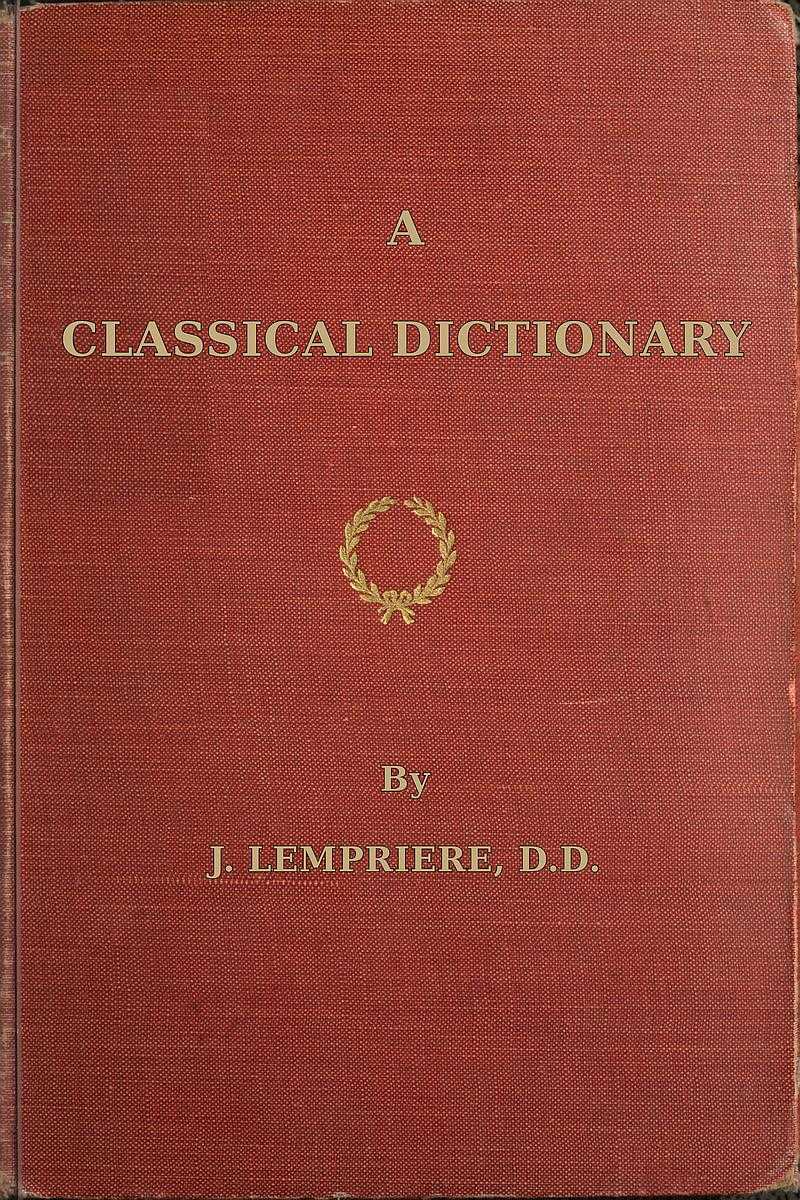
A Classical Dictionary: Containing a Copious Account of All the Proper Names Mentioned in Ancient Authors with Tables of Coins, Weights, and Measures Used Among the Greeks and Romans and a Chronological Table
1788
For over a century, John Lemprière's dictionary was the essential key to the ancient world. First published in 1788, it became the standard reference for English-speaking scholars, students, and anyone who wished to read the Greeks and Romans in their original languages. Lemprière did not merely compile names. He built a gateway. Within these pages lie every proper noun that appears in the classical canon: gods and heroes, kings and philosophers, cities and rivers, along with meticulous tables of Greek and Roman currency, weights, measures, and a chronological table spanning centuries of history. This was the book a young Victorian schoolboy opened before tackling Homer, the resource that guided Darwin and Byron through their classical reading. It represents the Enlightenment's grand ambition to systematize all human knowledge in a single, usable form. While modern classical scholarship has surpassed it in many ways, Lemprière remains indispensable for understanding how the English-speaking world once encountered antiquity, and for anyone who wants to trace the genealogy of classical scholarship itself.
Editions
Link to this book
Add a free, dofollow link to Lex on your blog, forum, syllabus, or reading list.

<a href="https://lex-books.com/book/a-classical-dictionary-containing-a-copious-account-of-all-the-proper-names-ment-e0874b90-8787-4969-92d4-3ea8f0397ea7"><img src="https://lex-books.com/badges/read-on-lex.svg" alt="Read A Classical Dictionary: Containing a Copious Account of All the Proper Names Mentioned in Ancient Authors with Tables of Coins, Weights, and Measures Used Among the Greeks and Romans and a Chronological Table by John Lemprière free on Lex" width="160" height="40"></a>[](https://lex-books.com/book/a-classical-dictionary-containing-a-copious-account-of-all-the-proper-names-ment-e0874b90-8787-4969-92d4-3ea8f0397ea7)[url=https://lex-books.com/book/a-classical-dictionary-containing-a-copious-account-of-all-the-proper-names-ment-e0874b90-8787-4969-92d4-3ea8f0397ea7][img]https://lex-books.com/badges/read-on-lex.svg[/img][/url]Read A Classical Dictionary: Containing a Copious Account of All the Proper Names Mentioned in Ancient Authors with Tables of Coins, Weights, and Measures Used Among the Greeks and Romans and a Chronological Table by John Lemprière free on Lex: https://lex-books.com/book/a-classical-dictionary-containing-a-copious-account-of-all-the-proper-names-ment-e0874b90-8787-4969-92d4-3ea8f0397ea7Cite this book
Reading this edition for a paper or guide? Copy a citation.
Lemprière, John. A Classical Dictionary: Containing a Copious Account of All the Proper Names Mentioned in Ancient Authors with Tables of Coins, Weights, and Measures Used Among the Greeks and Romans and a Chronological Table. Lex, lex-books.com/book/a-classical-dictionary-containing-a-copious-account-of-all-the-proper-names-ment-e0874b90-8787-4969-92d4-3ea8f0397ea7.Lemprière, J. (1788). A Classical Dictionary: Containing a Copious Account of All the Proper Names Mentioned in Ancient Authors with Tables of Coins, Weights, and Measures Used Among the Greeks and Romans and a Chronological Table. Lex. https://lex-books.com/book/a-classical-dictionary-containing-a-copious-account-of-all-the-proper-names-ment-e0874b90-8787-4969-92d4-3ea8f0397ea7Lemprière, John. A Classical Dictionary: Containing a Copious Account of All the Proper Names Mentioned in Ancient Authors with Tables of Coins, Weights, and Measures Used Among the Greeks and Romans and a Chronological Table. Lex. https://lex-books.com/book/a-classical-dictionary-containing-a-copious-account-of-all-the-proper-names-ment-e0874b90-8787-4969-92d4-3ea8f0397ea7.