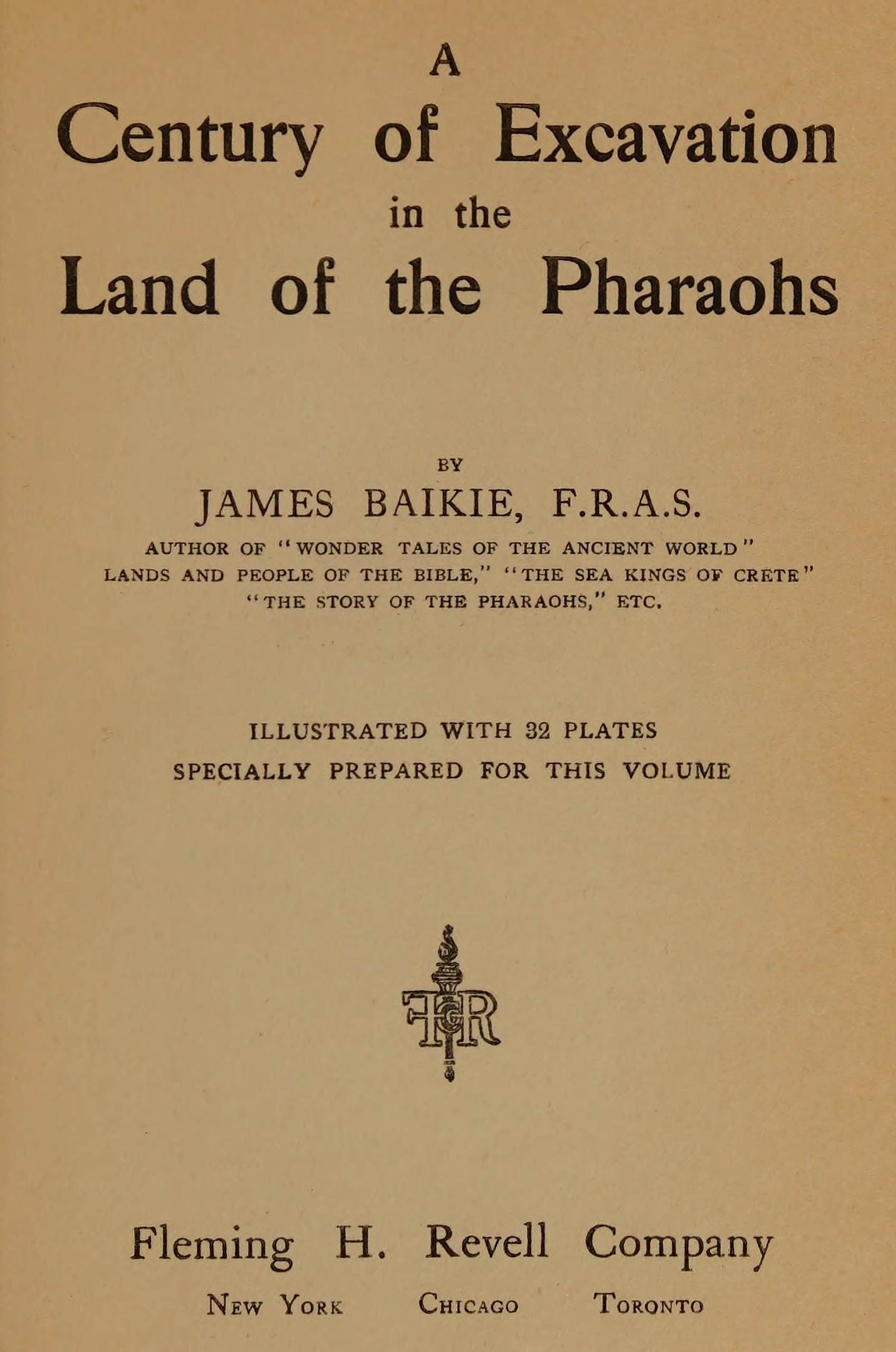
A Century of Excavation in the Land of the Pharaohs
1924
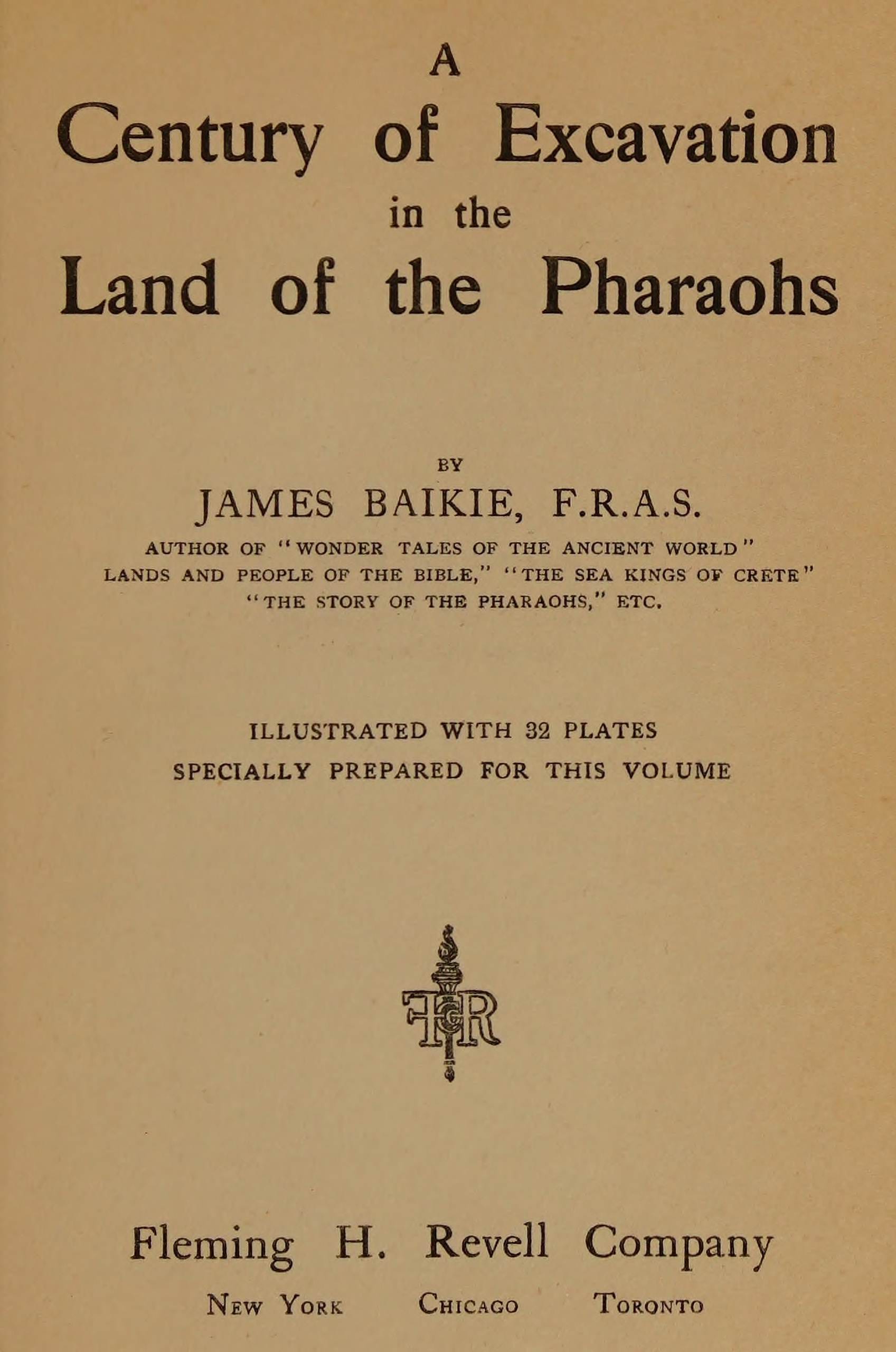
A Century of Excavation in the Land of the Pharaohs
1924
A Century of Excavation in the Land of the Pharaohs, written by James Baikie and first published in 1924, provides a historical overview of Egyptology and archaeological practices in Egypt. The book chronicles key figures, pivotal discoveries, and the evolution of excavation methods over a century, from early treasure-hunting to the establishment of scientific archaeology. Baikie highlights the contributions of notable archaeologists like Auguste Mariette and Flinders Petrie, emphasizing the importance of responsible excavation and preservation of Egypt's ancient heritage.
Editions
X-Ray
The author and narrator of this comprehensive survey of Egyptian excavation. A scholar and historian who synthesizes the work of many explorers and archaeologists over a century of discovery.
French archaeologist who became the first head of Egypt's Service of Antiquities in 1858. He discovered the Serapeum and established the first Egyptian Museum, fighting against the pillage of antiquities.
Italian explorer and showman who made several important discoveries including the tomb of Sety I and the opening of the Second Pyramid. Known for his dramatic methods and colorful personality.
British archaeologist who revolutionized excavation methods by emphasizing the importance of small finds and systematic recording. Pioneer of modern archaeological techniques.
About A Century of Excavation in the Land of the Pharaohs
Chapter Summaries
- 1
- Traces the beginnings of Egyptian archaeology with Napoleon's expedition of 1798 and the early period of destructive treasure hunting by men like Belzoni and Drovetti. Describes the gradual transition toward more scientific approaches.
- 2
- Chronicles Auguste Mariette's career from his accidental discovery of the Serapeum to his establishment of the Egyptian Service of Antiquities and the first national museum. Details his battles against pillage and his major excavations.
- 3
- Explains the transformation of archaeology into a scientific discipline under Maspero's leadership, emphasizing the importance of small finds and systematic recording methods pioneered by Petrie.
Key Themes
- Scientific Progress vs. Exploitation
- The book chronicles the evolution from crude treasure hunting to systematic archaeology, showing how scientific methods gradually replaced destructive pillaging of ancient sites.
- Cultural Heritage and National Identity
- Mariette's establishment of the Egyptian Museum represents the principle that a nation's antiquities should remain in their homeland rather than being scattered across foreign collections.
- The Vanity of Human Ambition
- The failure of elaborate burial preparations to protect pharaohs from tomb robbers illustrates the futility of human attempts to achieve immortality through material means.
Characters
- James Baikie(protagonist)
- The author and narrator of this comprehensive survey of Egyptian excavation. A scholar and historian who synthesizes the work of many explorers and archaeologists over a century of discovery.
- Auguste Mariette(major)
- French archaeologist who became the first head of Egypt's Service of Antiquities in 1858. He discovered the Serapeum and established the first Egyptian Museum, fighting against the pillage of antiquities.
- Giovanni Belzoni(major)
- Italian explorer and showman who made several important discoveries including the tomb of Sety I and the opening of the Second Pyramid. Known for his dramatic methods and colorful personality.
- Sir Flinders Petrie(major)
- British archaeologist who revolutionized excavation methods by emphasizing the importance of small finds and systematic recording. Pioneer of modern archaeological techniques.
- Lord Carnarvon(major)
- British aristocrat who financed the excavations that led to the discovery of Tutankhamun's tomb. Died shortly after the tomb's opening in 1923.
- Howard Carter(major)
- British archaeologist who discovered Tutankhamun's tomb with Lord Carnarvon. Known for his meticulous excavation methods and dramatic discovery.
Link to this book
Add a free, dofollow link to Lex on your blog, forum, syllabus, or reading list.

<a href="https://lex-books.com/book/a-century-of-excavation-in-the-land-of-the-pharaohs-aac98e50-c337-4517-8b80-0893fdde8869"><img src="https://lex-books.com/badges/read-on-lex.svg" alt="Read A Century of Excavation in the Land of the Pharaohs by James Baikie free on Lex" width="160" height="40"></a>[](https://lex-books.com/book/a-century-of-excavation-in-the-land-of-the-pharaohs-aac98e50-c337-4517-8b80-0893fdde8869)[url=https://lex-books.com/book/a-century-of-excavation-in-the-land-of-the-pharaohs-aac98e50-c337-4517-8b80-0893fdde8869][img]https://lex-books.com/badges/read-on-lex.svg[/img][/url]Read A Century of Excavation in the Land of the Pharaohs by James Baikie free on Lex: https://lex-books.com/book/a-century-of-excavation-in-the-land-of-the-pharaohs-aac98e50-c337-4517-8b80-0893fdde8869Cite this book
Reading this edition for a paper or guide? Copy a citation.
Baikie, James. A Century of Excavation in the Land of the Pharaohs. Lex, lex-books.com/book/a-century-of-excavation-in-the-land-of-the-pharaohs-aac98e50-c337-4517-8b80-0893fdde8869.Baikie, J. (1924). A Century of Excavation in the Land of the Pharaohs. Lex. https://lex-books.com/book/a-century-of-excavation-in-the-land-of-the-pharaohs-aac98e50-c337-4517-8b80-0893fdde8869Baikie, James. A Century of Excavation in the Land of the Pharaohs. Lex. https://lex-books.com/book/a-century-of-excavation-in-the-land-of-the-pharaohs-aac98e50-c337-4517-8b80-0893fdde8869.