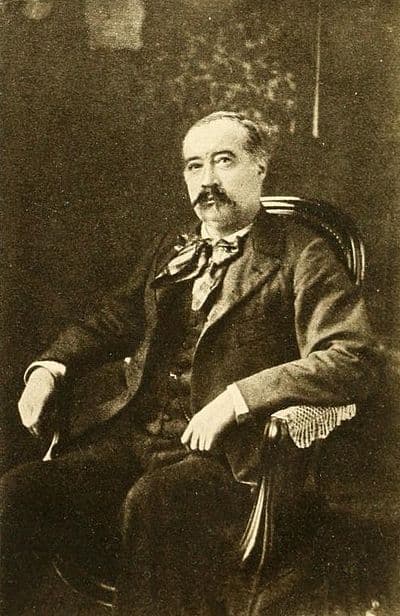
Émile Faguet
Émile Faguet was a French literary critic and essayist known for his insightful analysis of literature and his advocacy for the importance of literary aesthetics. Born in the late 19th century, Faguet became a prominent figure in the French literary scene, contributing to various publications and engaging deeply with the works of his contemporaries. He was particularly noted for his critical essays on authors such as Balzac, Flaubert, and Zola, where he explored the intricacies of their narratives and the social contexts that shaped their writing. His works often emphasized the moral and philosophical dimensions of literature, reflecting his belief in the transformative power of art. Faguet's most significant contributions include his critical studies, such as "Les grands écrivains français" and "Les écrivains et la société," where he examined the relationship between literature and society. His writings not only offered a critique of literary trends but also served as a defense of the value of literary criticism itself. Faguet's legacy lies in his ability to bridge the gap between literary theory and practical criticism, influencing future generations of critics and writers. His work remains a testament to the enduring importance of literature in understanding human experience and societal change.
Famous Quotes
View all 16 quotes“Universe, of the Creation and Constitution of the World. PHILOSOPHY.”
“What is the people's one desire, when once it has been stung by the democratic tarantula? It is that all men should be equal, and in consequence that all inequalities natural as well as artificial should disappear. It will not have artificial inequalities, nobility of birth, royal favours, inherited wealth, and so it is ready to abolish nobility, royalty, and inheritance. Nor does it like natural inequalities, that is to say a man more intelligent, more active, more courageous, more skillful than his neighbors. It cannot destroy these inequalities, for they are natural, but it can neutralize them, strike them with impotence by excluding them from the employments under its control. Democracy is thus led quite naturally, irresistibly one may say, to exclude the competent precisely because they are competent, or if the phrase pleases better and as the popular advocate would put it, not because they are competent but because they are unequal, or, as he would probably go on to say, if he wished to excuse such action, not because they are unequal, but because being unequal they are suspected of being opponents of equality. So it all comes to the same thing. This it is that made Aristotle say that where merit is despised, there is democracy. He does not say so in so many words, but he wrote: "Where merit is not esteemed before everything else, it is not possible to have a firmly established aristocracy," and that amounts to saying that where merit is not esteemed, we enter at once on a democratic regime and never escape from it.””
“Le sort des hommes est ceci : Beaucoup d’appelés, peu d’élus ; Le sort des livres, le voici : Beaucoup d’épelés, peu de lus.””
Books from the author







Link to this page
Add a free, dofollow link to Lex on your blog, forum, syllabus, or reading list.

<a href="https://lex-books.com/author/émile-faguet"><img src="https://lex-books.com/badges/read-on-lex.svg" alt="Émile Faguet on Lex" width="160" height="40"></a>[](https://lex-books.com/author/émile-faguet)[url=https://lex-books.com/author/émile-faguet][img]https://lex-books.com/badges/read-on-lex.svg[/img][/url]Émile Faguet on Lex: https://lex-books.com/author/émile-faguet