
William Mitchell Ramsay
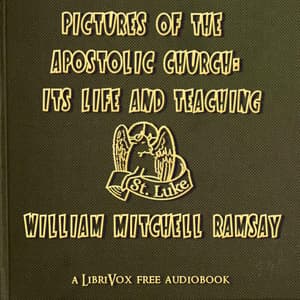
William Mitchell Ramsay was a prominent Scottish archaeologist and New Testament scholar whose work significantly contributed to the understanding of early Christianity. Born in the late 19th century, Ramsay's academic pursuits led him to explore the historical context of the New Testament, particularly focusing on the letters to the seven churches in Asia Minor. His notable works, such as 'The Letters to the Seven Churches of Asia: And Their Place in the Plan of the Apocalypse' and 'Pictures of the Apostolic Church: Its Life and Teaching,' reflect his deep engagement with the early Christian community and its teachings. Ramsay's archaeological findings and scholarly insights helped illuminate the cultural and historical backdrop of the New Testament, challenging previous assumptions and providing a more nuanced understanding of early Christian life. Ramsay's legacy lies in his ability to bridge the gap between archaeology and biblical studies, advocating for a historical approach to understanding scripture. His meticulous research and fieldwork in Asia Minor not only enriched biblical scholarship but also inspired subsequent generations of scholars to consider the interplay between historical context and religious texts. Through his writings, Ramsay established himself as a key figure in the study of early Christianity, leaving an indelible mark on both the fields of archaeology and theology.
Books from the author
Link to this page
Add a free, dofollow link to Lex on your blog, forum, syllabus, or reading list.

<a href="https://lex-books.com/author/william-mitchell-ramsay"><img src="https://lex-books.com/badges/read-on-lex.svg" alt="William Mitchell Ramsay on Lex" width="160" height="40"></a>[](https://lex-books.com/author/william-mitchell-ramsay)[url=https://lex-books.com/author/william-mitchell-ramsay][img]https://lex-books.com/badges/read-on-lex.svg[/img][/url]William Mitchell Ramsay on Lex: https://lex-books.com/author/william-mitchell-ramsay