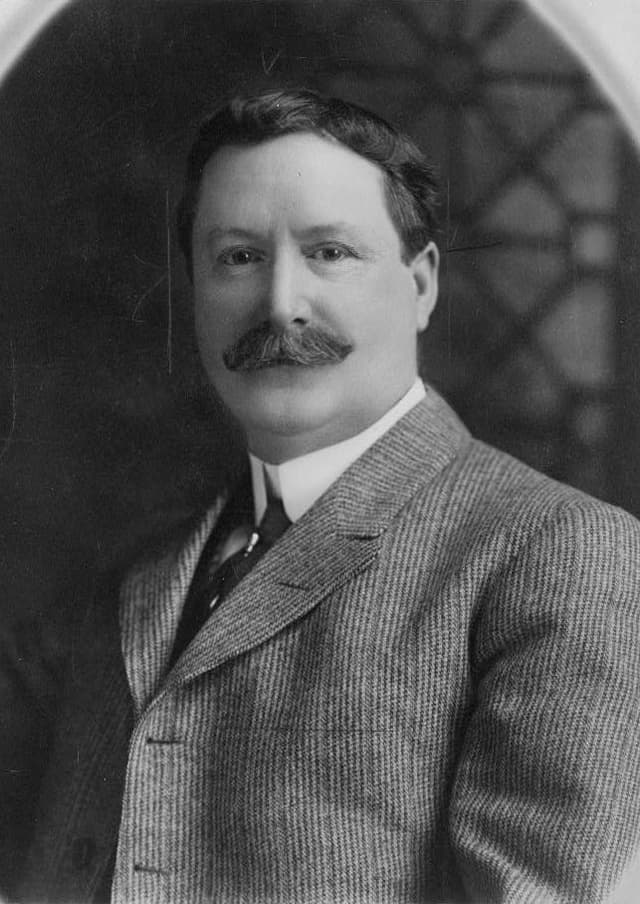
William J. Burns
William J. Burns was an influential American private investigator and law enforcement official, often referred to as 'America's Sherlock Holmes.' Born in Baltimore and educated in Columbus, he began his career as a United States Secret Service Agent, where he honed his investigative skills. Burns gained national prominence through his work on high-profile cases, including the exoneration of Leo Frank in the murder of Mary Phagan and the investigation into the 1910 Los Angeles Times bombing, which was linked to labor unrest. His ability to blend natural detective skills with a flair for publicity made him a household name, as he became a fixture in both news and detective magazines, where he published accounts of his true crime investigations. From 1921 to 1924, Burns served as the fourth director of the Bureau of Investigation, the precursor to the FBI, further solidifying his legacy in American law enforcement. He founded the William J. Burns International Detective Agency, which continues to operate today as part of Securitas Security Services USA. Burns's contributions to the field of private investigation and his role in shaping early 20th-century law enforcement practices have left a lasting impact on the profession, making him a significant figure in the history of American criminal justice.
Famous Quotes
View all 3 quotes“Russia is providing graphic evidence that declining powers can be at least as disruptive as rising ones, increasingly convinced that the pathway to revival of its great power status runs through the erosion of an American-led order.”
“Shaping the principles of policy debate, I learned, is often the first step toward winning it.”
“in a Time of Peril. New York: Viking, 2011. Albright, Madeleine. Madam Secretary: A Memoir. New York: Miramax”
Books from the author







Link to this page
Add a free, dofollow link to Lex on your blog, forum, syllabus, or reading list.

<a href="https://lex-books.com/author/william-j-burns"><img src="https://lex-books.com/badges/read-on-lex.svg" alt="William J. Burns on Lex" width="160" height="40"></a>[](https://lex-books.com/author/william-j-burns)[url=https://lex-books.com/author/william-j-burns][img]https://lex-books.com/badges/read-on-lex.svg[/img][/url]William J. Burns on Lex: https://lex-books.com/author/william-j-burns